

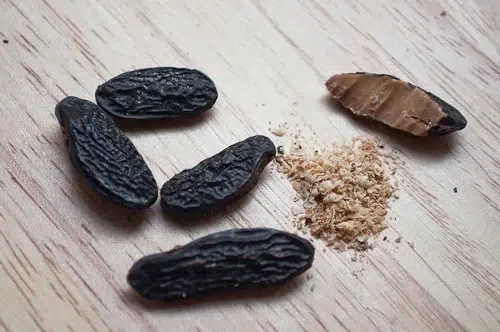
It’s British Bake Off biscuit week and you sit down to watch with a packet on hand and one of the contestants makes a slice-and-bake with Tonka beans as an ingredient that more closely resembles incredibly shrunken dates or giant raisins than what is often described as vanilla’s cousin.
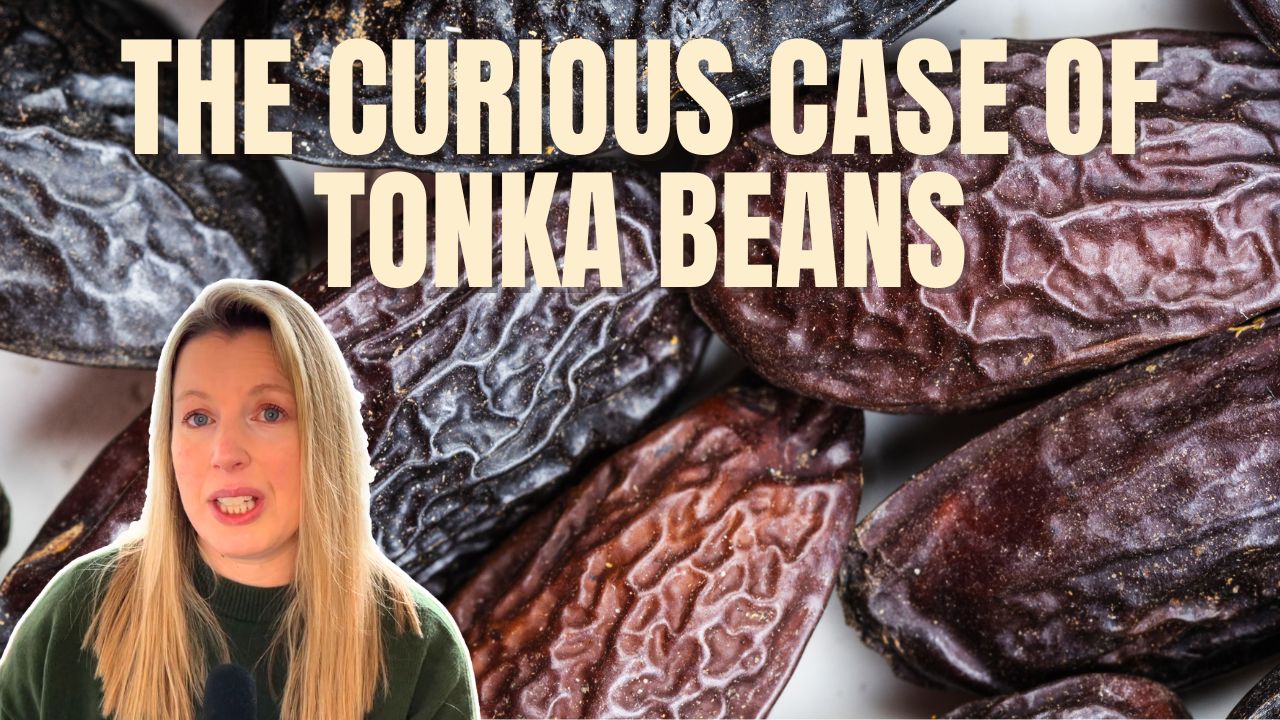
Table of Contents
Tonka beans have had a slight rise in popularity recently though most of us don’t have ready access to this ingredient and the fact it’s illegal in the United States also means there tends to be a greater interest in this spice than say star anise which is often found in supermarket aisles or spice shops.
Hey, hi, hello, my name is Sylvie and I’m a baker who has been studying the science and fundamentals of baking, whilst also spending many many hours baking up cookies, cakes and other things for my website roamingtaste.com.
Today I’m going to dig into what actually is a tonka bean? Why is it banned? And what does it mean when one ingredient is deemed unsafe whilst others of similar danger are completely legal
What are Tonka beans?
Native to South America, it was French botanist Jean-Baptiste Christophe Fusée-Aublet who first wrote about Tonka Beans in his book ‘History of the Plants of French Guiana’ in 1775. Born in 1720, Jean-Baptiste started his career by running away from home and boarding a ship where he became an apothecary’s assistant in Granada for a year at which time his parents tracked him down and he had to go back to France.
Those beginnings set the passion and he went on to train in apothecary, preparing medicine. The link between botany and medicine is deep so Jean-Baptiste became a botanist and surprising for the time, was anti-slavery and actually freed all his slaves (proving that you can stand up for human beings regardless of the vibes of the time, but that’s by-the-by).
He spent nine years living in Mauritius and two years living in French Guyana studying the native flora and fauna and working with local people to learn the traditional use of plants. Most references of him show he didn’t have the best reputation with other botanists and colonists wherever he went, however, being anti-slavery could also have had a hand in this and regardless of that reputation, he was so dedicated to his work that he kept being promoted and sent to new lands for more studies. He is also credited with being the first to propose illustrating flora in Guyana. Jean-Baptiste never made it further into South America due to health issues, but one can only wonder what more he would have learned had he been able to succeed in his plans.
According to Wikipedia, (which btw can we just keep donating to for it’s survival)
The word tonka is taken from the Galibi (Carib) tongue spoken by natives of French Guiana; it also appears in Tupi, another language of the same region, as the name of the tree.
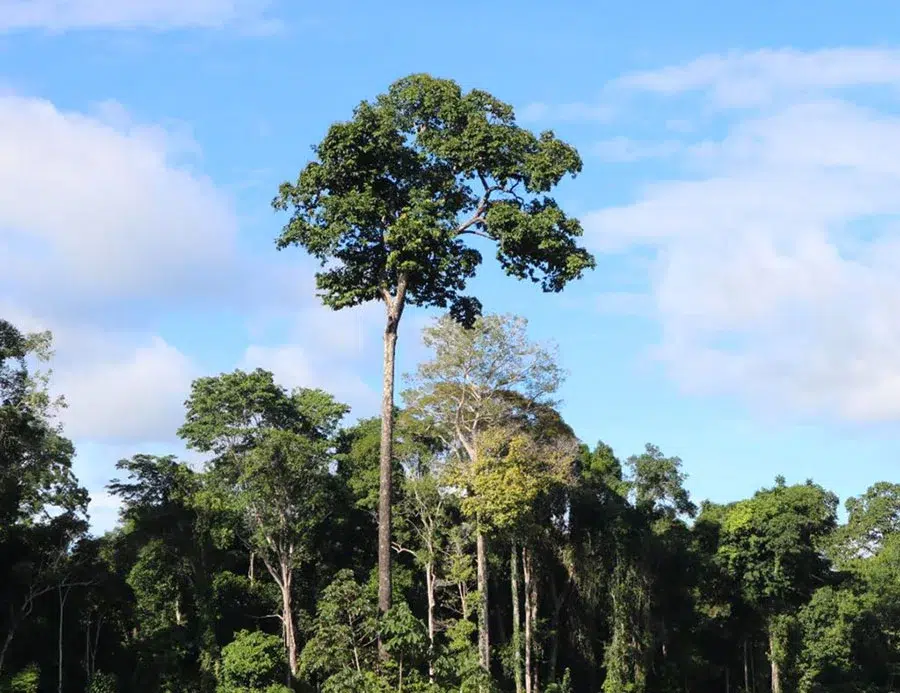
The beans are sourced from the Kumaru Tree, also known as Brazilian Teak which is valued as being a richly grained red hardwood primarily used for flooring and furniture. And the beans we use are actually the seeds shaped similar to a mango. The tree can grow up to 25-30 meters or 82-98 feet and aren’t farmed so grow independently scattered throughout the forests of South America from Colombia, Venezuela and Guyana in the north to the Amazon Basin and Bolivia which means harvesting is done much the same today as it has been for hundreds of years. Most often local indigenous people will go into the forest and scope out a pattern of trees where they will set up a base in a place kind of the center of the trees they’re harvesting. Kaapi ingredients, a Brazilian essential oil company notes how important this is to families of the Amazon basin alone:
One estimates that some 30% of the local population is somehow involved in the supply chain. For tonka harvested for Kaapi alone this is something near 15,000 people increasing their income, distributed in 30 villages in the Calha Norte area, especially in isolated and remote areas of the Brazilian Amazon.
These tall trees can only be harvested when the seeds fall to the ground during the winter and are picked by hand. The fruit will be split open with a hammer and seed extracted before it is dried and soaked in alcohol, most often rum before being fully air-dried. Soaking in alcohol actually lowers the coumarin content so it’s a positive thing. We’ll come back to coumarin in a second, but one tree is capable of producing up to 15 kilos or 33 pounds of tonka beans per year, sometimes that’ll happen every few years, though the average is between 1-3.5 kilos or just over 2-7 ½ pounds with one harvester being able to collect 150-240 kilos or 330-529 pounds of beans in a month which reflects how hard the people who harvest these seeds work.
It has been an ingredient in pipe tobacco, though isn’t in many nowadays, but is a beloved ingredient in perfumes from Delicious Bean by Dior to Tobacco Vanille by Tom Ford. I’ll include a link below to the website where all the perfumes that include Tonka are listed.
Now that we know how we get them, what does a Tonka Bean actually taste like? Although I don’t live in America, I’m always a little apprehensive to try an ingredient I don’t know much about or haven’t encountered before (this might be why we have so many rhubarb recipes on my website because there was a plant in our garden growing up). Most often you’ll hear the flavor is a mixture between vanilla and almond, but Liebherr.com’s description is more nuanced
For many people, the flavour is reminiscent of vanilla, but there are also hints of caramel, almonds, marzipan, rum and even sweet woodruff.
Several other descriptions used ‘fresh cut grass’ or ‘hay’ which is to say this spice has a very delightful scent and flavor, but our individual senses might note it slightly differently than another’s.

Path to prohibition
The Food and Drug Administration also known as the FDA was founded in 1906 when President Theodore Roosevelt signed into law the ‘Pure Food and Drug Act’ creating a regulation for consumables. Though the actual FDA agency wasn’t founded until the 1930’s, Wikipedia notes
The law was principally a "truth in labeling" law designed to raise standards in the food and drug industries and protect the reputations and pocketbooks of honest businessmen.
We’re going to come back to that last line. If you google ‘Tonka Beans’ the amount of articles that come up citing the fact it’s illegal and the compound ‘coumarin’ being the reason is vast, but other than one study on animals that found consumption in high quantities is unsafe for us, there isn’t a whole lot of nuance to these articles.
So, we are going to dig into two spices, and consider why the FDA might have been interested in banning Tonka Beans, particularly when one of these spices contains ‘coumarin’ at around the same levels and is essential to American cuisine. Why they might have had reasons for doing this that aren’t mentioned anywhere.
Coca-Cola was first created in 1886 by John Stith Pemberton, a broke pharmacist in Atlanta, Georgia and one of the essential flavors was vanilla (along with a handful of other flavors including citrus oils and cocoa leaf extract aka cocaine). Vanilla remained an essential ingredient until New Coke was introduced in the 1980’s where it’s likely synthetic vanilla was an ingredient thanks to it being much cheaper, but that launch was a hard fail so the company relaunched Coca-Cola Classic within several months and returned to using pure vanilla extract.
Though this cannot be completely verified as they’re very secretive about their ingredients and apparently only two people know the full recipe at any one time and can never fly on a plane together in case it crashes.
I digress, whilst synthetic vanilla known as Vanilin had been created in 1874 by some German chemists, just some 12 years prior to Coca Cola’s creation, it does not seem to be what was used in Coca Cola as it has always been marketed as having natural flavorings. A side note about synthetic vanilla or Vanilin is that the chemical compounds of this came from coal FYI and some continue to include coal tar, but those are more often found outside the US nowadays.
Within 9 years of it’s creation, by 1895 coke was sold in every US state and territory marking a swift rise in this product. The company was purchased for $25 million USD in 1919 in what would be a $468 million acquisition today. I know we deal with company acquisition’s in the billions today, but a purchase of this size is nothing to scoff at.
With the advent of World War II as per the FoodTalks article Coca-Cola: From pharmacy beginnings to global beverage giant
Against the backdrop of the war, Robert Woodruff, then chairman of Coca-Cola, came up with an ambitious vision: "Every U.S. soldier should be able to drink a bottle of Coca-Cola, no matter where they are, no matter how much it costs."
This move helped establish manufacturing bottle plants in several locations around the world and set the path for what would become an easy route into local international markets.
By the time it becomes the first product to appear on the cover of Time magazine and had it’s first commercial air on Thanksgiving in 1950, whilst people probably ate slices of Apple Pie; it’s apparent this is a valuable product for the United States and by the late 1950’s 33% of Coca Cola’s revenue comes from overseas sales.
If we consider the importance of vanilla for just this one product it’s clear it was an essential ingredient and couldn’t lose it’s place in popularity or sourcing from Madagascar and other poor countries where it grows. There was a real financial incentive to the growth and profit from just Coca Cola for the US economy, particularly for the ‘honest businessman.’
When we consider how poverty affects Madagascar today we see the effects of the very cheap vanilla trade with no incentive to ensure the people harvesting it are making a living wage and to be fair the same could be said for coffee and other products that us in the West enjoy, but cannot grow in our countries. I’d love to do an episode on vanilla, so let me know your thoughts in the comments below!

Another spice that is essential to American food is Cinnamon. Now I don’t have any financial notes here as it’s difficult to track down profits from cinnamon products from the 1950s. Though, unlike vanilla, cinnamon actually contains coumarin. The same compound as Tonka Beans. The most common variety of cinnamon you’ll find in the United States and Europe is cassia which contains 1% coumarin to the usual 1-3% found in Tonka Beans. Cinnamon is heavily used throughout American cuisine, what would Apple Pie, Snickerdoodles, Bananas Foster or beloved Cinnamon Buns be without cinnamon? The EU has set safe daily limits of cinnamon consumption at just 1 teaspoon due to the quantity of coumarin.
Knowing cinnamon also contains coumarin, brings Tonka Beans back into focus. The high levels of toxicity found in Tonka Beans from that one study on animals requires that a person consume around 30 of these beans. Regardless of this fact, there is no one person found to be responsible, we’ll never know what led to the decision in 1954 the FDA banned Tonka Beans with the following law set in place
Food containing any added coumarin as such or as a constituent of tonka beans or tonka extract is deemed to be adulterated under the act, based upon an order published in the Federal Register of March 5, 1954
The meaning of Adulteration here is:
Adulteration: A violation of the Federal Food, Drug, and Cosmetic Act which includes products that are defective, unsafe, not shown to be safe, filthy, or produced under insanitary conditions.
Obviously Tonka Beans come under the ‘unsafe’ umbrella in the FDA wording here, and though cinnamon can have coumarin rates as high as tonka beans, some might say it’s understandable for it to be illegal and the United States isn’t the only one to ban it, with Belgium following suit in 1977. In opposition to France where they have been readily used and revered since the late 1700s.
However, the FDA does get things wrong (looking at red food coloring when it wasn’t considered safe to consume almost everywhere else on earth), and though they have a history of doing this from Sichuan peppercorns to Mangosteens, those bans were removed in 2005 and 2007, respectively.
Within this law there is an undermining here of how Tonka Beans had been consumed in South America, with this JSTOR.com article referencing Venezuela specifically where they are known as ‘Sarrapia’, which btw is an incredible website, we see how the local peoples have been using Tonka beans
Traditionally, sarrapia was used medicinally by Indigenous groups, such as the Mapoyo, and mixed-race groups like the Aripao and Jabillal. Guided by elders, one was supposed to consume no more than three fruits per day; local knowledge held that excess could cause fever or body aches. In this context, use reflected a nuanced relationship with the plant that was grounded in moderation, observation, and experience.
How is it used in baked goods
Apparently, it’s not difficult to source Tonka Beans in the United States because it’s simply illegal to use as a food. Though restaurants and other food establishments such as bakeries or even home bakers continue to use it in desserts, it’s most often used in fragrances, soaps, detergents, pipe tobacco to name a few.
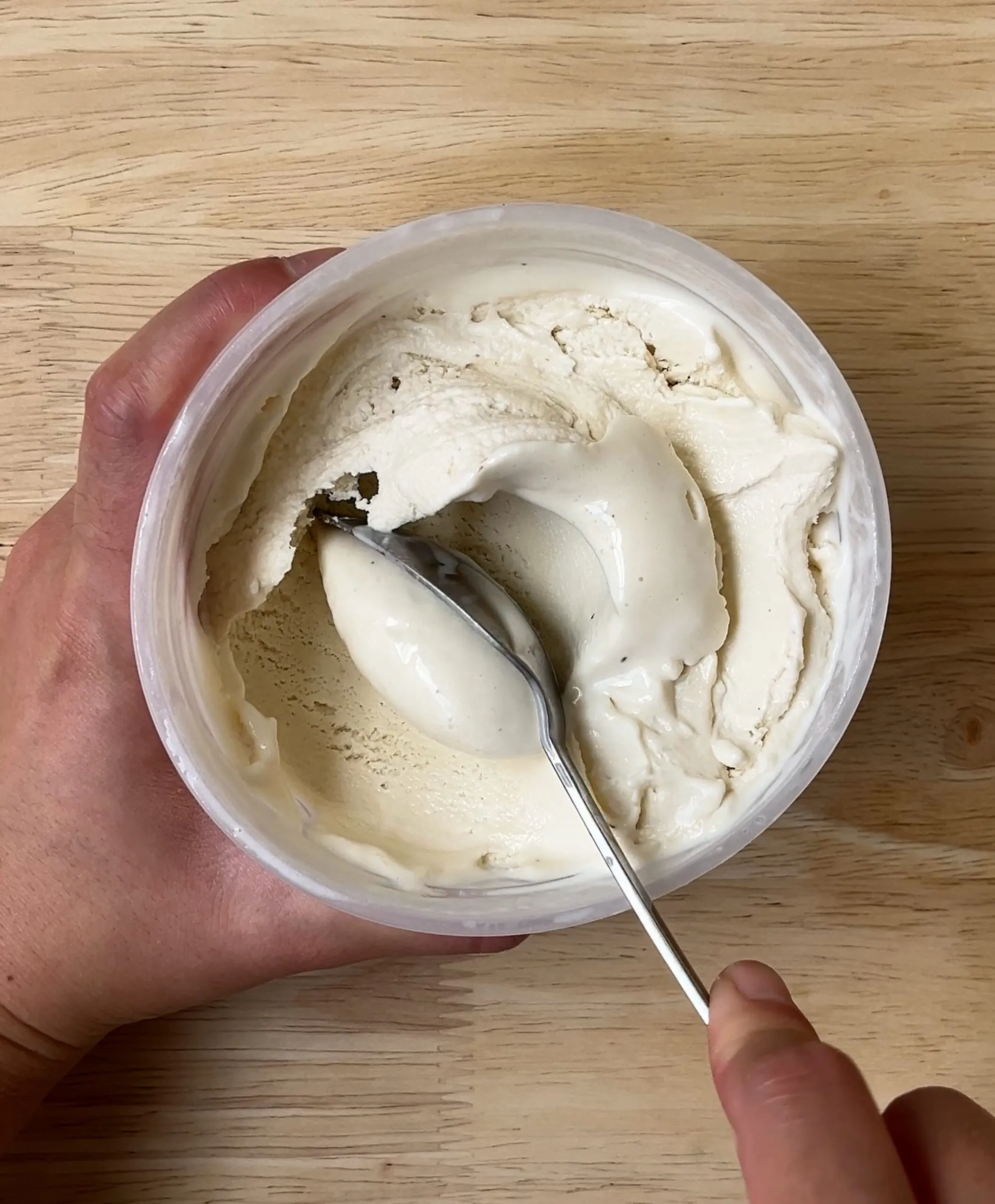
The most common use in dishes is as a powder, freshly ground or steeped into a dairy base such as butter, milk or cream. It can be freshly grated into a butter cookie base or added as a flavor to a panna cotta, creme brûlée or ice cream base. You could even grate it into rice pudding in place of vanilla extract. It can also be infused into liquor such as vodka in a similar way to vanilla extract. 1 tonka bean can flavor up to 30 dishes and apparently it holds it’s flavor when being infused multiple times. Effectively it’s a spice that holds it’s own so is best left to shine on it’s own, not alongside vanilla as that might overpower an overall dish.
Where to from here
Tonka Beans come from trees mostly just grown in wild forest and not farmed or domesticated to meet our needs then it is helpful to examine how this ingredient might not have been ‘cheap’ enough to be needed and banning it was easier to ensure money could continue through channels of spices that benefit the economy and guaranteed income and profits.
In the book Against the Grain - How Agriculture has Hijacked Civilization by Richard Manning there is a consideration to be made between how Tonka Beans are treated today and the rise of sugar during the time of trading companies and colonization:
Sugar gave the homeland cheap food, supported by slave labor in the Caribbean and South America. Its production rested on industrialized plantations that were markets for England's factories. The plantations in turn created wealth that became the capital that financed the industrialization of Britain. It was a system that had nothing to do with the well-being of most of the humans involved and everything to do with raising wealth.
There is a saying that common sense isn’t common and it is important to think about how an agency that holds enough power to storm restaurants or spice shops such as the events in 2006 with the Chicago restaurant Alinea or when Sichuan peppercorns were illegal and spice shops were raided with guns; bans one ingredient when there are other ingredients with a similar level of risk to the public that are freely available. So what does the banning of Tonka beans signify? For most of us, we aren’t taught about food in school. Where it comes from, what to do with it or how to use our common sense when consuming it. So with the busyness of life it can be easy to outsource that knowledge to an agency who might not actually have our full benefit at hand, particularly when pharmaceutical drugs come under the same agency’s oversight.
Btw I’m not saying pharmaceuticals aren’t an essential element in today’s society, most of us require them at some point in our lives to help us live and for some people they simply wouldn’t be alive without pharmaceuticals. However, when the same agency is linked to food and it’s safety and the seemingly unending possibilities for profit from pharmaceuticals, it’s important to be reasonable. An article from politico.com entitled ‘The FDA’s Food Failure’ from 2022 recognizes the issues taking place particularly when you consider how great the profit is when it comes to pharmaceuticals.
The result is that the agency fails to come anywhere close to meeting most American consumers’ basic expectations of government oversight on food safety and nutrition, even as Congress has directed more resources to tackle food safety problems.
An article from late 2025 notes how intrinsically tied together the FDA and Pharamaceutical companies really are.
These criticisms are correct. The agency has been institutionally corrupted by the drug companies it is meant to regulate. Every former FDA commissioner except one since the 1980s has gone on to work for the pharmaceutical industry.
Fear is a helpful tactic to move people. It’s been used throughout human history and human behavior won’t change regardless of how advanced our world or technology becomes so it’s easy to keep the status quo at this point. Tonka Beans have been dubbed ‘the most delicious ingredient you’ve never heard of’, and though there has actually never been a recorded death from consuming Tonka Beans, unlike licorice, for now, the ban remains.
In the west, particularly the nations where colonization came in and bulldozed local knowledge of plants and their benefits for us we can see how the use of Tonka beans isn’t for health benefits, it’s an additive, a flavoring. Whereas to the local peoples who have cultivated this plant for hundreds of years it is a vital part of their lives and so maybe if we viewed it in the same way we would have a more cohesive relationship with it. Honestly, it doesn’t make sense why it is illegal, but as long as it is the tonka bean will be haunted by the fact it could poison us whilst other ingredients that are of similar danger to us are readily available with little fear.
Ultimately it’s up to each of us to educate ourselves, particularly if we aren’t educated around food at school to understand and reason on why we eat what we eat. What makes something we consume healthy, unhealthy. Helps us thrive or delights us. Really that should be the lesson. The joy this sweet seed creates shouldn’t be feared, but we should be aware of it alongside whatever else we consume.
That’s my take on the tonka bean and obviously this is just my opinion, but there is surely a bigger reason that hasn’t been explained as to why Tonka Beans have been banned for over 7 decades. Thank you so much for watching. If you liked this or know someone who would, please like share and subscribe.
See you in the next one, thanks, Ka kite an? and tschüss
YouTube Essay
TIME STAMPS:
- What are Tonka beans?: 1:38
- Path to prohibition: 7:01
- How is it used in baked goods: 15:42
- Where to from here: 17:34
SOURCES:
CHAPTER 1: What are Tonka beans?
- Jean-Baptiste Christophe Fusée-Aublet ref 1: https://repository-naturalis-nl.translate.goog/pub/534955?_x_tr_sl=auto&_x_tr_tl=en&_x_tr_hl=en-GB
- Jean-Baptiste Christophe Fusée-Aublet ref 2: https://www.persee.fr/doc/jobot_1280-8202_2014_num_65_1_1286
- Jean-Baptiste Christophe Fusée-Aublet ref 3: https://plants.jstor.org/stable/10.5555/al.ap.person.bm000000295
- French Guyana drawing: https://www.loc.gov/resource/pga.13697/
- History of the Plants of French Guiana:https://gallica.bnf.fr/ark:/12148/bpt6k1520398p
- The Apothocary circa 1752 by Pietro Longhi: https://www.lucindabrant.com/blog/the-apothecarys-apprentice-in-18th-century-england
- Wikipedia Common: https://upload.wikimedia.org/wikipedia/commons/e/e7/Flore_médicale_des_Antilles%2C_ou%2C_Traité_des_plantes_usuelles_(8260741137).jpg
- Kaapi ingredients: https://kaapiingredients.com/articles-essential-oils/tonka-beans-information/
- Kumaru image - https://stock.adobe.com/uk/images/dipteryx-odorata-commonly-known-as-cumaru-kumaru-or-brazilian-teak-is-a-species-of-flowering-tree-in-the-pea-family-fabaceae-rio-negro-riverbank-manaus-n-amazon-brazil/494507067
- Flowering Cumaru tree: https://www.anywhere.com/flora-fauna/tree/tonka-bean-tree
- Cumaru wood decking: https://www.unbllc.com/cumaru-decking.php
- Cumaru boardwalk: https://www.externalworksindex.co.uk/entry/152803/The-Outdoor-Deck-Company/Cumaru-decking-for-marina-boardwalk-Wood-Wharf/
- Venezuela rainforest image: https://www.landmarc2020.eu/venezuela-indigenous-forestry-management
- Venezuela forest image: https://www.123rf.com/photo_96280305_path-in-the-rainforest-in-venezuela-jungle-scene.html
- Tonka bean in harvester’s hand: https://www.facebook.com/groups/1917452758487025/posts/3804879086411040/
- Harvested Tonka Beans in sack image: https://www.givaudan.com/sustainability/communities/sourcing4good/venezuela-tonka
- Tonka bean in shell and cumaru tree image: https://kaapiingredients.com/articles-essential-oils/tonka-beans-information/
- Liebherr: https://www.liebherr.com/en-gb/fridges-freezers/freshmag/food-a-z/tonka-bean-7813851
- The Atlantic - https://www.theatlantic.com/health/archive/2010/11/the-tonka-bean-an-ingredient-so-good-it-has-to-be-illegal/65616/
- Delicious Bean by Dior: https://perfumesociety.org/hug-bottle-dior-unveils-collection-privee-feve-delicieuse/
- Tobacco Vanille by Tom Ford: https://www.johnlewis.com/tom-ford-private-blend-tobacco-vanille-eau-de-parfum-50ml/p1369742
- Pipe Tobacco: https://www.etsy.com/uk/listing/1299163557/cherry-pipe-tobacco-fragrance-oil-hive
- List of perfumes with Tonka bean: https://www.fragrantica.com/search/?ingredients.EN=Tonka Bean


.jpg)
CHAPTER 2: Path to prohibition
- That's Illegal - Simpsons: https://yarn.co/yarn-clip/6e665267-f694-4f80-9f26-89da6a539064
- That's Illegal - Cheers: https://yarn.co/yarn-clip/7efc8d8b-9a50-483b-86b8-27b00811fadb
- Highly Illegal - Knight Rider: https://yarn.co/yarn-clip/d6ed83cb-054c-4e51-915b-935a4d421f63
- Theodore Roosevelt: https://en.wikipedia.org/wiki/Theodore_Roosevelt#/media/File:Theodore_Roosevelt_by_the_Pach_Bros.jpg
- Pure Food Bill: https://42265766.weebly.com/documents.html
- Food and Drug law 1906: https://en.wikipedia.org/wiki/Pure_Food_and_Drug_Act
- Coca Cola 1919 advertisement: https://www.alamy.com/1919-coca-cola-ad-sold-everywhere-image616401289.html
- Coca Cola coupon and ladies ad: https://www.ikonographia.com/the-coca-cola-history-through-ads-1-1886-1919/
- After Andy Warhol artwork: https://www.roseberys.co.uk/a0583-lot-544083-after-andy-warhol-american-1962-1987coca-cola-offset-lithograph-in-colours
- Coca Cola by Warhol: https://cokeart.wordpress.com/2007/11/07/king-of-pop-art/
- Andy Warhol Green Coca-Cola Bottles: https://whitney.org/collection/works/3253
- Coca Cola Time Magazine cover: https://content.time.com/time/covers/0,16641,19500515,00.html
- Coca-Cola: From pharmacy beginnings to global beverage giant - FoodTalks article: https://www.foodtalks.cn/en/news/54911
- Pemberton Coca Cola bottle: https://kidnappingmurderandmayhem.blogspot.com/2023/01/the-sad-life-of-john-stith-pemberton.html
- Vintage WWII Coca Cola Ad 1942: https://envisioningtheamericandream.com/2013/05/30/on-the-front-lines-with-coca-cola-pt-ii/
- New Coke Fail: https://arabfounders.net/en/coca-cola-new-coke-failure/
- Native Vanilla hanging from the Wild Orange,. Praslin, Seychelles by Marianne North: https://prints.kew.org/products/497-native-vanilla-hanging-from-the-wild-orange-praslin-seychelles-mn-497
- German Chemists who invented synthetic vanilla: https://www.symrise.com/our-stories/150-shades-of-innovation/vanilla/the-big-bang/
- Madagascar poverty: https://documents.worldbank.org/en/publication/documents-reports/documentdetail/099703304212517450
- EU dailly limits: https://www.bfr.bund.de/cm/349/faq-on-coumarin-in-cinnamon-and-other-foods.pdf
- Law banning Tonka from 1954: https://www.ecfr.gov/current/title-21/chapter-I/subchapter-B/part-189/subpart-C/section-189.130
- Quote from FDA around adulteration - https://www.fda.gov/animal-veterinary/resources-you/glossary-terms-related-fdas-regulation-animal-products
- Quote around courmarin from US government: https://www.ecfr.gov/current/title-21/chapter-I/subchapter-B/part-189
- Sichuan peppercorns: https://www.jamesbeard.org/recipes/ground-toasted-sichuan-peppercorns
- Mangosteens: https://en.wikipedia.org/wiki/Mangosteen#/media/File:Mangosteens_-_whole_and_opened.jpg
- JSTOR: https://daily.jstor.org/tonka-bean-the-tale-of-a-contested-commodity/
- Tonka Bean Industry in Venezuela: https://www.jstor.org/stable/41342067?mag=tonka-bean-the-tale-of-a-contested-commodity&seq=2


CHAPTER 3: How is it used in baked goods
- Tonka Bean Panna Cotta: https://www.bbcgoodfood.com/recipes/tonka-bean-panna-cotta-roasted-rhubarb
- Tonka Bean ice cream: https://www.daywithmei.com/tonka-bean-ice-cream/
CHAPTER 4: Where to from here
- Politico article: https://www.politico.com/interactives/2022/fda-fails-regulate-food-health-safety-hazards/
- FDA link to pharmaceuticals: https://cepr.net/publications/more-of-the-same-kennedys-fda-continues-big-pharma-corruption/
- It's delicious - Broad City: https://yarn.co/yarn-clip/ee6afdc7-b8a8-4a59-a7d0-6ec6725e16f8
- It's Delicious - Dracula: https://yarn.co/yarn-clip/60a59795-064b-4675-aa1f-217882667415
- Yum - Schitt’s Creek: https://yarn.co/yarn-clip/fa5a9cc0-1f52-4466-8fd4-d4ed4a62d7ca
- Appreciated sending over custard - A Streetcar named Desire: https://yarn.co/yarn-clip/b4463bca-5fb3-470c-86a6-99a55496e74c
- Enjoying your ice cream - Gilligan's Island: https://yarn.co/yarn-clip/163909d1-deb2-4e24-89d0-48da5d14d6de
Further Sources:
- Image - https://www.salon.com/2025/09/19/meet-tonka-bake-offs-secret-spice/
- BBC - https://www.bbc.co.uk/future/article/20170620-the-delicious-flavour-with-a-toxic-secret
- Camilla Wynne screenshot (licorice and tonka beans) https://kitchenprojects.substack.com/p/kitchen-project-144-all-about-tonka
- Tonka bean close up: https://carrementbelle.com/blog/en/2021/02/24/tonka-bean-perfume/
- Tonka beans image - https://daily.jstor.org/tonka-bean-the-tale-of-a-contested-commodity/
- Meet tonka, “Bake Off’s” secret spice: https://www.salon.com/2025/09/19/meet-tonka-bake-offs-secret-spice/
- One Tonka bean grated image: https://www.foodrepublic.com/2015/02/02/why-you-should-be-cooking-with-tonka-beans/
TikToks:
- @condimentclaire
- @daywithmei
- @chefandressanchez
- @whippedfood