

Added to a slab of dough to create flaky layers. Whipped for chewy, tender cookies or simply whipped until so pale that it coats cakes. Butter is the most often called for fat in bakes.

Table of Contents
Butter in…
Now that we’ve covered all the types of butter, it’s time to consider how butter affects the different types of baked goods it’s usually found in.

Enriched Dough
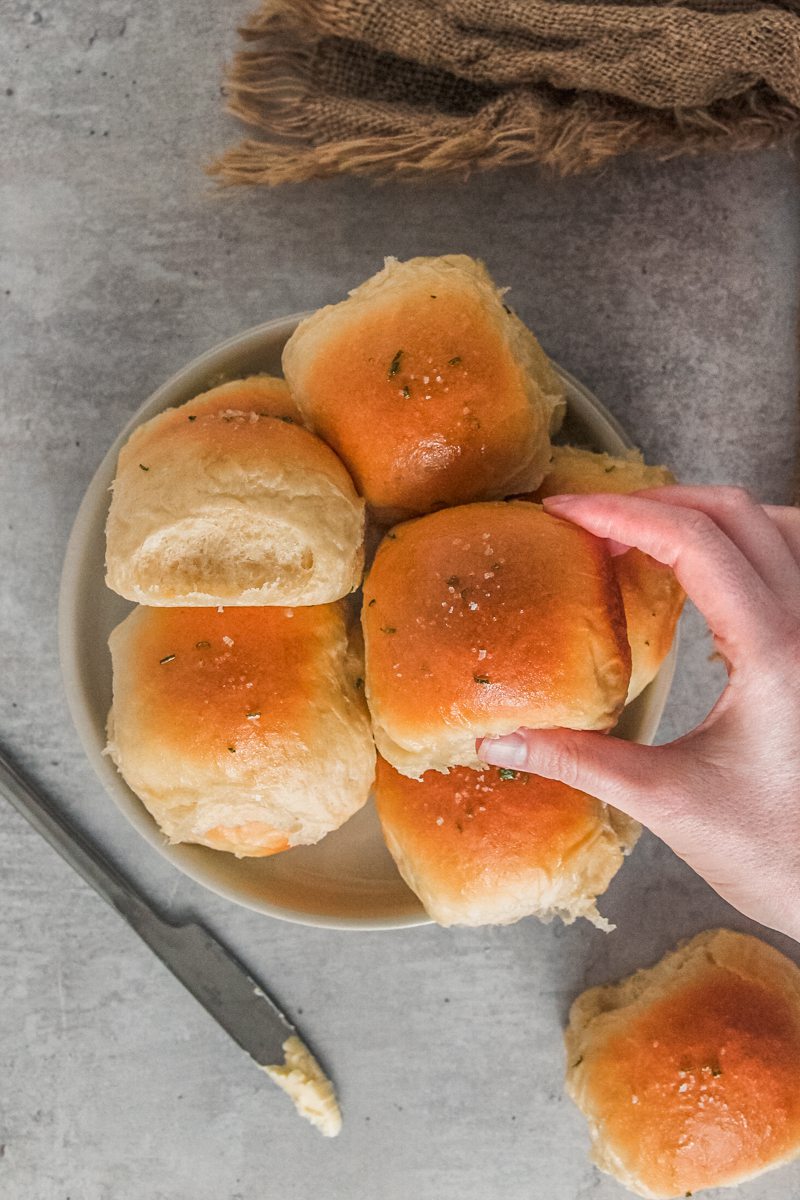
Enriched dough is effectively richer than standard flour, water, yeast and salt dough. It involves some form of fat, such as butter or oil, eggs, milk and/or sugar. Most enriched doughs will include more than one of these such as butter, eggs and sugar or butter, eggs, sugar and milk. If you have ever made or bought brioche, babka, hot cross buns, cinnamon rolls or the ever popular Thanksgiving side, dinner rolls then you’ve had enriched dough bread.
According to The Perfect Loaf
"Butter in bread dough tenderizes the dough, making the soft, pull-apart texture of bakes like brioche, dinner rolls, and Pullman loaves."
"As fat inhibits starch recrystallization, bread that includes butter will stay soft longer, increasing the loaf’s shelf life."
There are effectively three stages to dough development. The first shaggy dough stage where it is a messy mixture, and last is the full smooth ball of dough. The middle phase is where it has been kneaded for several minutes where
"the dough should be strengthened enough to pass the windowpane test before butter is added."
and the
"butter should be added to dough slowly, each small amount mixed in entirely before moving onto the next piece."
There are a couple of things to note with your dough. If you are hand kneading, it is best to warm the milk, even with instant yeast as the dough won’t warm up as much as when using a mixer and dough hook.
And, the temperature of your butter is key. It should be room temperature, but cool to the touch. Butter that is too cold will not form into the dough, but likely tear it. Whilst butter that is too warm will create a greasy mixture that likely won’t be cohesive.
A side note from the article ‘The Butter Mistake That Could Be Ruining Your Brioche’ where
Nathan Myhrvold, founder of Modernist Cuisine notes
"It's no accident that brioche and many enriched breads contain eggs — they have properties that help pull ingredients together"
So if you are using a brioche dough and you’re not vegan and the recipe doesn’t call for eggs you could try an experiment of making two types of enriched dough - one with eggs and one without and seeing the difference this makes in the overall texture and flavor of the bread.
One last element we’ll look at is the quantity of butter in an enriched dough as per the article How to master brioche and unlock a whole world of baking
"There are no hard and fast rules for making brioche, but in general, the butter is typically anywhere from 30% to 70% of the flour weight."
Though some recipes for enriched dough will call for butter percentage as low as 5% or 15%.
As a wee side note here, the percentage referenced is referred to a baker’s percentage, which refers to all ingredients in relation to flour. Flour is always 100% and the other ingredients come in as percentages to that amount. If you have 1 kilo or 2.2 pounds of flour in a recipe and it calls for 500 grams or 1.1 pounds of butter that is technically 50% butter to flour ratio.
Finally before we finish up on enriched doughs
The Butter Mistake That Could Be Ruining Your Brioche notes
"It's also helpful to chill the dough (overnight if you can) before shaping it and putting it in the oven."
Laminated Dough
The term pastry is varied here so I’ll break it down with the different types of pastry. The easiest place to start is with the most famous pastry of all. Laminated dough which creates beloved croissants, pain au raisins and most of the flaky baked goods you know and love.
In the book Understanding Baking - The Art and Science of Baking by Joseph Amendola and Nicole Rees explains (pronounced day-trahm-puh)
"A dough, the détrempe, whose primary ingredients are flour, water, and salt, is wrapped around a block of cool but malleable butter, the beurrage. Puff pastry and Danish pastry consist of roughly equal amounts by weight of butter to flour."
And Samin Nosrat beautifully describes laminated dough in her book Salt, Fat, Acid, Heat
"a flaky dough is wrapped around a large slab of butter. This dough-and-butter sandwich is rolled out and then folded back upon itself in a process called a turn. Classic puff pastry, when turned six times, will have precisely 730 layers of dough separated by 729 layers of butter! Upon entering a hot oven, each one of those distinct layers of butter will turn to steam, creating 730 layers of flakes. It's crucial, when making laminated doughs, that the fat and workspace remain cold so the butter does not melt, though the butter must be soft enough to roll into a slab."
Most home bakers are unlikely to try and make their own laminated dough for homemade croissants. Particularly when you consider how cheap it is to buy a packet of frozen croissants or ready baked croissants.
I’ve personally never made croissants, but I have made Franzbrötchen or German Cinnamon Rolls. These have a laminated style dough and has a requirement of rolling butter out to a large and even square to layer in the dough. The easiest way to do this is to weigh out your butter and place in parchment paper that can be folded over and enclose the butter to the size you need it to create a nice even edge and height to the block. As it’s completely covered you can pop it into the fridge until you’re ready to use.
Over and over again the key feature in creating a great laminated dough is the temperature of the butter and the need to rest the dough. Chef Trung Vu, chef-instructor of Pastry & Baking Arts at the Institute of Culinary Education in New York City advises
"The goal is for it to become flexible when laminating, but not to warm it up and have it melt or leech out of the dough. If your butter warms up too much while you are working with the dough, letting it rest for five to ten minutes covered in the refrigerator can be extremely helpful."
Butter secrets every “Bake Off” fan should know, according to a pastry expert

Often in life when we’re doing something, whether baking, finishing up a task for our job, spending time with people; we are actively aware that we have a time limit to this because there is something else we need to do. Sometimes we’re not fully present mentally. If we choose to make laminated dough, we have to be fully mentally present and also respect the process and the time it’s going to take. So this is something to be mindful of when giving it a go.
In the book Understanding Baking - The Art and Science of Baking by Joseph Amendola and Nicole Rees take a balanced approach and recognize the different types of fats you can use in laminated pastries and how they affect the overall flavor and texture when used
"Although butter is certainly the first choice for great-tasting pastry, it doesn't necessarily make the highest or flakiest pastry. Lard, along with hydrogenated vegetable shortenings and hard margarines designed to be rolled into laminate doughs, possess large fat crystals that contribute to the flaking effect. Lard and shortening have a lower water content than butter, meaning that an equal amount by weight will provide more fat, and therefore create a more tender, flaky product. When cooled, pastry made with shortenings may leave a waxy aftertaste, owing to the higher melting point of the fat. Butter, with its mouth-friendly low melting point, will not."
It’s important to consider what you want to achieve if making your own laminated pastry, so having this wider picture is helpful.
Understanding Baking - The Art and Science of Baking by Joseph Amendola and Nicole Rees
"Working with butter, which has a narrow temperature range for ideal handling, requires more precision, to be sure, but produces superior flavor."
Pie and shortcrust pastry
"She took the butter from its box and opened up its foil wrapper. It was hard and cold. She didn't want to create more washing-up than necessary and she still hadn't located a chopping board, so she sliced it on top of the paper and placed it on the scale."
by Asako Yuzuki, Butter
The key, the absolute key when we speak about butter in pastries for pies, tarts or quiches is cold butter.
In her book Salt, Fat, Acid, Heat; Samin Nosrat runs the gamut on incorporating your butter when making the best pie or shortcrust pastry
"keep butter cold in order to preserve its emulsion and prevent it from interacting with the proteins in flour when making doughs for flaky pastries"
because
"The warmer, and hence softer, your butter, the more readily it will combine with the flour. Because fat inhibits gluten development, the more intimately the two ingredients combine, the more tender — not flaky-a dough will be. To prevent gluten from developing, keep butter cold."
And Paula Figoni in her book How Baking Works suggests
"Whenever possible, work the fat into the dough with your fingertips instead of using a mixer, since mixers quickly over blend fat with flour. Be sure water added is chilled, so it doesn't melt the fat, and chill the dough before rolling."
A lot of professionals recommend pressing butter into the pastry with your fingers because you work quickly to create the right texture before adding in your cold or ice water. In the case of some shortcrust pastries, egg is added to create a more tender dough. Working quickly helps create that tender dough.

Once made, it is best to chill to rest for ideally at least an hour. And as Samin Nosrat says in her book Salt, Fat, Acid, Heat
"Roll out a properly made pie dough and you'll see the chunks of butter. When you slide the pie into a hot oven, the cold pieces of butter, entrapped air, and steam from the water released by the butter, all push apart the layers of dough to create flakes."
Though it is best once rolled out to do further resting as an additional 20-30 minutes chilling before baking can make a huge difference in the flakiness of your pie.
It’s important to mention the classic French shortcrust pastry Pate Brisee which dates back to the Middle Ages and is both
"flaky and sturdy, rather than crumbly."
as per Wikipedia.
And quoting from Paula Figoni’s book How Baking Works
"French chefs achieve this texture through fraisage, a process in which fat and flour are kneaded with the heel of the hand until they are thoroughly blended."
This is the pastry used in dishes from beloved Quiche Lorraine to berry tarts or galettes. It’s as versatile as a standard pie dough, though the resting time is best for several hours or even 24 hours.
Choux Pastry
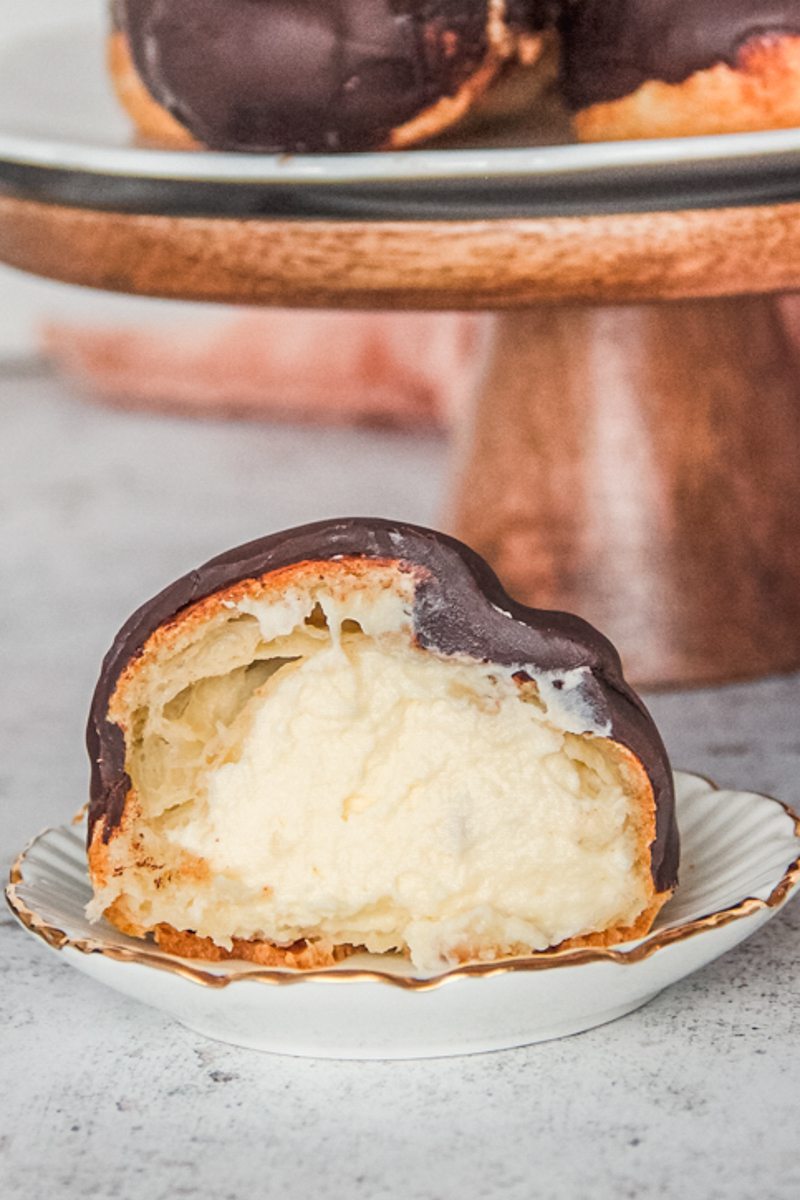
Choux is a completely different type of pastry than a pie or laminated dough. Butter and water are heated together to a boil before swiftly stirring in flour and then eggs to create a smooth dough. It can be baked into a variety of dishes from cream puffs to chocolate eclairs to cheese puffs to name a few.
In the mixing phase, butter helps create a smooth texture between the water and flour whilst adding flavor and color to the baked pastry.
If you want to replace butter in choux, it’s best to try with margarine with fat content above 80% as it’s similar to butter. It should also provide the same structure to the final baked good, though the flavor could well be affected.
Cookies
When speaking about cookies, I’m most specifically speaking about the main types of beloved chewy and slightly crispy on the edges and soft and tender in the center ones.
Most recipes will call for either room temperature or melted butter, though some might call for softened. So let’s define room temperature butter as that definition isn’t clear. What this means is that the butter is cool to the touch and when pressed leaves an indent, but isn’t so soft that your finger goes through the block or slides off it. If a recipe calls for room temperature and your butter is softened, it’s best to pop it back into the fridge for 10 minutes to firm up somewhat.
When you whip butter and sugar - water in the butter will be attracted to the sugar helping to introduce more air whilst the sugar dissolves into the butter to create a really cohesive base to cookies. Most great cookie recipes will require you to whip the butter and sugars first for around 3 minutes, because it takes 2-3 minutes for this reaction of dissolving and fluffiness to happen throughout the mixture.
Room temperature butter alongside room temperature eggs gives cookies that soft texture and the fat contributes to the tender and rich flavor. Whilst spreading the dough evenly during baking for nice uniform cookies. Most often you’ll see a recipe require room temperature butter versus melted and this is because it makes it easier to whip up with sugar and gives the cookies their nice rise. Cookies made with melted butter tend to be flatter and crispier because when butter is melted the emulsion between fat and water is broken and cannot be repaired.
A side note here for butter cookies like shortbread which tends to have a signature texture different to a soft and chewy cookie.
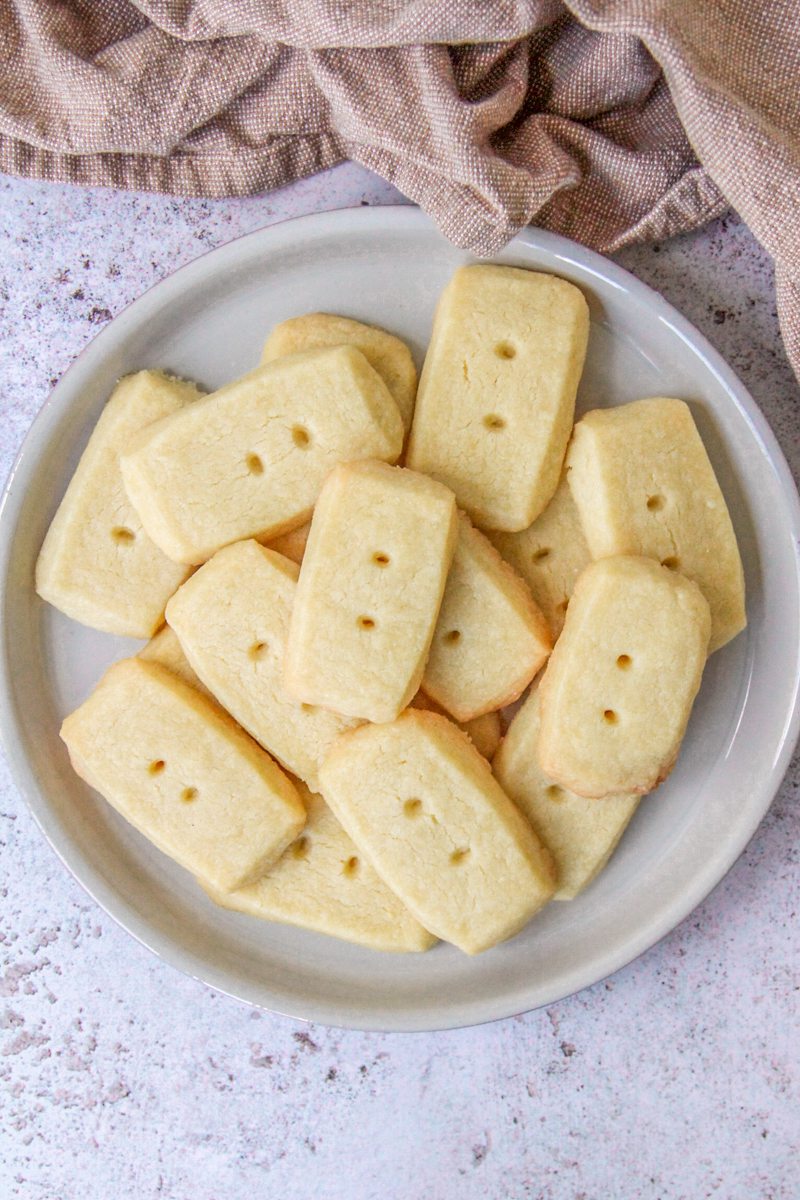
Shortbread has a standard ratio of 3 parts flour to 2 parts butter to 1 part sugar. Though some recipes call for cornstarch also known as corn flour or salt, the overall ratio should still be around the same.
"Many of the shortest recipes, such as shortbread cookies, call for very soft or even melted butter, in order to encourage this now fluid fat to quickly coat individual flour particles, preventing gluten webs from forming. These doughs are often soft enough to press into the pan."
Quoting once again from Salt, Fat, Acid, Heat by Samin Nosrat
Shortbread biscuits are incredibly different from standard cookies in that they should always be incredibly pale and a great shortbread should have a nice smooth texture but somewhat of a crunch and bite which relies almost solely on the butter and sometimes salt to the dough.
Most recipes will recommend you whip the butter and sugar until pale and fluffy, kind of similar to a standard cookie recipe, though some will call for the butter to be melted. According to a Serious Eats article before their recipe for shortbread that
"As cookies bake, the air pockets “begin to swell with steam, a gentle upward draft that helps to hold the dough aloft. When the cookie finally sets, the air’s footprint forms its crumb.”"
And Lowrey foods
"When cooled, the fat re-solidifies, locking in that snap-to-melt texture."
So the texture of the dough, thanks to the minimal ingredients and all that butter means the dough pre-baking should be soft enough to shape and once baked to a light pale color can even be cut into individual pieces meaning it’s still soft. Some would recommend never replacing the butter with margarine, but you do you.
Cakes
"Hoping to ground herself, Rosie closed her eyes and thought of butter, the way other people probably pictured relaxing tropical idylls. Her favorite thing in the world was creaming butter and sugar, watching the way two disparate ingredients come together to form something new. She could picture it in her mind, back in the kitchen at home: the soft pale yellow of the butter, the old wooden spoon, and the cracked brown mixing bowl. Butter was magic. The starting point for cookies and cake and pie and muffins and everything good.”
by Stephanie Kate Strohm, Love à la Mode
Round cakes, layer cakes, loaf cakes - most cakes call for butter as it’s base fat, particularly if it’s a vanilla cake base where butter is a complimentary ingredient to the texture and flavor.

Like with pastry, the temperature of our butter matters with most cake recipes calling for room temperature butter.
Quoting from Salt, Fat, Acid, Heat by Samin Nosrat
"butter at room temperature is more pliable, allowing air to be worked into it to lighten cakes, or to combine more readily with flour, sugar, and eggs for tender cakes"
Like the temperature of our butter, the speed of whipping is essential as found in the book On Baking - A Textbook of Baking & Pastry Fundamentals by Sarah Labensky, Priscilla A. Martel & Eddy van Damme
"For butter cakes, the fat should be creamed at low to moderate speeds to prevent raising it’s temperature."
If our butter is too soft or we whip too swiftly and warm it too much it results in the air bubbles we create during that whipping phase to collapse and make heavy or soggy cakes.
Most cake recipes that have a creaming method will call to whip the butter with the sugar which is explained by the Institute of Culinary Education
"This emulsion is essential for creating stability in the dough. It allows for steam and carbon dioxide to be trapped in the batter as it is bakes, which causes your cake to rise. The butter also helps to create a light and tender texture in cake batter."
When making a cake it is important to mix the butter well, particularly if it is a cake that relies heavily on the butter for flavor and texture - like a butter cake, so if a recipe calls for you to whip for 3 minutes, don’t try to do it for less because it can affect the overall outcome.
The same temperature requirement also applies for recipes where you whip the butter into the dry ingredients - a process called ‘reverse creaming’
"Basically, by coating the recipe’s flour with butter, this method limits gluten development. Too much gluten development can make cakes tough, so this buttery coating acts as a safety net to prevent that from occurring with too much mixing."
Quoting from King Arthur Baking
There are so many layers to how butter affects a tender vanilla or plain cake’s flavor and texture. It’s the best fat for those styles of cakes whereas most chocolate, zucchini or carrot cakes for example, will call for oil as that’s the best fat for those denser cakes that require hydration and is complimentary to these ingredients.
Additionally, as the article Why We Love to Bake With Oil Instead of Butter (Sometimes) by Epicurious notes
"A butter cake will firm up in the refrigerator, so for the best taste and texture you have to let it come to room temperature, which can take over an hour. Oil cake? It's pretty much good to go straight from the fridge."
This can be helpful if you’ve found a great recipe, but want to use butter in place of oil or vice versa but factoring in how it’ll be served etc might make you re-evaluate. Though it’s always best to make a recipe as recommended for best results.
Lastly, one additional point to note when we are making loaf cakes you might have noticed that some bakers, myself included, place a line of butter down the center of the loaf prior to baking which is explained in the Salon article The “Bake Off” guide to loaf cakes
"This allows it to stay moist there and it will leave you with an even central crack in your cake where all the expansion happened."
Meaning you’re guiding the cake how to rise nice and evenly during the baking phase for a more aesthetic dessert. If you’re topping with frosting, you could forgo that step though.
There are a few factors to consider when using butter or oil - firstly, if butter is called for, but it’s melted then it’s doing the job of oil in the mixing stage, but adding the perfect complimentary flavor once baked. If the recipe you have calls for butter, but you want to use oil or vice versa, it’s better to find a specific recipe that uses the fat you prefer, instead of amending and risking the recipe not turning out.
Buttercream
There’s a whole episode I want to do on buttercreams because there is so much to say, but a key of buttercream is, you guessed it…butter!
Buttercream tends to be made with room temperature butter as it needs to be whipped to form a nice cohesive smooth buttercream as Paula Figoni notes in How Baking Works
"the best temperature for creaming butter is generally within the narrow range of 65°-70°F (18°-21°C)."
This is to say that you want the butter to be room temperature or softened, but not too soft
"that it appears melty or overly greasy on the exterior."
quoting from Erin Jeanne McDowell there.
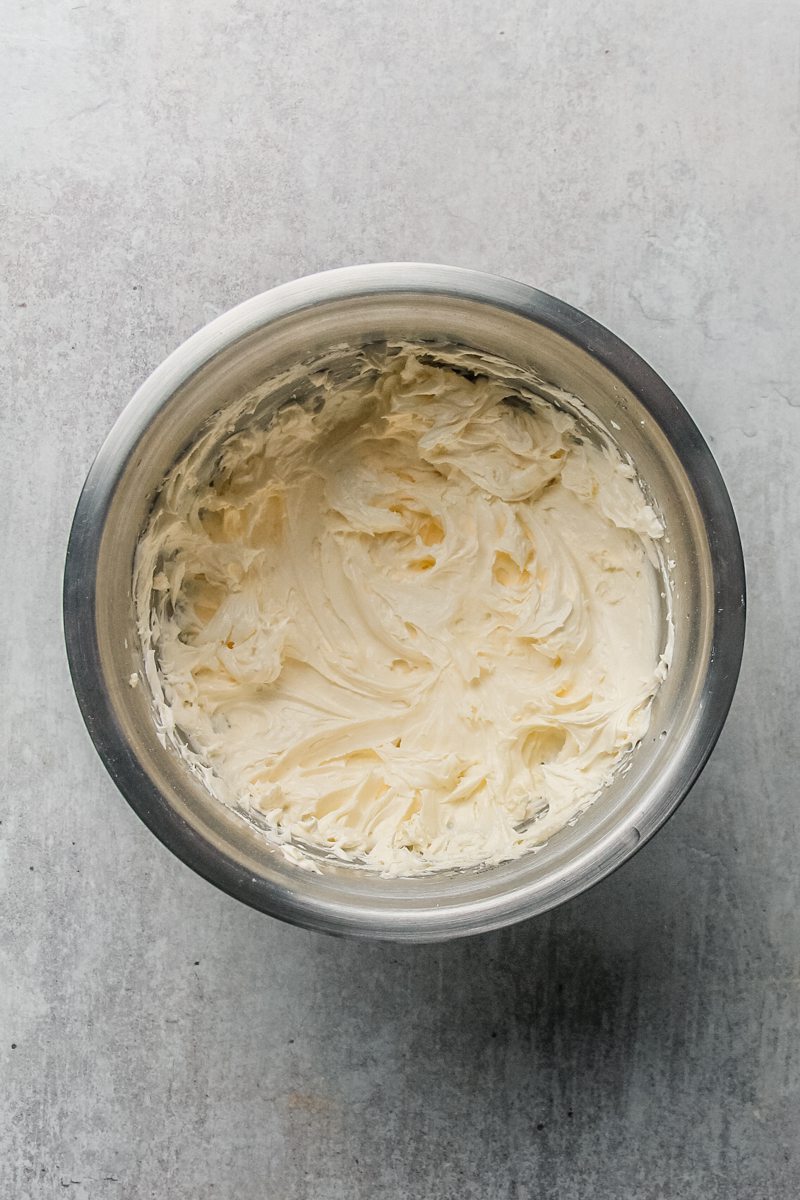
Most buttercreams rely on other ingredients to give them stability as butter’s minimal temperature window means that it can’t handle warmer temperatures when left out. It’s important to consider the context your buttercream is needed for. Such as American buttercream is fine on top of cookie bars or brownies for a potluck. Whereas Swiss Meringue buttercream is ideal for decorating a wedding cake that will be consumed several hours after being taken out of the fridge, for example.
The beauty of buttercream is that it can be made ahead and stored in an airtight container in the fridge for up to 1 week or frozen for up to 3 months for later use.
If you want to make buttercream without butter, it’s best to source a recipe using margarine or without it versus amending a buttercream recipe you already have. Particularly as buttercream tends to use a lot of resources such as egg whites or sugar, by trialling something else.
Final thoughts on butter in baking
“It is as sweet as early grass butter in April.”
by Herman Melville, Moby Dick
Whenever we use butter in our baking we want to consider what it’s effects are.
If we happen to have sweet cream butter and are using it in a cake that will include fruit in the batter and be topped with a frosting, it’s lower fat content and flavor will be masked by the other ingredients.
Whilst if we’re making a pie pastry or vanilla cake, we probably want to source a higher fat content butter. Or understanding that browned butter has a lower moisture content than regular butter results in crumblier textures in our baking, but that isn’t necessarily a bad thing when a recipe has already been tested with it and calls for it. Cultured and whipped butters should absolutely be slathered across bread, though cultured can be used in some baking and whipped shouldn’t really be used in that way. The fact that clarified butter and ghee act like oil in baking means we can try recipes with these ingredient in place of oil, though we need to be mindful we are amending a recipe because they’re almost never called for. Lastly, if you happen to burn butter, fine strain those burnt bits out and keep it for a chocolate or ginger dessert, don’t feel the need to toss it.
It’s also important to consider how it affects a recipe when we remove it as an ingredient as stated in the book How Baking Works by Paula Figoni
"When fats are removed from baked goods, flavors become disjointed and the baked good doesn't taste as rich and full favored. Fats probably affect taste perception because many flavors dissolve in them."
If you want to make a recipe without any type of fat, I’m going to suggest the same advice I keep giving - find a recipe that you can follow that meets that requirement. There are so many recipes online that you don’t need to try amending your favorite and risk wasting time and ingredients for a result that doesn’t have guaranteed success.
Fats and our bodies
Once the buttering is done, something that is to be set about with extreme generosity, the bun must be placed back under the grill in order for the butter to melt. Perfection is when you manage to catch the bun just as the butter has formed a golden pool yet retains a patch of glistening, soft-but-not-yet-liquid butter at its centre. A shining, golden coin in the middle of your bun.
by Nigel Slater, A Thousand Feasts: Small Moments of Joy… A Memoir of Sorts
Obviously butter is a fat and we’ve discussed at length the many ways it affects the baking recipes it’s used in. Though it’s important to recognize that fat is overtly characterized as a villain in most societies and most of us have little to no understanding of how it plays into our biological makeup to make us healthy. This is particularly important with the rise of non FDA approved Ozempic and other GLP-1 weight loss drugs also known as semaglutides.
Most of us have only lived in a world where thin is the epitome of beauty…well thin, but not too thin as one of the girl’s in my high school found for her naturally thin frame and the incessant name-calling she received. The attitude of thin = hot isn’t actually how it’s always been as found in this article thanks to the Culinary Institute of America
"Prior to the Progressive Era (1897-1920), thinness was understood to be an issue tied to poor health and poverty, and large bodies symbolized wealth and good health. By the start of the 20th century, however, thinness was both idealized and tied to a “national” morality that promoted self-control and the regulation of one’s body."
Culturally, regardless of our natural body’s frame, the genes that dictate our bone size, features and skin color, we must always want to be lean, eat less and/or feel guilt around food. At least that’s the message we find everywhere. Add in the fact we are well aware that (koh-mor-BID-uh-teez)
"The global epidemic of obesity and its increasing rate puts a great economic burden on societies; medication-based treatment of obesity with drugs such as semaglutide may halve the costs, depending on the other comorbidities. However, some studies came to the conclusion that the use of semaglutide just for weight loss is not cost-effective"
Quoting there from a National Library of Medicine article Semaglutide in the Real World: Attitudes of the Population
And a Brown University article What are Healthy Fats and Why Do You Need Fat in Your Diet? advises us that
"Fat is a necessary part of our diets and is required for many functions in your body. In fact, fat is needed to absorb and store key vitamins. Vitamins A, D, E, and K all require dietary intake of fat for proper absorption and storage."
Because of the dialogue around consuming fats or the societal views on overweight individuals all being negative, which is very much reflected in statistics with people who are overweight being less likely to be hired, promoted as well as a slew of other sociological elements. When some people actively avoid consuming any fat in their diet it can lead to
"poor eye sight, bone density issues, problems with the nervous system, poor skin health, and bleeding risks."
The lesson here is pretty clear that we need it as human beings for everyday function, but as part of a balanced diet. Which sometimes feels like a cop out to say because it’s a statement that can have multiple meanings because no two people’s balanced diets are the same.
I personally hate the sentiment of food being seen as bad or even being used as a reward, because it’s essential to life. I know the use of the word ‘hate’ there is incredibly strong, but there is no other way to cut through the incorrect learning most of us have been trained with around food being something to hold against us or used to celebrate us.
When food is associated beyond it’s necessity for us it can be quickly manipulated in a negative way. Such as, if someone tells you to reach for ‘low-fat’ anything you should ask yourself why that is? Why is something ‘low-fat’ considered better than regular fat? Particularly when so many low-fat products contain higher levels of sugar than a regular fat product.
We live in a capitalist world where messages around food are directed at us with studies and articles that don’t always paint a full picture of a balanced diet. Ultimately, if we can train ourselves to lean into eating more fruits, vegetables and legumes as well as organic meats and tofu then that hot cross bun on a Saturday morning slathered with butter isn’t going to be a problem.
In the Lithub article What We Know (and Don’t Know) About Fat
"Fats direct and guide critical aspects of mammalian biology, activating or suppressing genes that govern metabolism and immunity. They can influence whether we are happy or sad, thinking clearly or wading through mental fog. And in terms of the fats in meat and dairy, it matters what the animals in the human diet consume—for what they eat, we become."
Ultimately if we’re consuming butter, we want it to come from animals that are living their best lives - not just for our consumption, but also for them to be so happy they produce more milk and that is most often not done on an industrial scale, but rather with smaller farms who know their animals and can care for them properly.
In an ideal world we would all have access to suppliers who provide those minimal things for the animals which would only make our food taste that much better, because the product is going to be that much better. But with the reality of food deserts becoming ever more present - where people are lucky if they can access food stores actually selling fresh produce as most of the major chains who run stores in these areas are likelier to only selling food in refrigerators, we all just have to work with what we’ve got and remember that food is neither villain nor hero.
Butter as a Status symbol
I shouldn't think even millionaires could eat anything nicer than new bread and real butter and honey for tea.
by Dodie Smith, I Capture the Castle
Want butter color cookware, a mixer, a scent, clothing, a bag and actually, in London, England you can go to one of the best bars in the city and drink a cocktail made with butter - no lies, I’ve had it on more than one occasion!

It seems only too perfect for this final chapter to be about butter as a status symbol; particularly with the quiet rise it’s had in the 2020s. I say quiet rise because it’s not until we really stop and pay attention to the way it has entered so many areas of society that butter has become something we should crave, show off and create into something where it’s suddenly a statement. We had butter boards in 2022, butter sculptures at weddings in 2024 and in 2025 butter was the color of the year appearing seemingly everywhere we looked. Apparently some mother’s are also feeding their babies sticks of butter and this all speaks to it being an ingredient that references you as having a status, particularly a sense of wealth.
In a world where we all aspire to something more - even if that something more is the basics of life because food is so expensive; it becomes clear how easily it can be turned into a status symbol.
This is really notable with the increased cost of butter going from being affordable to literally being an item of luxury. During Covid it became apparent how striking the cost increase was when a discounted block of butter was suddenly equal to what been the full cost price pre Covid. Add in the shrinkflation where a standard block has most likely gone down in size whilst the price has either stayed the same or risen.
Food as a status symbol is nothing new, but in our over saturated world of advertising it’s become more obvious at how brands and the wealthier classes can use their excessive wallets to use food as props or inspiration for the few to enjoy whilst the tightened wallets of the many go without or have to use something like Klarna or afterpay to buy groceries with.
As mentioned in the article This Summer, The Vibe Is...Butter
"In a world where everything is commodified, access to scarcity is one of the only remaining luxuries."
In the Taste article Butter: The Softest Flex, Flora (whose name matches the subject matter perfectly) writes
"Consumer reports point to a heightened interest in premium butter as part of the “little luxury” movement–a pursuit of small, affordable indulgences. And marketing budgets are increasing accordingly."
Why is this ingredient having such a moment in the 2020s?
There are layers to the reasons, from less disposable income to comfort factor and nostalgia. Most of us grew up eating toast slathered with butter and jam. It’s simplicity tells us that no matter what’s happening outside our door or how little control we have on the state of the world, we can still reach for something we know will fill our bones with comfort.
This is also reflected in the fact Millennials and Gen-Z will die poorer than previous generations, but are the largest to splurge on the luxuries of food. We understand how even the private act of what we eat is no longer a private activity. Everything we do, consume and own or even rent tells the world who we are both in real life and on our curated online lives.
Barbara Kafka, food consultant and cookbook author puts it’s perfectly
"The food you purchase is a reflection of your position in society"
and
"It's a way to upgrade the image of yourself."
In the article Why Butter Became 2025's Most Unexpected Food Trend we also see how butter plays into multiple elements whether we’re aware of it or not.
"It is a color that signals comfort, tradition, and a specific vision of home."
"The aesthetic and the ingredient reinforce each other, creating a feedback loop in which butter becomes both a visual and culinary signifier of a particular kind of abundance."
The theory holds that consumers turn to affordable luxuries during uncertain times as small acts of self-care and control.
"Butter offers something rare: abundance without apology. It is one of the few indulgences that feels both attainable and justified—a full-fat "yes" in a landscape of expensive "no's.”"
I’ve already mentioned in my Bakery video that with the cost of living being what it is we’re more likely to spend the money we have for joy on smaller purchases like goods from independent bakeries or on ingredients such as butter.
A Medium article From Quiet Luxury to ‘Quiet Eating’: How Food became the new status symbol
"The poorest households now spend 50% more of their disposable income on food than the richest (Resolution Foundation, 2023), yet online, we’re told that the real secret to good eating is effort, not money."
Being able to afford butter, is the same kind of marker as was sold by the media a few years ago for people to cook their own meals. This involves having time and money, something those with less disposable incomes tend to have less of because they need more jobs to keep a roof over their head. The richest 1% or 3,000 people (Taylor Swift included) holds more wealth than the remaining eight billion people.

Butter being a marker of social status is particularly relevant when we consider two events that took place in 2025. One was a trip for influencers to Ireland for KerryGold and another was held at 1 Hotel in San Francisco in August 2025. Plugra Butter is one of the most popular butters in the United States for professionals or home bakers thanks to its higher quality. On this particularly day according to their own Instagram they
"didn’t throw a party, we launched a concept…and committed to it"
Some lucky influencers were invited, and one of the centerpieces included a butter cake stacked high to show that they have so much money to spend for an event that caters to a chosen few. They retail between 20%-50% higher than standard American butters by the way and obviously are a butter brand so can do whatever they want with their product and that money. But Madisyn Brown recently did a great video ‘food is the new quiet luxury’ and sums it up pretty well
Or let them eat butter.
We don’t have to be rich to slather a piece of bread with this ingredient that is the type of hazy yellow you get at the height of summer evening. Really, what is life without some bread and butter to remind us of the beauty of simplicity in making us feel rich regardless of what’s in our bank account.
Okay, I think that is all I have to say on butter, though, I’ve probably left a couple things out, do let me know your thoughts in the comments below. If you’ve watched this whole thing through, thank you so much. Researching and writing this episode almost broke me. I described it to friends as drowning in butter because there is just so many facets to this unassuming ingredient. So I hope you learned something or enjoyed this episode. Please like share and subscribe so I can make more episodes like this about ingredients and desserts.
In the meantime, thanks so much for watching, see you in the next one. Ka kite an? and tschüss
Video Essay
TIME STAMPS:
- Intro 0:00
- Butter in…Enriched Dough: 1:12
- Butter in…Laminated Dough: 5:11
- Butter in…Pie and shortcrust pastry: 10:02
- Butter in…Choux Pastry: 12:55
- Butter in…Cookies: 13:40
- Butter in…Cakes: 17:34
- Butter in…Buttercream: 23:12
- Final thoughts on butter in baking: 25:24
- Fats and our bodies: 26:39
- Butter as a Status symbol: 33:57
SOURCES:
BOOKS
- SALT FAT ACID HEAT Cover: https://www.saltfatacidheat.com/
- Understanding Baking- The Art and Science of Baking: https://www.hatchards.co.uk/book/understanding-baking/joseph-amendola/9780471405467
- How Baking Works: Exploring the Fundamentals of Baking Science: https://www.goodreads.com/book/show/124039986-how-baking-works?from_search=true&from_srp=true&qid=U1e1jeKBYP&rank=4
- On Baking - A Textbook of Baking & Pastry Fundamentals book: https://www.biblio.com/book/baking-3rd-edition-labensky-sarah-r/d/1721051342
CHAPTER 1: Butter in…Enriched Dough
- The perfect loaf: https://www.theperfectloaf.com/what-does-butter-do-to-bread-dough/
- The Butter Mistake That Could Be Ruining Your Brioche: https://www.chowhound.com/1992219/brioche-butter-mistake/
- How to master brioche and unlock a whole world of baking: https://www.kingarthurbaking.com/blog/2022/09/01/how-to-make-brioche-maritozzi
CHAPTER 2: Butter in…Laminated Dough
- The butter's too cold! The butter is too cold!: https://yarn.co/yarn-clip/e5ed7b7b-5a35-4dfa-a906-7b6d8a39791f
- Brod & Taylor butter in parchment paper: https://uk.brodandtaylor.com/blogs/recipes/how-to-level-up-your-lamination?country=GB
- All about laminated dough: https://www.theculinarypro.com/laminated-dough
- Rough puff pastry: https://bakingwithbutter.com/rough-puff-pastry/
- Homemade croissants: https://bakingwithbutter.com/homemade-croissants-step-by-step/
- Rolling croissant: https://www.olivemagazine.com/recipes/baking-and-desserts/croissants/
- Butter for croissant dough: https://www.foodandwine.com/cooking-techniques/how-make-all-butter-laminated-croissant-dough
- Pastry: https://leitesculinaria.com/77947/recipes-sweet-pastry-dough.html
- Butter secrets every “Bake Off” fan should know, according to a pastry expert: https://www.salon.com/2024/10/20/butter-secrets-every-bake-off-fan-should-know-according-to-a-pastry-expert/
CHAPTER 3: Butter in…Pie and shortcrust pastry
- Making Apple Pie: https://www.seriouseats.com/perfect-apple-pie-recipe-double-crusted-thanksgiving-dessert
- Steak, cheese and mushroom pot pies: https://recipes.co.nz/recipes/steak-cheese-and-mushroom-pot-pies/
- Cornish Pasty: https://cookidoo.co.uk/recipes/recipe/en-GB/r82865
- Pate Brisee method: https://www.simplyrecipes.com/recipes/all_butter_crust_for_sweet_and_savory_pies_pate_brisee/
CHAPTER 4: Butter in…Choux Pastry
CHAPTER 5: Butter in…Cookies
- Shortbread Cookies: https://www.seriouseats.com/shortbread-cookie-recipe-one-bowl-quick-and-easy-8623247
- From Dough to Delight: How Butter Transforms Shortbread: https://lowreyfoods.com/blogs/news/from-dough-to-delight-how-butter-transforms-shortbread
- Do you want some shortbread?: https://y.yarn.co/1791f14e-4667-4897-9277-f1ec2a9a9145.mp4
CHAPTER 6: Butter in…Cakes
- What is reverse creaming, and why does it make great cake?: https://www.kingarthurbaking.com/blog/2022/03/09/what-is-reverse-creaming-and-why-does-it-make-great-cake
- Why We Love to Bake With Oil Instead of Butter (Sometimes): https://www.epicurious.com/expert-advice/why-we-love-to-bake-with-oil-instead-of-butter-sometimes-article
- Most cake recipes will call for room temperature butter: https://ourworldindata.org/rich-poor-working-hours
- The “Bake Off” guide to loaf cakes Salon article: https://www.salon.com/2024/10/26/the-bake-off-guide-to-loaf-cakes-secrets-from-a-pastry-professional/
- Culinary Institute of America: https://library.culinary.edu/clarifyingbutter/butter
CHAPTER 7: Butter in…Buttercream
- All about Buttercream: https://food52.com/story/16142-all-about-buttercream-how-to-make-6-different-types
CHAPTER 8: Final thoughts on butter in baking
CHAPTER 9: Fats and our bodies
- What We Know (and Don’t Know) About Fat: https://lithub.com/what-we-know-and-dont-know-about-fat/
- A systematic comparison of sugar content in low-fat vs regular versions of food: https://pmc.ncbi.nlm.nih.gov/articles/PMC4742721/
- Yes, You Can Still Be Fired for Being Fat: https://www.nysenate.gov/newsroom/in-the-news/2022/brad-hoylman-sigal/yes-you-can-still-be-fired-being-fat
- Research shows that half of employers are ‘unlikely’ to hire job seekers who are overweight: https://www.vercida.com/uk/articles/research-shows-half-employers-unlikely-hire-job-seekers-overweight
- Semaglutide in the Real World: Attitudes of the Population: https://pmc.ncbi.nlm.nih.gov/articles/PMC12452689/
- Obese Women Make Less Money, Work More Physically Demanding Jobs: https://www.npr.org/2014/11/08/362552448/obese-women-make-less-money-work-more-physically-demanding-jobs
- Fat people earn less and have a harder time finding work: https://www.bbc.co.uk/worklife/article/20161130-fat-people-earn-less-and-have-a-harder-time-finding-work
- What are Healthy Fats and Why Do You Need Fat in Your Diet?: https://www.brownhealth.org/be-well/what-are-healthy-fats-and-why-do-you-need-fat-your-diet
- Low fat food will make you fatter: https://www.motionfitnessbali.com/low-fat-food-will-make-you-fatter/
CHAPTER 10: Butter as a Status symbol
- Butter scent: https://www.clueperfumery.com/products/dandelion-butter
- Butter cocktail: https://www.instagram.com/p/C6ZJuMZMZ5S/?hl=en
- Butter: The Softest Flex: https://tastecooking.com/butter-the-softest-flex/
- KitchenAid Butter Mixer: https://www.kitchenaid.co.uk/mixers/medium/859711695750/mixer-4-7l-butter-artisan-5ksm195psbbt-butter
- This Summer, The Vibe Is...Butter: https://coveteur.com/summer-of-butter-beauty-fashion-advertisement
- Why Butter Became 2025's Most Unexpected Food Trend: https://www.forbes.com/sites/stephaniegravalese/2025/12/08/why-butter-became-2025s-most-unexpected-food-trend/
- Coupons Required by Leonora Kathleen Green artwork: https://artuk.org/discover/artworks/coupons-required-6017
- Mound of Butter by Antoine Volllon 1875 - 1885 artwork: https://www.inka.world/blogs/the-lunch-club/the-most-iconic-food-art-in-history
- Is it time to wear butter yellow?: https://www.nytimes.com/2025/03/04/style/butter-yellow-clothes-accessories-spring-fashion.html
- From Quiet Luxury to ‘Quiet Eating’: How Food became the new status symbol: https://medium.com/@subtextjournal/from-quiet-luxury-to-quiet-eating-how-food-became-the-new-status-symbol-33889f318726
- Pure Food: The Status symbol of the Decade; Who buys it? The Affluent and the Aware: https://www.nytimes.com/1986/04/02/garden/pure-food-the-status-symbol-of-the-decade-who-buys-it-the-affluent-and-the-aware.html
- BUTTERED TOAST, PLEASE: https://yarn.co/yarn-clip/31860265-ee4b-47bf-929f-987bf47909bb
- Billionaires now hold more wealth than 99% of ALL countries: https://www.thecanary.co/global/world-analysis/2025/04/07/billionaires-wealth-2025/
- Time Poverty: the Rising Cost of Time in an Unequal World: https://humanact.org/time-poverty-the-rising-cost-of-time-in-an-unequal-world/
- Oh, God, I love butter sauce. There's nothing bad about it: https://yarn.co/yarn-clip/05cc780c-cb4f-4100-8d31-9c766b729a38
- Where's the butter?: https://yarn.co/yarn-clip/9b685c6b-2259-4015-b8aa-c037a2142d68
- Reformation dress: https://www.thereformation.com/products/britney-satin-dress-es/1317419BTT.html?lang=en_GB
- Parents Are Feeding Their Babies So Much Butter: https://www.thecut.com/article/babies-butter-instagram-tiktok.html
- Madisyn Brown video Food is the new quiet luxury: https://www.youtube.com/watch?v=zg4l_Wp5hxs
MUSIC
Silent Waves
Music by: Bensound.com/free-music-for-videos License code: GEFOG2QAX37RXYY7 Artist: : Nick Petrov
Hearty
Music by Bensound.com/free-music-for-videos
License code: B1B7YGQQ7E8UIUM0
Artist: : Aventure
Source Damour by Arthur Marie Brillouin
Leave a Reply