

Who we are is defined in the way we show up on social media. What we’re holding, consuming, wearing, the soundtrack we choose. We live in a world of trends from fashion, interiors to food and drink. Even if we don’t show up on social media, that also says a lot about who we are. Whilst I focus mainly on baking history and science in these videos. This is going to be less about using matcha in baked goods and more about the rise of this powdered tea.

Table of Contents
There have been a number of videos made about matcha, but lots of them haven’t gone into the history or science of the grading and so that is what I’m doing today. As well as considering whether Matcha provides actual health benefits? And what our obsession with this product is doing locally. Before we get into it, I’m not going to go into the process of making a cup of this tea. It feels like virtually every video of matcha on TikTok fills that need, but I hope you stick around anyhow.
From China to Japan to us
The city of Uji, located on the outskirts of Kyoto, includes the Nintendo museum and is the home of Matcha, but how did this come to be?
We begin in China where tea has been an intrinsic part of the culture for thousands of years.
"The origins of matcha can be traced all the way back to the Tang Dynasty in China. The Tang Dynasty spanned the 7th – 10th centuries. During this time, the Tang Dynasty steamed tea leaves to form into bricks, making their tea harvests easier to transport and subsequently trade. These tea bricks were prepared by roasting and pulverizing the leaves then mixing the resulting tea powder with water and salt."
As per the article The History of Matcha
The trick there to add salt shows that people knew, even then, that salt helps offset bitterness. Often something that can put some off matcha or why so many people drink matcha with a portion of sugar or flavored syrups, because of that bitterness.
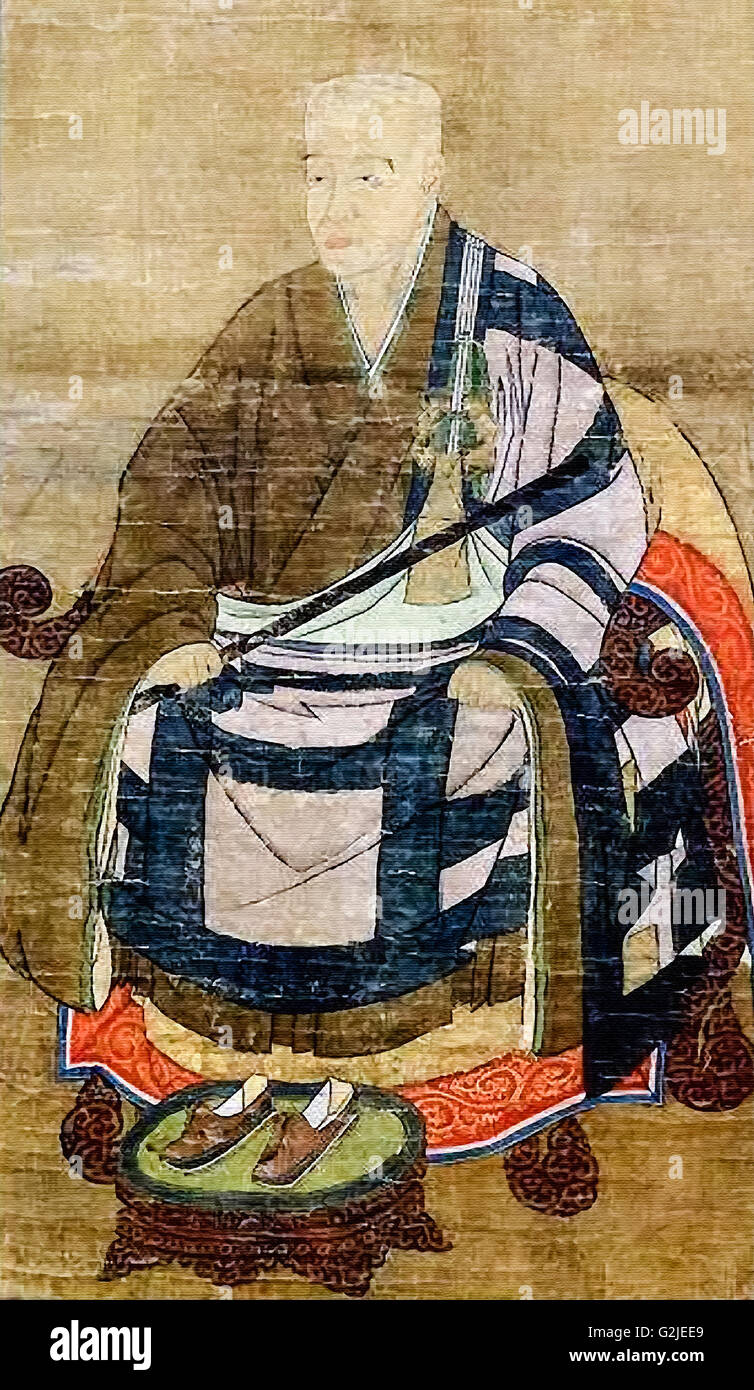
How it came to the island nation of Japan all comes down to one man. His name was My?an Eisai (pronounced Myoh-ahn Ey-sye) and his introduction to Matcha was during his time in China whilst furthering his studies as a Buddhist Monk. Where he also extensively studied tea which led My?an to pack seeds from tea plants before returning to Japan.

Eisai planted these seeds
"in Mount Sefuri, on the border of Fukuoka and Saga prefectures. He thought that this place looked similar to Mount Tiantai, so it was a suitable place for the tea plants to grow."
Mount Tiantai is where Eisai had called home during his time in China so it makes sense why he would plant the seeds he had in this location. Though funnily enough, this location is not the home of Matcha today. Eisai also gifted his friend, a fellow monk named Myoue Shounin (pronounced Myoh-eh Shoh-neen) some of these tea plant seeds and Myoue
"planted the seeds near the temple, and this was the beginning of tea in the region of Uji."
From the article Eisai: The Monk that Propagated Tea Culture in Japan. We learn that he didn’t just bring back enough seeds to grow the tea for himself and some friends, but
"There’s a written account from 1214 where Shogun Minamoto was suffering from a hangover, and Eisai gave him tea and also his book: Kissa Yojoki." (pronounced Kee-sah Yoh-jo-key)
"The book talked about the health benefits of tea, how to cultivate it, and how to prepare it, among other things."
"He also detailed the preparation and consumption of powdered tea (matcha). Rather than considering it a spiritual beverage, Eisai presented tea as a health elixir, stressing that its bitter taste was beneficial to the heart and improved one's overall physical well-being."
Quoting there from the book Green with Milk and Sugar - When Japan filled America’s tea cups by Robert Hellyer.
Eisai here shows that he didn’t just acquire knowledge of how to go from seed to cup during his time in China, he understood the health benefits of consuming matcha. This knowledge was clearly a passion which drove him to write a book to extend that knowledge beyond his community and lifetime.
"This led to the reintroduction of tea culture in Japan, because this time the lower classes began to drink it. Until then, tea was reserved for nobles and monks only."
Quoting once again from the article Eisai: The Monk that Propagated Tea Culture in Japan
"In the thirteenth century, tea came to be offered during Buddhist and Shinto ceremonies, helping further expand consumption. Court nobles and the samurai class, the latter then gaining more political and economic power, held events to choose superior teas based upon their area of production, instead of judging simply by quality, as was the practice in China. This variation formed one of the early ways that elites began to define Japanese teaways: inspired by Chinese methods but tailored to Japanese contexts."
Quoting from the book Green with Milk and Sugar by Robert Hellyer
We see here how consumption of tea was being expanded. But still fitted into more specific sections of Japanese society. Thanks to the article ‘From Korea to Japan and Back Again: One Hundred Years of Japanese Tea Culture through Five Bowls, 1550-1650 by Takeshi Watanabe, we see how it came to be apart of the culture outside these contexts. (Part of Bulletin - Yale University Art Gallery 2007-01) (toh-cha)
"As tea grew in popularity outside temples, it became a source - of entertainment in the fourteenth century. Tea contests (t?cha) in which participants had to distinguish teas produced in various regions of Japan, were held at parties that also included theatrical performances, poetry and wine."
"The government cast a critical eye on this social phenomenon, and issued edicts forbidding these rowdy drinking parties."
"The prizes awarded at these contests consisted of expensive, imported goods, made available through the resumption of trade with China, a policy initiated by Asikaga Yoshimitsu (1358-1408). And karamono, “Chinese things,” lay at the core of the style of tea patrionized by Ashikaga Yoshimasa (1436-1490) at his Higashiyama palace in Kyoto."
The idea of being invited to a party where distinguishing teas is apart of an event alongside theater, poetry and wine seems like a great time! It’s also great to think that in the thirteenth century the nobles were doing this. But without all the other artistic elements and I just love how the regular folks made it into such a thing of joy and apart of something greater.
I’d totally go to something like this!
Though it bears mentioning the type of tea they consumed at this time wouldn’t have been exactly the same as we do today, because it wasn’t until
"Early in the Edo period, Uji tea men advanced a method of covering tea bushes for part of the season, often with straw mats supported by bamboo frames. The practice produced a tea with a brighter green color and sweeter flavor."
The Edo period began in the early 1600s and the technique of growing the tea under shade became the preferred method as
"over the generations, Japanese farmers began to develop and refine techniques for growing tea under shade—now recognized as the beginning of what we know today as tencha cultivation."
Quoting from the article The History and Cultural Significance of Matcha. Tencha is another descriptor for matcha. So you could say this quote reflects how matcha cultivation was perfected during this time.

The Edo period lasted for a couple hundred years and
"As the Edo period progressed, tea become truly ubiquitous in Japanese daily life, consumed at meals and throughout the day. An account penned in 1814 described a wayward traveler knocking at the door of a remote farmhouse. As a matter of accepted custom, he was welcomed and offered a cup of tea without charge. As a common, everyday beverage, tea was ingrained at every level of the Japanese social fabric, spanning class divides."
From the book Green with Milk and Sugar by Robert Hellyer, once again.
In that book, the writer Robert dives into the connection between Japan and the United States which originated once ties with British teas were severed. There was already a taste for tea within America and this opened up the opportunity for a direct market. This led to some American’s, including some of Robert’s family establishing tea companies directly for export from Japan to the United States.
"the tea that ended up on American tables was not produced on large plantations, as in India and Ceylon, but on small family farms throughout Japan."
The British Empire at this time ran a huge business in India and Ceylon, which is known today as Sri Lanka. This business included a ton of propaganda around not consuming tea from other nations (think China). Because they needed to expand their wealth. And the growers in these countries didn’t have a lot of control as they were under a form of oppression by the British Empire. And even saying that is putting it really lightly.
Whereas the teas from Japan were still being grown and produced by individual farmers which also allowed a variety of teas to flourish in the country and provided opportunity to meet a diversity of tastes for both consumers and exporters with a market expanse
"After 1800, Americans began to consume more green than black teas. It is not entirely clear why this change transpired, but available trade statistics show U.S. ships began carrying more greens than blacks beginning in the 1805-1806 season."
And this continued into the 20th Century where
"Japanese tea merchants of the 1920s succeeded in making more common the practice of offering sencha as a gift."
These tea merchants gave these gifts of green tea leaves to Americans because it was something people in the United States had a real affinity for. And the two nations had an established relationship at this time.
As per the article The History and Cultural Significance of Matcha, where in it’s homeland,
"It was consumed by monks during meditation, by warriors before battle, and eventually by artists and nobility who came to cherish the calm focus it provided."
We see it take on a different relationship, when introduced to a country where many different cultures had settled with their own ways of consuming tea.
As most consumers of green tea in America were immigrants and didn’t come from a background of tea ceremonies, the way green tea, including matcha, established itself in the American market was one of nourishment and a quiet enjoyment. It was a successful product until the Japanese exclusion in the 1920’s; as we see in another quote from Robert Hellyer’s book Green with Milk and Sugar
"Over roughly the first half-century of the republic…Americans continued to affirm the national preference for green teas, which included new varieties, notably those with additives to enhance their green color."
We see here how American’s had a natural affinity for a very green colored green tea. Though the Japanese exclusion of the 1920’s suspended what had been a successful relationship between these two countries. This was further exacerbated with the attack on Pearl Harbor that hasn’t fully recovered this relationship to consumption of green tea in the United States to this day. Though, we begin to understand how the foundation for matcha’s eventual rise in recent times was set within the United States. From it’s earliest days as the country we know today.
All about the matcha
Consumers of matcha fall into one of two camps. Either they find the taste not to their liking and still drink it in case their taste buds change. Or they love it and opt to drink it several times a week or even every day.
And, one of the most vital pieces of information we are taught when being introduced to matcha, whether by our friends at a local cafe or on a trip to Japan, is that there is a grading system to the types of matcha we consume.
In my research, narrowing down when this grading system began was nigh on impossible. If you have any information on this, please let me know in the comments.
The reason I wanted to find a timeframe for when the grading system began is to find out if it was connected to exporting matcha. Whether it’s actually a marketing tactic, which is a term I came across a lot whilst digging into the grading system. Or if it’s been apart of Japanese culture for some time. Maybe centuries and therefore there is a deeper basis to it’s existence. Because we can’t define when the grading system was established, these elements remain with questions that I cannot answer. Such as why is there a grading system and when was it introduced? Does the grading system provide better incentives to farmers? etc etc
Putting aside the background of the grading system, Matchatower.com establishes
"The absence of universal grading standards is the single largest source of consumer confusion in the matcha market. Unlike coffee (which has established SCA grading), wine (AOC/GI protection), or olive oil (EU grades), matcha grades are entirely self-declared by producers and retailers."
The fact there is no universal standards means it’s incredibly difficult to find the exact grading definition. In all of my research I only came across two definitions, with the most exact being from the website just quoted. However, all of the sources for their definition that I’m about to quote are broken or do not lead to the actual information. Though I do have second source that somewhat aligns with this information that further establishes a general definition. If you have a better source for these standards, do let me know in the comments, please and thanks.
"Matcha grading is not regulated by any international standard. Japanese industry benchmarks include L-theanine ?35mg/g for ceremonial, CIELAB L* ?52 for color, and particle size ?10?m — but these are voluntary and not enforced outside certification schemes."
- note ?m is pronounced micrometers
This sentence is very much in the weeds, so I want you to set that aside for the moment. Ceremonial grade is universally recognized as being the best and for those of us who are not scientists on this stuff (like myself), we’re going to dig into the three things in this sentence on what these industry benchmarks actually mean.
For matcha to be considered ceremonial grade according to Japanese benchmarks. L-theanine has to be above 35 or make up 3.5% of 1 gram (this is my understanding of the research I did, if I’m wrong, let me know in the comments, please and thank you). We’ll come back to L-theanine, but in the meantime, CIELAB (per Understanding the CIELAB (Lab*) Scale)
"is a standardized method for measuring color"
and the
"L* represents lightness, or how bright or dark a color is. The value ranges from 0 (black) to 100 (white)."
"A* represents the red-green axis, with negative values representing green"
And, my second source for narrowing down the grading standards is from First Agri, where they note
| 60+ (bright, vivid) | Below 50 (dark, dull) |
|---|
Basically when it comes to L*, the brighter the color the better is it so First Agri’s definition is the one we’re going with here as it’s more detailed. Noting
"The a value is most critical.* If a supplier can't provide a* values below -14, their matcha is likely under-shaded, oxidized, or contains older leaves."
The last portion of the quote references the particle size which has to be under 10 micrometers.
Though First Agri once again has slightly more detail on this with premium ceremonial grade being as fine as 5-10 microns; which is another term for micrometer and we see here how long it takes to finely ground 40 grams of matcha.
| Premium Ceremonial | 5-10 microns | Stone mill (40g/hour) |
|---|
Now we’ve pulled each of those three facets apart. What the Japanese matcha industry benchmarks indicate is that the amount of amino acids as per the L-theanine; the main contributor to the flavor from depth to umami within the tea has to be 3.5% per 1 gram. The L-theanine is a major contributor to what makes matcha healthy. So this is another reason why there is likely a standard for it here. The color of ceremonial grade matcha has to be above L*50 which is why it’s traditionally a slightly dark, but bright green color. And to understand how fine the particle size has to be at under 10 micrometers. Is that an average human hair is 100 micrometers, so it’s incredibly fine.

Ultimately the biggest difference between grades is not just the visible color, which can be messed with to make it brighter, but also how fine the powder is. A finer powder means a higher grade; and often we’re not going to know this until we’ve purchased a packet of matcha.
L-theanine in matcha is a huge contributor to what makes it healthy, but we’re going to come back to those health benefits in a moment. In the meantime, let’s clarify the difference between the grades.
There are three main types or rather specifically, grades of matcha.
Ceremonial, culinary; and daily.
The highest grade is Ceremonial - it’s color is bright green and is the type most people seek out to make their own matcha at home. It is the best and people love having the best. Though unless you are actually doing the whole ceremonial style matcha at home, a different grade does suffice.
The second grade is known as culinary, and as per the name is the type most used in baking. Culinary grade actually has a duller color than either ceremonial or daily grade. With daily grade being the third type and is the one most often used in matcha lattes. So this is the grade you’re most likely to be served in a cafe or coffee shop when ordering matcha.
The grades are first defined when the leaves are picked. It takes a year to grow ceremonial grade matcha. Whilst culinary grade can be harvested three times per year and the best matcha leaves are hand picked.
"New-growth leaves picked in the first harvest were considered the most tender and desirable (as is the case today)."
Quoting from the book Green with Milk and Sugar by Robert Hellyer
According to the study A comparative multi-analytical approach to the characterization of different grades of Matcha Tea
"High-quality ceremonial grade matcha is typically harvested in spring. When the leaves are younger and more tender. In contrast, food-grade matcha is often harvested later, during the summer."
"The size and age of the leaves are other defining factors. Grade I ceremonial matcha is obtained exclusively from buds and first leaves, representing the finest and most delicate selection. Other ceremonial grades are typically made using the second and third leaves, which, while still tender and high in quality, offer a slightly different flavor and texture profile. Lower grades (e.g., grade 4 and beyond) incorporate larger, older leaves, such as the fourth or fifth leaf, resulting in less delicate flavors and textures."
The actual grading of matcha is further qualified once the leaves have gone through the steaming, drying and aging process as per the study A comparative multi-analytical approach to the characterization of different grades of Matcha Tea
"The grinding process is critical: ceremonial grade matcha is traditionally ground using stone mills, a slow process that preserves the vibrant color and delicate flavor. Faster grinding methods or alternative milling techniques are typically used for lower grades, which have a more robust flavor and are therefore, better suited for food applications."
This is all a lot of really detailed info, I know, but it’s important to understand the layers to the grading system, because this comes into play when we, as consumers are buying our matcha.
Taking into consideration the grades, how they’re defined and when the leaves are picked, what, if any health benefits are there?
As per the article The rise of matcha: From Japanese tea ceremonies to ceremonial grade lattés (cat-e-kins)
"Matcha is rich in antioxidants, particularly catechins, and is also known for its combination of L-theanine (a calming amino acid) and caffeine, which together create a more balanced, focused energy compared to coffee."
According to Healthline,
"A 2016 study found that L-theanine could help decrease upper respiratory tract infections."
"may help contribute to the feeling of alertness."
"Some research suggests that L-theanine could be beneficial for a good night’s sleep, which could be because it helps to promote relaxation."
One of the main motivators for people leaning into matcha versus coffee is the slower release of caffeine. And we see in that reference this gives people a feeling of alertness without a crash.
For the majority, drinking matcha, particularly when it’s made predominantly with water and minimal flavorings, is a healthy drink like any herbal tea.
However, there have been some people who have found drinking matcha has left them with low iron levels
"Because matcha interacts specifically with the iron in plant-based foods, vegans and vegetarians are most at risk of it causing a deficiency,"
and because of matcha’s high level of catechins (cat-e-kins)
"Although they have beneficial anti-inflammatory properties, catechins bind to some of the types of iron when it passes through the gut, meaning less is absorbed into the blood."
Quoting there from the article What is the link between matcha and iron deficiency - and who is most at risk? from Sky News.
People with existing iron deficiencies should be careful when consuming too much matcha. Some say too much is only once or twice a week too.
In short, yes consuming matcha does provide health benefits. Though for some people you do have to be careful about quantity, particularly if you are prone to low iron levels.
One last thing, before we finish up on this chapter. It’s important to consider the shelf life of this powdered tea, how long is it actually good for?
For those lucky enough to go to Japan and purchase their matcha direct, it doesn’t really matter how much you buy because matcha has a shelf life of 1-2 years and
"is best consumed within 60-90 days of opening"
Quoting from matcha.com there.
According to Matchatower.com
"Matcha loses 50% of its L-theanine and significant chlorophyll content within 3 months of opening under typical conditions. Airtight, refrigerated storage slows degradation to maintain quality for 4–6 weeks post-opening."
Once opened it’s actually best to keep in the fridge to maintain it’s quality. And if you can’t drink all the matcha you have, the degradation of the powder can be slowed down by freezing. But even then you’ll want to consume it within a year.
Drink culture and trends
Drink culture has existed for centuries and most of it is linked to alcohol and then coffee and tea cementing their nigh on equal status in the 16 and 1700s. If you’ve ever called dinner ‘tea’ then that is actually connected.
I’m not going to go into detail on those because that’s for another day. But we do see how our perception of drinks and the commonality of corner coffee shops came into existence from English factory workers.
"During the nineteenth century, when the custom arose, it was something like the coffee break in modern workplaces, but not so leisurely: a chance to gulp a quick cup of tea, which was invariably laced with sugar. In this way were the human machines of the factory "nourished" - fueled without even needing to leave their machines."
And by the beginning of the twentieth century, poorer
"Women and children typically ate jam, suet pudding with molasses, and sugared tea for at least two meals a day."
Quoting from the book Against the Grain - How Agriculture has Hijacked Civilization by Richard Manning
So many people seek out their morning beverage for the benefits it brings. In that way, even though the world around us is so very different from the lives of these people in factories or majority of English society; we lean into drinks that provide something beyond a different flavor than water.

The cost alone now, means we have to see and feel some benefit when purchasing a drink. And that is where matcha fits so perfectly into so many categories. It’s aesthetically pleasing, tastes great on it’s own or as a base flavor; provides a slower release of energy than coffee and fills a gap so we consume less.
Obviously, for the majority of us who have seen the explosive rise of drink culture in the 2020’s; we’re not consuming or seeking out drinks to act as a meal in and of itself (except for Huel bros), but rather as a way to provide some nutrients and give us needed energy to get through our day.
I first tried matcha in the early 2010’s in the form of a green tea latte from Starbucks. And liked it immediately as I don’t drink coffee. The convenience of Starbucks adding matcha to their menu in 2008 helped set the stage for what we now see as the incredible rise of matcha into the Western world. Sure there are some other markers that it would surge, but really, Starbucks introducing it on their regular menu made it immediately accessible around the world in a way it hadn’t been to the West before. It was probably one of the few places I could find it in a store I both knew and trusted, at that time, seeing as I didn’t really frequent any specific Japanese places.
I first baked with Matcha around 2014 - I say around because the recipe I created was posted and has since been deleted from my website. But being a powder, it was clear this was a great ingredient to add to baked goods. And there are over 89 million recipes with matcha on the internet showing that my view isn’t niche.
It’s also a much beloved ingredient in baking throughout Japan, proving that this isn’t just a popular fad in the West. Though that didn’t come about until more recently in the 90s and early 2000’s. This includes the famous matcha kitkat’s, which were first released in 2004.
As humans, we’re incredibly social and if we don't fit in, then for the majority a sense of discomfort follows. This effect becomes evident when food trends tend to be explosive, a common occurrence in the time of social media. Matcha has had a meteoric rise in the 2020s like other trends we’ve seen before; particularly when it is an ingredient that isn’t native or traditionally found or even grown in Western nations.
The background to our incessant need, the constant demand for that thing everyone seems in on means we’re either with them or want to be, as described in an article by Alicia Kennedy
"Those in affluent nations see something shiny, just like the men with the big boats, and because we want something new, because we survive by making more, more, more new, we f*** some people over who have no voice in the matter, then never think about it again."
Trends have an expiration date and the rise of matcha from being a simple ingredient in tea to multiple flavors of drinks as well as an array of desserts is not dissimilar to the another fan favorite that was everywhere a few years ago as per Kim Severson in a NY Times article
"Salt caramel’s rise as the flavor of the year illuminates the fast flow of food trends in a country that can grab hold of a relatively unknown ingredient like chipotle and move it through a cultural sluice box that ends at McDonald’s."
"These days salted caramel is so widespread as to be a cliche. It’s almost hard to remember there was a time when it still felt fresh."
Caramel comes from sugar. So it’s popularity didn’t directly affect a local market and peoples in the same way as another ingredient that was everywhere in the late 2000’s which matcha’s popularity much more closely resembles. It’s the 2020’s version of what happened to Quinoa in 2008. With Alicia Kennedy writing a particularly thoughtful article on Quinoa and the boom that took place at that time
“It had long been an indigenous food grown for subsistence in Bolivia and Peru; in 1980, it started to become known as a “superfood” and had a stable export market under the fair-trade label until the quinoa boom began in 2008. This led to the adoption of intensive agricultural techniques, driven less by organic and fair trade markers than by higher yield, and more competition from Peru and even growers in the U.S., Australia, France… Then, the bottom fell out of the market, and now Bolivian farmers have faced occasional drought conditions for years.”
Only a very small number of countries grow matcha and in fact, you could say, only one country is recognized and valued for it. So if you were in a store and saw ‘grown in China’ on the packaging of matcha, would you put it back? Probably.
When we’re demanding a product, what else goes along with that? Are we demanding the people who grow and farm it do everything in their power for us to have our morning beverage? Or should we maybe stop and consider what we’re asking for when we purchase a specific product? Particularly when people’s livelihoods and ways of life are involved and it’s not grown within our own borders.
We see this demand moving into other products such as Ube. This has historically been consumed by a small population, so the farms growing it has been sufficient to meet the demands. Now, with it trending in the west, the 2026 demand for this yam is well beyond what the farmers can grow. We’re going to pause on demand outstripping supply, but in KC Hysmith’s recent Substack article titled A Little Sociocultural History of Sprinkles diving into the dot cake phenomenon, she sums up our obsession with matcha well:
"It’s important to recognize, though, that the use of any one thing in excess (especially within the framework of capitalism) flattens the rich complexities that thing once held. Basically, too much of a good thing can be a bad thing."
If you’d like me to do an episode on dot cake and sprinkle cakes, let me know in the comments. And if you are enjoying this, please do hit the like button so it can reach more people.
Farming and demand
According to the article Global Matcha Shortage Hits as Demand Outpaces Supply
"The Kyoto area, responsible for roughly 25% of Japan’s tencha production, experiences intense heatwaves, negatively affecting harvest yields."
In the past year the amount of information coming out about the matcha shortage has been deafening. And this article from 2025 reflects what is going to be an ongoing issue in coming years with the instability of the weather and increased temperatures. Whilst the demand continues to increase as indicated by Business Research Insights
"The global Matcha Tea Market is estimated to be valued at USD 1.23 Billion in 2026. The market is projected to reach USD 3.07 Billion by 2035."
According to the article Global Matcha Shortage Hits as Demand Outpaces Supply
"The international demand far exceeds Japan’s export target of 15,000 tons by 2030."
"Masahiro Yoshida, a sixth-generation farmer explains: "Last year's summer was so hot that it damaged the bushes, so we couldn't pluck as many tea leaves.”"
The average age of a Japanese tea farmer is 65. And like most places on earth, farming is not an industry younger people are moving into. Likely a major reason is that growing matcha is sensitive to the changing climate and farming, as a profession, isn’t financially sustainable.
According to best-matcha.com
"China produced an estimated 5,000 metric tons of matcha in 2025 — roughly 60% of the world’s total supply."
So other nations are capable of and are growing matcha, however, the high quality that Japan produces has not been proven elsewhere. This means matcha from Japan is held in such high esteem that the other markets that grow it, would have to develop their marketing budgets to actually lure prospective buyers.

As per the article The Unfolding Matcha Situation from Tea Nursery
"This demand is sometimes unreasonable, as most customers seek the product they can sell using terms like stone-milled, or ceremonial, but sometimes paying little attention to other aspects."
And the article Global Matcha Shortage Hits as Demand Outpaces Supply
"The surge in matcha’s popularity affects its availability and results in a steep price increase."
In the next few years we’re going to not only see the ability to source matcha become more difficult for the average consumer. Though our favorite coffee shops will probably still have it on their menus, but the price of it will likely also increase significantly.
What to do when the shortage hits
In the article Climate Nausea by Alicia Kennedy; we’re reminded of a fundamental fact we cannot avoid when it comes to what we consume. Particularly if that thing is incredibly popular.
"This “taste,” this “cool factor”—these are not neutral. They do not pour forth from nowhere, from nothing, from no one."
"these have real implications when they lead to overproduction and changes to age-old agricultural practices."
The next sentence Alicia mentions mountains of butter which is something I’ve discussed in this video in the Butter as a Status Symbol chapter.
I recently saw an Instagram post of someone who has hundreds of thousands of followers with her entire career in the food world and by all accounts has a pretty great life. I’m not going to specify, but I will say I’ve been following her for quite some time, so have seen how genuinely great some parts of her life are. We know it’s curated, but there are some indicators she’s doing okay. Anyway, she shared a recipe in a sponsored post for sandwiches using Ube flavored rolls and it reminded me of the above quote because whilst an ingredient is popular the demand rises, without any regard for the people’s who have consumed and quite possibly relied on it for centuries.
For most of it’s existence in human history, matcha has just gone along satisfying the people’s who built traditions around consuming it. Now, it’s becoming hard to ignore how much of a struggle the coming few years will be with the shortage of farms growing it or unable to pick it due to immature plants or climate related issues.
Quoting from the article The rise of matcha: From Japanese tea ceremonies to ceremonial grade lattés
"ceremonial-grade matcha has become increasingly difficult to obtain domestically, as much of it is now exported to meet international demand. This shift risks eroding the centuries-old traditions."
"There is a big world beyond matcha in Japan; perhaps this will be a helpful hand for the world to discover the rich tapestry of the other 95% of teas produced in Japan."
Quoting from the article The Unfolding Matcha Situation from Tea Nursery.
There are over 100 types of herbal teas in Japan. So we have a choice to maybe try some we can get our hands on. Ultimately it’s not about whether we stop enjoying our matcha lattes, but about where we source it from and frequently we consume it.

Whether we consider the peoples who have consumed this ingredient far longer than we’ve even known it’s existed. Whether we prize our enjoyment of it above other people’s access to it. If we’re in a store in Japan, could we actually be reasonable enough to only purchase what we need; not hoard so much that we deprive even the locals of this ingredient.
In her book ‘Grist’, Abra Berens put’s it perfectly
"The problem is not with exploring ingredients from other areas; in fact, that is one of the true joys of a globalized world. The problem is in mass consumption with little regard for how the crops are produced, how they function within the society of origin, or for folks who grow and depend on the ingredient as a daily diet staple."
So despite the global shortage its kind of irrelevant to hoard. Because in time that powder won’t create the type of matcha you love, so…like the farmers in Japan, those of us who love to consume it will have to ride the shortage out. Or better yet, try falling in love with a different tea. One that doesn’t demand only the newest leaves are picked five years after planting. There’s a whole bunch out there waiting for you to taste test.
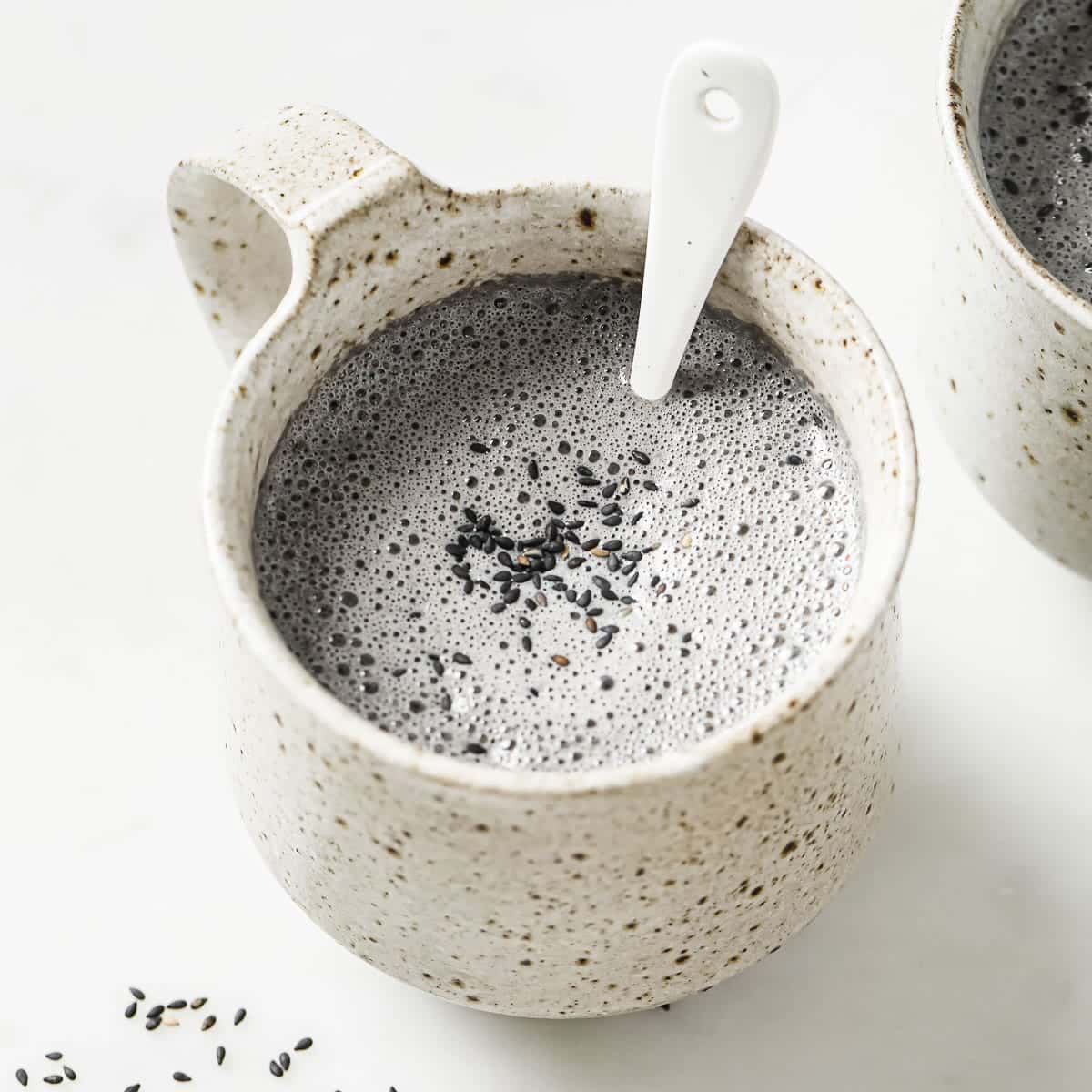
We have incredibly short attention spans in the West, and so if you’re not hugely into matcha now, don’t worry, it’ll be the thing everyone has forgotten was everywhere in just a few years. I actually stirred some black sesame paste into a sweetened coffee recently and loved that flavor. Some might love hojicha. Genmaicha is also known in some circles as popcorn tea, I love it, though it’s color is very subtle. Matcha’s color just hits!!
I hope this episode was worth your time. I really appreciate you watching. What I thought would be a relatively simple episode to write, because there’s no scientific explanation for baking required here. Well, it led me down this deep and winding path across continents to understand how it all plays into the product we can find in our supermarket aisles quite easily now.
If nothing else, the grading specifications have explained. Anyway, if you enjoyed this, please like share and subscribe. I’m currently writing an episode on Flan as that was requested recently. If you have any desserts you’d like me to delve into, please do let me know in the comments. In the meantime, I will see you in the next one, Ka Kite Ano and Tschuss.
Video Essay
SOURCES:
BOOKS
- Green with Milk and Sugar - When Japan filled America’s tea cups by Robert Hellyer book cover: https://www.atlasobscura.com/articles/japanese-green-tea-history
- Against the Grain: How Agriculture Has Hijacked Civilization: https://www.goodreads.com/en/book/show/579932.Against_the_Grain
- Grist: https://bookshop.org/p/books/grist-a-practical-guide-to-cooking-grains-beans-seeds-and-legumes-abra-berens/0c911a967a6f2b51?ean=9781797207131&next=t&next=t&affiliate=6811&utm_campaign=climate-nausea&utm_medium=referral&utm_source=www.aliciakennedy.news
CHAPTER 1: From China to Japan to us
- My?an Eisai artwork: https://www.eisateaco.com/post/who-was-myoan-eisai
- My?an Eisai: https://c8.alamy.com/comp/G2JEE9/myan-eisai-1141-1215-japanese-buddhist-priest-known-for-introducing-G2JEE9.jpg
- My?an Eisai monk artwork: https://ujimatchatea.com/pages/history-of-matcha
- Eisai: The Monk that Propagated Tea Culture in Japan: https://www.myjapanesegreentea.com/eisai
- The History of Matcha: https://www.matchaful.com/pages/the-history-of-matcha
- The History of Matcha: https://matcha.com/blogs/news/the-history-of-matcha
- The History and Cultural Significance of Matcha: https://inheritancecoffee.com/blogs/learn/the-history-of-matcha
- Uji, Japan: https://www.google.co.uk/maps/place/Uji,+Kyoto,+Japan/@35.3589183,136.0873974,7.25z/data=!4m6!3m5!1s0x60011184e72853ed:0xd66a46aa6041ddde!8m2!3d34.8845134!4d135.7997037!16zL20vMDFmbWYw?entry=ttu&g_ep=EgoyMDI2MDYyOS4wIKXMDSoASAFQAw%3D%3D
CHAPTER 2: All about the matcha
- Does Matcha Expire?: https://matcha.com/blogs/news/does-matcha-expire-how-to-tell-if-your-matcha-powder-has-gone-bad-5-signs-matcha-tea-is-stale
- L-theanine health benefits: https://www.healthline.com/health/l-theanine#risks-and-side-effects
- What is the link between matcha and iron deficiency - and who is most at risk?: https://news.sky.com/story/what-is-the-link-between-matcha-and-iron-deficiency-and-who-is-most-at-risk-13432090
- Types of matcha: https://matchaandbeyond.com/articles/a-guide-to-understanding-matcha-grades/
- Understanding the CIELAB (Lab*) Scale: https://www.umfcorp.com/post/understanding-the-cielab-l-a-b-scale
- A Comparative Multianalytical Approach to the Characterization of Different Grades of Matcha Tea: https://pmc.ncbi.nlm.nih.gov/articles/PMC12157965/
- 5 Signs of High-Quality Matcha (And How to Verify Them): https://first-agri.jp/matcha/columns/high-quality-matcha-signs
- Grown in shade image: https://akimatcha.com/blogs/aki-matcha-101/matcha-meets-sam-ng?c-linh-a-historic-bridge-of-wellness-between-japan-and-vietnam
- I spent so much time: https://y.yarn.co/a5872baa-1982-49b3-bc91-9acfed91e120.mp4
- I only want what’s best :https://yarn.co/yarn-clip/9341a8e4-68a2-494f-b4b5-ffec4209d221
- Matcha leaves: https://cdn.shopify.com/s/files/1/0668/5149/files/Encha-matcha-green-tea-plant-new-leaf-bud-1600px.jpg?v=1528595878
- Matcha plants: https://mecenemarket.com/cdn/shop/articles/matcha-plants_1200x.png?v=1725583936


CHAPTER 3: Drink culture and trends
- How Caramel Developed a Taste for Salt: https://www.nytimes.com/2008/12/31/dining/31cara.html
- Climate Nausea by Alicia Kennedy: https://www.aliciakennedy.news/p/climate-nausea
- A Little Sociocultural History of Sprinkles: https://penknife.substack.com/p/a-little-sociocultural-history-of?utm_campaign=email-half-post&r=3vg8xo&utm_source=substack&utm_medium=email
- Matcha KitKat: https://japanesetaste.com/cdn/shop/files/Nestle-Koicha-Green-Tea-Kit-Kat-Japanese-Dark-Matcha-KitKat-10-Bars-1-2025-03-04T06_51_14.107Z.jpg?v=1743425252&width=600

CHAPTER 4: Farming and demand
- Matcha Tea Market Size, Share, Growth, and Industry Analysis: https://www.businessresearchinsights.com/market-reports/matcha-tea-market-120816
- Global Matcha Shortage Hits as Demand Outpaces Supply: https://fooddigital.com/news/how-high-temperatures-have-caused-mass-matcha-supply-issues
- The State of 2025 Food Trend Predictions: https://www.bayousaintcake.news/p/the-state-of-2025-food-trend-predictions
Ube headlines:
- https://bworldonline.com/agribusiness/2026/05/25/751681/govt-not-yet-geared-up-for-expected-ube-demand-surge/
- https://businessmirror.com.ph/2026/06/07/global-ube-craze-can-phl-meet-the-global-demand
- https://www.foodingredientsfirst.com/news/ube-purple-yam-trends-global-demand.html
- https://www.cnbc.com/2026/04/26/ube-purple-yam-viral-trend-philippines-supply-crunch.html
- https://www.fakta.co/philippines-ube-production-declines-demand
- https://edition.cnn.com/travel/ube-purple-yam-philippines-trend-spc
- https://www.theguardian.com/food/2026/apr/16/ube-cocktails-coffees-tiktok-trend-starbucks-costa-new-matcha
- https://www.glamourmagazine.co.uk/article/what-is-ube-tiktok-trend
CHAPTER 5: What to do when the shortage hits
- The Unfolding Matcha Situation from Tea Nursery: https://www.teanursery.com/the-unfolding-matcha-situation/
- The rise of matcha: From Japanese tea ceremonies to ceremonial grade lattés: https://epigram.org.uk/the-rise-of-matcha-from-japanese-tea-ceremonies-to-ceremonial-grade-lattes-2/
- Countries growing matcha: https://best-matcha.com/knowledge/industry-insights/beyond-japan-global-matcha-production-and-quality-differences
- Photos of tea: https://www.tokyoweekender.com/food-and-drink/types-of-japanese-tea-guide/
- Barley Tea: https://www.tastingtable.com/1229991/types-of-japanese-tea-explained/
- Black sesame latte: https://iheartumami.com/wp-content/uploads/2022/11/Black-sesame-latte-recipe.jpg
- Gyokuro tea: https://www.alldayieat.com/gyokuro-tea-a-japanese-green-tea/
- Shiso tea: https://myhealthopedia.com/shiso-tea-benefits-side-effects-dosage-recipe/
- Hojicha: https://www.bonappetit.com/story/what-is-hojicha
Shortage headlines
- https://www.bbc.co.uk/news/articles/cgq7w1n00xeo
- https://perfectdailygrind.com/2025/09/matcha-shortage-japan-production/
- https://fooddigital.com/news/how-high-temperatures-have-caused-mass-matcha-supply-issues
- https://mainichi.jp/english/articles/20251219/p2a/00m/0li/025000c
- https://www.fooddive.com/news/a-matcha-shortage-is-coming-for-social-medias-latest-obsession/761141
- https://asia.nikkei.com/business/food-beverage/global-matcha-craze-causes-shortages-of-tea-leaves-and-machinery
- https://www.hobokengirl.com/matcha-shortage-impact-hoboken-new-jersey-2025/
- https://www.theknightnews.com/2025/12/09/out-of-stock-the-global-matcha-shortage-and-the-internets-obsession/
- https://retailasia.com/news/matcha-shortage-spurs-calls-stricter-rules-counterfeits-rise
- https://www.nytimes.com/2025/10/14/dining/matcha.html
MUSIC:
- Hearty
- Music by Bensound.com/free-music-for-videos
- License code: B1B7YGQQ7E8UIUM0
- Artist: : Aventure
- Song: Moonlight Coffee
- Music by: https://www.bensound.com
License code: 6CQ8OXPBOGV854AK
Artist: : Yunior Arronte
- Music by: https://www.bensound.com
- Source Damour by Arthur-Marie Brillouin
Leave a Reply