

Smeared over golden toast, whipped as a cookie base, tossed into whipped meringue for frosting, rubbed into flour until it resembles a rough crumble or melted and simmering until bubbly and golden, butter is a magical ingredient.
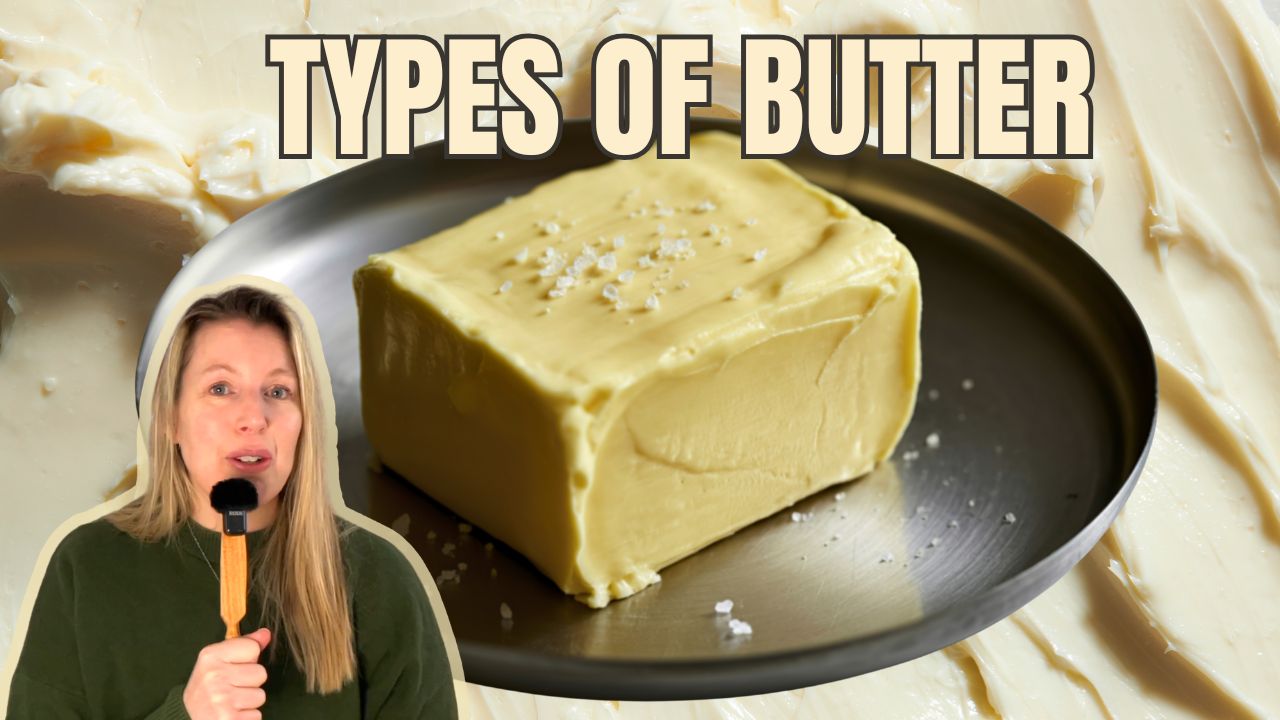
Table of Contents
Hey, hi, hello, my name is Sylvie and I’m a baker who has been studying the science and fundamentals of baking, whilst also spending many many hours baking up cookies, cakes and other things for my website roamingtaste.com. I love butter. What has to be one of the most unprocessed goods in our supermarket (beyond fruits and vegetables) is cream and what becomes of it when churned…butter.
Today we’re diving into it’s history, the various types you can make or find in stores and different ways it effects baking. This is going to be a long and in depth video so if you’re here to learn something specific about butter you might want to check the description below to find that chapter, though if you watch the whole video, that is also greatly appreciated!
Greatest invention post toast
Suddenly a yellow curd was weighting the churned up white,
heavy and rich,
coagulated sunlight
by Seamus Heaney
According to English Heritage
"The history of butter stretches back to prehistory when people had to be creative in terms of their ingredients, working around the local climate. ‘The process of developing butter has been around since the Neolithic period,’ explains food historian Dr Annie Gray, ‘It’s almost as old as cooking itself.”
The exact date and origin story of butter is not completely known as it’s so historical. But in my research, it became clear that the first discovery of butter goes something like this: around 6,500 years ago, a farmer had some milk and placed it into an animal skin bag which was a common place of storage for milk at the time. There are some nomadic tribes that still carry milk this way.
The farmer tied the bag to a pack animal while they travelled some distance which gave the milk enough time to be churned. When he opened up this animal skin bag, well the milk wasn’t milk anymore. One can only wonder what this farmer and his family thought when they first tried this butter, but it must have been pretty good because it’s survived throughout so much of human history.
According to Elaine Khosrova’s book Butter - A Rich History, it was so revered that
"Ancient Sumerians offered up gifts of butter at temple in honor of the "powerful fertility goddess Inanna, protector of the seasons and harvest,”"
And in the truly wonderful book A History of Food by Maguelonne Toussaint-Samot
"Butter with its sunny, golden colour is so closely associated with fire in folk memory that in Iceland, according to seventh-century texts from the monastery of St Gall, the farmers' wives of that time were still asking the smith god Gobhin to look after the butter they made. Whether in the rites described in the Vedas, or in magical Celtic practices, butter features as a substitute for those natural golden treasures, honey and virgin wax, which themselves have sometimes been called the butter of the bees."
Funnily enough I’m currently writing an episode on honey which runs deep in human history, so if you’d like to be notified when that goes live, subscribe.
Butter was once the most taxed commodity in Europe, it is an ingredient in sculptures by Tibetan monks and has been apart of human civilization almost as long as we’ve existed. There have been logs of butter found buried in bogs in Ireland, in fact, some are still being found. In the book A History of Food by Maguelonne Toussaint-Samot
"The Icelandic butter made by the descendants of the Vikings is mentioned in a book of 1607, the Thrésor de santé, as being pressed into wooden vessels 30 to 40 feet long."
So butter has been pivotal to many cultures, in fact I could probably spend an hour just digging into all the ways it’s shown up as a vital ingredient across several parts of the globe. In it’s history, as we move closer to modern day, the connection between butter production and women though, cannot be ignored
"By Elizabethan times, we see women very much at the forefront of dairy work."
Quoting from the article Women in the dairy from Yorkshire Dales

And in the article Butter Making and Economic Development in Mid-Atlantic America from 1750 to 1850 by Joan M. Jensen we see how it had been apart of the fabric of society for some time
"Butter making was a traditional female task, having been performed by countless women over the ages, with increasingly complex skills that were passed by oral tradition from mother to daughter, mistress to servant, neighbor to neighbor"
With the Culinary Institute of Butter reflecting
"This association with women and domesticity led to butter becoming a symbol of femininity and domesticity (as well as the early modern European association among witches, the devil and butter-making), a time-consuming and labor-intensive process."
There is something about milk and effectively all dairy being tied reproductive organs which made it potentially less of a job men were inclined to, but I couldn’t verify this.
According to Folklore Thursday’s article Cow to Kitchen: The Lore of Milking and Dairy Work
"Dairy work was a woman’s job. Men were believed to lack the necessary patience and care. Many rural women were skilled with all aspects of dairy work. It was hard, physical work. Cheeses weighing up to 50kgs were lifted and turned daily. Dairymaids were expected to be at work by 5am and could be at the churn for four hours a day, churning the cream until it turned to butter."
For those who find kilograms foreign, 50 kilograms converts to 110 pounds these women we lifting and turning every day. Who needs weights when they’re doing that!?!
"The correct churning speed was essential. Men were inclined to churn too fast and produce soft, poor quality butter."
And in the article Butter Making and Economic Development in Mid-Atlantic America from 1750 to 1850 by Joan M. Jensen
"For scholars intent on analyzing early nineteenth-century American economic development, rural women remain an elusive majority. Omitted from most agricultural histories because they were not the owners of American farmland, slighted in labor histories because their work was different from that of males, and neglected by histories of women that concentrate on the urban middle and working classes, rural women are barely visible in American history."

In the article Women Made Butter a Behemoth
"Though men tended to ignore butter production, it became a valuable way for women to profit off their farms."
"By 1840, butter was the fifth most valuable agricultural product in the mid-Atlantic region."
Once again quoting from Butter Making and Economic Development in Mid-Atlantic America from 1750 to 1850 by Joan M. Jensen
"In 1850, the Philadelphia hinterland was a rich agricultural region marked by substantial stone houses and barns"
"The women were known for the quality of their butter."
"The first agricultural census, completed in 1850, confirmed the growing importance of butter making."
"Women changed both their techniques and their equipment to increase butter production. They learned to produce butter more efficiently to make it more saleable."
"How much butter women actually produced is difficult to determine because women usually did not keep written records. At the time of the Revolution, at least three-fourths of rural women in Chester County could not write. Rural males, almost all of whom were literate, tended to keep written accounts of their own farm work but not of the work done by women. There are a few fortunate exceptions. Samuel Taylor recorded in his 1798 journal: "My mother took 40 Ibs of butter to Gedion Williams. Sold it for V6 per lb.”"
The V6 is likely referring to the currency of shillings, meaning Samuel Taylor’s mother made 6 shillings per pound of butter there. Calculating a total income from that sale to 240 shillings or 12 pounds Sterling. The British currency which was still used in the United States until the Coinage Act of 1857. The amount converted into today’s currency would be $2,054.67 in 2026 USD.
The fact that 75% of rural women in Chester Country; which is a tiny picture of likely a much larger national reality, could not write whilst their male counterparts were literate reflects how intrinsically women’s labor was not able to be recorded which leaves a huge gap in the reality of how much these women affected their local economies.
However, thanks to Joan M. Jensen’s article Butter Making and Economic Development in Mid-Atlantic America from 1750 to 1850 we do have the account of a widow named
"Esther Lewis, a Chester County widow, left diaries and letters that give a detailed account of the use of hired female help. In 1835 and 1836, Lewis recorded sending monthly to Philadelphia 75 to 100 pounds of butter produced with the regular help of a hired woman. Lewis taught her daughters to churn and prepare butter for the market, but she also used some of her farm income to send them to boarding school so that they could become teachers and support themselves if they did not marry."
We see here how Esther used her skill to train her daughters, setting them up for a future that didn’t solely depend on a man. With the demand for dairy labor increasing in Esther’s County and therefore those with the skills becoming harder to come by, in 1839 Esther hired an Irish immigrant who had to learn the whole process of butter making.
With those skills some Irish immigrants would have been
"able to move on to farms of their own in which they did their own butter making and sent their daughters out to work on neighboring farms. Black women had far fewer opportunities to profit from their labor. Blacks in some southeastern Pennsylvania townships numbered over 25 percent of the population, yet almost none owned farm land. Across the border in Delaware, where slavery had disappeared from the prosperous northern counties, blacks also owned no farm land."
In the case of Esther Lewis being a widow, these circumstances provided her a rare opportunity to teach dairying skills to other women on the land she likely owned and make a profit from it. But this wasn’t an opportunity afforded to all people, particularly African Americans which meant the profits from the dairying afforded landowners to grow their businesses and profit making potential whilst some were not even able to imagine those opportunities.
"Eventually, men took over dairying entirely, denigrating women-made butter as “unscientific” and of lower quality—but not before women made the entire industry possible."
Once again quoting from the Women Made Butter a Behemoth article
According to Folklore Thursday’s article Cow to Kitchen: The Lore of Milking and Dairy Work
"Mechanical butter workers appeared in the late 19th century, but the famous cookery writer Mrs Isabella Beeton wrote that no butter worker could equal a woman’s hand."
When the majority of one gender is not allowed to gain education, the effect of their work on their local, national and the global economy, is unlikely to ever be known. Giving us a wholly untrue picture of the overall work by anyone from this time and we see this pattern reflected so often in history around the globe where women’s work is either undocumented, misrepresented or stolen by their male counterparts. By not giving all people basic education it results in improper reporting giving us an incorrect picture of these people’s lives at this time and now makes it easier for some sections of modern society to assume women have always been in the kitchen.
These dairymaids who were churning dairy into butter at 5am, turning hefty wheels of cheeses and likely having children and raising them too, faced an all too common problem as stated in the article Women Made Butter a Behemoth
"A woman who helped save the farm with her butter production was still expected to be a submissive wife and could not own property or land."
What is butter?
Life isn't life without real butter.
by Adrienne Posey
In her book Salt, Fat, Acid, Heat, Samin Nosrat poetically describes how we get butter.
"We skim the richest cream off the top, and churn it until it transforms into butter. The process is so straightforward that kids can make butter by shaking a glass jar filled with chilled cream."
Essentially at it’s core butter is made up of three ingredients - fat, water and milk solids and the water is what creates the ‘sweat droplets’ that form when butter sits out during a warm day as it begins to separate from the fats. Once broken down or melted, it will not return to it’s original state, even when cooled, as the emulsion is broken.
Paula Figoni states in her book How Baking Works which we’re going to have referenced a lot in this episode
"A few optional ingredients are allowed in butter in the United States and Canada. For example, natural butter flavor and annatto, a natural coloring, can be added."
When we speak about butter throughout most of the Western world we are speaking about a product made from cows, however, throughout history and in certain countries butter comes from sheep, goats, buffalo, yaks or a number of other animals.
Salt is typically added because it’s a preservative and the amount of salt can vary between brands. Because this video is predominantly about baking, where possible, it’s best to consider using unsalted butter, particularly if it’s to be used in a bread or laminated dough as you want full control over the ingredients and salted butter can offset the flavors.
Quoting once again from ‘How baking works’ by Paula Figoni
"The very act of making butter-of churning cream and removing buttermilk-is a form of food preservation because buttermilk supports bacterial growth. But butter still contains some buttermilk, which is rich in nutrients so it can still spoil. This was a problem in the days before refrigeration."
Thanks to salt being a powerful antimicrobial agent where it kills or inhibits the growth of bacteria, fungi and viruses it ensures butter doesn’t spoil, particularly if there isn’t an opportunity to refrigerate it.
The average shelf life for regular unsalted butter is between 1-3 months in the fridge or 6-12 months in the freezer whereas salted butter can last between 4-5 months in the fridge or around the 12-18 months in the freezer.

European butters versus American butters - European are most preferred by professionals thanks to their higher fat content of between 82% and 85% than American butters which tend to have 80% fat content. The higher fat content results in dishes with a richer and creamier texture and enhanced flavors. If you plan to use butter in your baking or cooking then this matters more than when it’s simply slathered across toast underneath jam or the base for a sandwich though high quality butter is most preferred in those situations also.
"Butter containing a higher percentage of butterfat typically has a smoother, creamier mouthfeel. Because it is also lower in water, higher fat butter is often firmer in consistency and slower to melt."
As Paula Figoni advises in the book How Baking Works
Butterfat can also be known as milkfat and is lactose free so 100 grams or 3.5 ounces of butter usually contains only around 0.1 grams of lactose, which is why those who are lactose sensitive or intolerant find themselves still able to consume butter with minimal effect.
Before we finish up on what butter is, it’s important to explain that
"Over 95% of butters sold in the United States are salted sweet cream butters."
Quoting once again from How Baking Works
Though they have this name, sweet cream butters have no sugar added and can come both salted or unsalted. But, they are different than European butters in a few ways. Firstly, sweet cream butters are only churned for 20-25 minutes versus the 30-45 minutes European butters are churned. Secondly, this shorter churning time results in a lower fat content and therefore, thirdly, results in a lower smoke point as a higher fat content increases the smoke point.
Types of Butter
When we talk about types of butter we’re still talking about mostly the same composite as defined in the ‘what is butter’ section, however, there are a number of ways to both treat butter or process it and that is what I mean by types of butter and we’re going to consider what each type of these are.
Cultured Butter
Cultured butter can also be known as ‘ripened butter’ and the term cultured is as simple as it sounds. It’s cream with live cultures or bacteria such as what you find in yogurt or buttermilk added in where it is allowed to ferment for between 1-2 days before being whipped into butter.
It’s creamier than standard butter with a flavor more sour than traditional butter; a slightly tangy or nutty flavor similar to yogurt, creme fraiche or buttermilk. If cultured butter is salted the tang tends to be even more pronounced. Before the industrialization of dairy production, the process of separating the milk from the cream would have been a slower process and would have allowed for some of the live cultures within the dairy to develop more which means it would have been the more standard type of butter people consume.

In the article A Guide to Butter, Clare Finney writes,
"Arguably the most ‘real’ of all the real butters, cultured butter is what butter would have been had you been alive a hundred years ago. ‘Originally the milk would have been left out in big vats so the cream came naturally come to the top – a process which would take a number of days. In this time, the cream would naturally ferment,’ says Grant Harrington of Ampersand Dairy. ‘The bacteria would grow during that time, which slightly sours the cream.’"
Deputy Editor of Taste of Home Magazine, James Schend recommends using cultured butter in baking ?
"to make biscuits, pancakes, shortbread or pound cake. In these recipes, you’ll really notice the extra flavor that cultured butter provides."
and
"butter’s slight acidity can produce more tender bakes."
While we’re on the topic of cultured butter, there is a type found in Morocco called Smen that is mixed with lactic acid bacteria and stored in an airtight container for up to two years. It’s known for being stinky with a smell and taste similar to blue cheese and is not always eaten plain so can be found flavored with honey, olive oil and dried meat. It’s a special occasion ingredient for Ramadan or other special occasions.
Fresh churned butter usually has a shelf life in the fridge of up to 1 week whilst cultured butter has a shelf life of up to 3 weeks thanks to those cultures. It’s most often served with high quality bread such as sourdough, though its also great in laminated doughs for croissants or other baked goods.
Clarified Butter
From the book How Baking Works by Paula Figoni
"If butter is heated just until the water evaporates and is skimmed and strained before milk solids brown, it is called clarified butter…Because milk solids have been removed, clarified butter is less likely to scorch, smoke, or burn when foods are sautéed under high heat."
Clarified butter is like clear beautiful yellow liquid with a much higher smoke point that is more stable than standard butter. Meaning it’s less likely to go rancid and has a richer flavor that helps enhance the flavor of other ingredients.
The highest end smoke point for clarified butter is 252C or 486F compared with 191C or 376F smoke point in regular butter.

There are several reasons why clarified butter is loved by professionals. It’s incredibly versatile so works great to saute or pan fry with or drizzle over meat, fish, egg or vegetables, or when added to butter sauces. It adds a great flavor to popcorn and is even used as a dipping sauce for boiled or grilled lobster or crab.
This is great, but as a baking channel how can it be used in baking. Well thanks to the water being evaporated off, the result is that clarified butter is actually more like oil than butter as it’s almost 100% fat. So if you have an oil based baking recipe you could replace with clarified butter, though it also works well in pie crusts or laminated pastry for croissants or even shortbread with a flaky, but crispy exterior in baking.
Remember though that you can’t aerate oil like you can butter, so if you are incorporating or whipping sugar with clarified butter, because there is minimal water for the sugar to form to, it can result in denser baked goods, particularly if you are amending a standard butter based recipe with clarified butter.
As clarified butter can be made at home, it’s best to make in a double boiler as it’s easier to control the heat and avoid burning as it shouldn’t be stirred whilst heating so the milk solids can truly separate and make the job of removing the foam from your butter easier also.
Chef Mark Strausman from the restaurant Mark’s Off Madison
"says you should really read the label of the butter you're starting with and only use butter that is at least 80 percent butterfat and doesn't contain any food colorings."
The shelf life of clarified butter is 1-3 months in an airtight container away from light at room temperature, between 3-6 months in the fridge or 1 year in the freezer.
Ghee
Most of us can find at least one form of ghee in the butter aisle, but what it is has always been lost on me because it was never fully explained until I started researching this episode. I wish I had asked about ghee before writing up this episode. I wish it was more commonly known how incredible ghee is beyond the Indian disapora.
As Alton Brown puts it Ghee is
"basically an extreme version of clarified butter with a shelf life like uranium."
Ghee is effectively cooked and the milk solids removed exactly like clarified butter, but it is then further heated until it is more golden in color.
"Ghee has a distinctive buttery taste, so works particularly well in muffins, pies, shortbread biscuits and cookies."
From Happy Butter Organic Ghee
However, as ghee is basically 100% fat, it’s composition in baked goods is more considered as an oil, not a butter. Redditor Migraine_Megan suggesting
"To keep a similar rise in cookies and cakes, I use 50/50 ghee/canola oil. Ghee makes a heavier, denser product."
It’s unopened shelf life is up to a couple of years, but some people have had a tin of ghee for up to 10 years.
OMGhee recommends
"Opened ghee…will last up to around three months on the kitchen bench…keeping it in the fridge will extend it's shelf life"
As you note, it doesn’t have a standard shelf life like other butters, making it particularly helpful to have in the home.
Margarine
We cannot speak about butter without at least considering margarine, something my grandmother had in her fridge my entire childhood alongside single slices of plastic wrapped cheese, things my mother would have never had in our house.
"After the French Emperor Napoleon III issued a challenge to create a butter-substitute from beef tallow for the armed forces and lower classes, Hippolyte Mège-Mouriès invented margarine in 1869"
quoting from Wikipedia there
Napoleon issued this challenge because France was dealing with a butter shortage, so times were desperate, you could say. I’m not going go into detail about how Hippolyte first made margarine cause it’s kind of gross - let’s say it included fresh sheep’s stomach and without food coloring the color was a kind of gray…
"The spread was originally named oleomargarine from Latin for oleum (olive oil) and Greek margarite ("pearl", indicating luster)."
At it’s core margarine is a water-in-fat emulsion exactly like butter, but it is made through an intensive process of refined vegetable oil and water.
Nowadays margarine is made up of a blend of vegetable oils, think sunflower, soybean, canola or palm oil and is a highly processed food.

The Lithub article What We Know (and Don’t Know) About Fat from the book What Your Food Ate: How to Heal Our Land and Reclaim Our Health by David R. Montgomery and Anne Biklé describes it’s margarine this way:
"In an agroindustrial version of recycling, they turned oil squeezed from the seeds left after harvesting fluffy, high-value cotton into an artificial edible fat (hydrogenated vegetable oil)."
According to Bakers Authority website
"Margarine, being made of plant oils, has a different fat profile (typically more unsaturated fat) and often higher water content. As a result, baked goods made with margarine tend to turn out softer and more uniform in texture. For example, a cake made with margarine may be very moist and soft (thanks to extra water that converts to steam), and breads or muffins may feel a bit more spongy. In fact, margarine’s added moisture can keep items like cakes from drying out, which some bakers appreciate. Volume bakers sometimes choose margarine for products like muffins, quick breads, or high-ratio cakes where a very soft, moist crumb is desired."
"On the flip side, crispness and flakiness often suffer when using margarine. A pie crust or biscuit made with margarine will typically be less flaky or crispy compared to one made with cold butter, often coming out a bit softer or doughier. The same goes for cookies: margarine-based cookies may stay softer and not have the same crisp edges or light snap that butter can give."
Some people prefer using margarine in their cakes or muffins and can replace butter in equal measure in a recipe.
There has been many debates about margarine and I’m not here to say whether it is healthy or not, because quite frankly it’s not always clear who is behind the studies on whether something is good for us or not. However, if you’re going for something that is less processed, then butter is the better option.
Or as Paula Figoni states in her book ‘How baking works’
"No other fat can match butter in these we attributes. Margarine may contain natural butter flavor and have a low final melting point, but it still does not have the superior flavor and texture of butter."
Whipped Butter
The whipped butter had already started melting across the waffles' latticed brown surface, creating a golden trickling waterfall that pooled in their hollows. Rika bit into the dough, savoring how juicy and moist it had become with all the butter it had absorbed, with a pleasant saltiness.
by Asako Yuzuki, Butter
The chances you’ve seen whipped butter on social media in the past year or two is probably quite high - especially if you love and engage with food content. But what actually is it?
It’s made with room temperature butter whipped for several minutes, sometimes a couple of tablespoons of milk or buttercream are added and often its served with salt or maybe maple syrup or honey added in to smear thickly on bread.

Whipped butter is most often served with steak, sometimes flavored with herbs or garlic and rolled into a log before being sliced and served.
Because it has so much air added to it it’s not really ideal to use for baking. Any recipe that calls for whipping butter and sugar can be made with whipped butter, though because it’s already whipped, it’s best not to whip for a further 2-3 minutes when adding the sugar as this will simply add in more air to the butter.
A key feature when baking with whipped butter is to weigh by weight, not volume. So you need scales to get the right amount of butter as 1 cup of whipped is different than 1 cup of standard butter. Though with all that extra air it can behave differently than standard butter in your baked goods so you do need to be mindful of this.
On Baking - A Textbook of Baking & Pastry Fundamentals by Sarah Labensky, Priscilla A. Martel & Eddy van Damme
"Whipped butter is made by incorporating air into the butter. This increases its volume and spreadability but also increases the speed with which the butter will become rancid."
Store bought whipped butter has a shelf life of 2 weeks in the fridge whereas homemade whipped butter, when stored in an enclosed container is best consumed within 10 days.
Brown Butter
This has been incredibly popular in baked goods in recent years, but what is it?
Firstly, browned butter is simply caramelized butter. It’s simmered down to cook away the water and caramelize the milk solids. The little pieces at the bottom of the saucepan are the caramelized milk solids.
Secondly, the structure of brown butter is not the same as regular butter because when you brown butter you lose approximately 30% of it’s content and with less water it means the reaction in our baked goods won’t be the same as with standard butter. 100 grams or 3.5 ounces of browned butter is actually 125-130 grams or 4.4-4.6 ounces of regular butter.
There are so many recipes out there for brown butter baking from brownies to cakes or frosting and rice krispie treats so you can follow them easily knowing the recipes have been tested.
But if you have a recipe you love and want to make it with browned butter and it’s calling for regular butter it’s important to consider the loss of moisture that happens during the browning process. Unless you’re adding some milk fats or water the result of browned butter baking can be crispier and more crumbly than when using standard butter so some people prefer to use a 50/50 mixture of browned and regular butter in their baking, particularly if they’re making a cake or frosting where the loss of moisture can affect the outcome negatively.
I actually did this last year with a recipe test of my sponge cake with just browned butter which I thought was dry, but added my milk soak and then topped with buttercream because I was ignoring all the knowledge and signs this was never going to work. It wasn’t until I literally cut into the cake and it sounded like cutting into Polystyrene. It was the driest cake I’ve probably ever made and it went straight into the bin because I hadn’t accounted for the difference of just using brown butter and that can happen when we’re not super experienced or haven’t done our research. It wasn’t even something I considered and I already knew about this loss of moisture.
The shelf life of brown butter is 1 month when stored in a covered container in the fridge or up to 3 months in the freezer.
Burnt Butter
Burnt butter is used by chefs, but honestly, if butter is burnt it feels like a difficult ingredient to use because we don’t encounter it often as home cooks or bakers. If you have browned butter to the point it’s now burned versus browned, drain off the milk solids through a fine sieve or even better, cheesecloth to catch all those bitter bits of burnt milk solids.
If a baking recipe calls for browned butter thats melted you can use the burnt butter immediately otherwise you can treat it like browned butter in your recipes. Because burnt butter has a bitter taste though, it’s best used in recipes with strong complimentary flavors such as with chocolate recipes - brownies for example, toffee or ginger recipes which will help balance those bitter notes.
The shelf life of burnt butter is hard to say because search results don’t understand the difference between browned and burnt butter these days, but it’s probably best to keep refrigerated in a covered container and consume within 2-3 weeks or freeze for up to 3 months.
Final thoughts on types of butter
Understanding that browned butter has a lower moisture content than regular butter results in crumblier textures in our baking, but that isn’t necessarily a bad thing when a recipe has already been tested with it and calls for it. Cultured and whipped butters should absolutely be slathered across bread, though cultured can be used in some baking and whipped shouldn’t really be used in that way.
The fact that clarified butter and ghee act like oil in baking means we can try recipes with these ingredient in place of oil, though we need to be mindful we are amending a recipe because they’re almost never called for. Lastly, if you happen to burn butter, fine strain those burnt bits out and keep it for a chocolate or ginger dessert, don’t feel the need to toss it.
YouTube Essay
TIME STAMPS:
- Intro: 0:00
- Greatest invention post toast: 1:40
- What is butter?: 14:17
- Types of Butter: 19:10
- Cultured Butter: 19:31
- Clarified Butter: 21:58
- Ghee: 24:58
- Margarine: 26:51
- Whipped Butter: 30:18
- Brown Butter: 32:56
- Burnt Butter: 35:44
- Final thoughts on types of butter: 37:03
SOURCES:
BOOKS
- SALT FAT ACID HEAT Cover: https://www.saltfatacidheat.com/
- Understanding Baking- The Art and Science of Baking: https://www.hatchards.co.uk/book/understanding-baking/joseph-amendola/9780471405467
- How Baking Works: Exploring the Fundamentals of Baking Science: https://www.goodreads.com/book/show/124039986-how-baking-works?from_search=true&from_srp=true&qid=U1e1jeKBYP&rank=4
- On Baking - A Textbook of Baking & Pastry Fundamentals book: https://www.biblio.com/book/baking-3rd-edition-labensky-sarah-r/d/1721051342
CHAPTER 1: Greatest invention post toast
- Women in the dairy: https://www.yorkshiredales.org.uk/women-in-the-dairy/
- English Heritage: https://www.english-heritage.org.uk/members-area/members-magazine/the-history-of-butter/
- Women Made Butter a Behemoth: https://daily.jstor.org/women-made-butter-a-behemoth/
- Woman Churning Butter, print, Jean-François Millet 1855-56: https://upload.wikimedia.org/wikipedia/commons/2/20/Woman_Churning_Butter_MET_DP827612.jpg
- Young Woman Churning Butter by Jean-François Millet 1848-51: https://upload.wikimedia.org/wikipedia/commons/f/f1/Jean-François_Millet_-Young_Woman_Churning_Butter-66.1052-Museum_of_Fine_Arts.jpg
- From Cow to Kitchen: The Lore of Milking and Dairy Work: https://folklorethursday.com/folklife/from-cow-to-kitchen-the-lore-of-milking-and-dairy-work/
- Butter Making and Economic Development in Mid-Atlantic America from 1750 to 1850: https://www.jstor.org/stable/3174113?mag=women-made-butter-a-behemoth&seq=1
- Currency conversion: https://www.uwyo.edu/numimage/currency.htm
- Bog Butter image: https://upload.wikimedia.org/wikipedia/commons/thumb/a/a2/Irish_churn_and_bog-butter_vessel.jpg/960px-Irish_churn_and_bog-butter_vessel.jpg?=20251001085429
- Culinary Institute of America: https://library.culinary.edu/clarifyingbutter/butter
- The Dairymaid by Charles William Mansel: https://commons.wikimedia.org/w/index.php?curid=7726277
- Milkmaids in Sweden: https://brewminate.com/milkmaids-and-the-image-of-female-purity-in-the-18th-and-19th-centuries/
- Women at a dairy Malvern: https://www.oldtreasurybuilding.org.au/lost-jobs/on-the-land/dairy-farms/
- This is delicious: https://yarn.co/yarn-clip/8688804b-97e9-40bd-adfd-e12e29668ec2
- Tibetan Butter Sculpture: https://www.gototibet.com/travel-guide/artifact/yak-butter-sculpture.html
- Wisconsin Dairy Woman: https://eu.wisfarmer.com/story/news/2020/11/18/pioneer-women-influenced-wisconsins-shift-become-dairy-state/6279711002/
- Woman milking a cow, circa 1890: https://www.thehenryford.org/collections/explore/articles/women-and-farm-work-1790s-1930s


CHAPTER 2: What is butter
- Seamus Heaney Churned Butter poem excerpt: https://genius.com/artists/Seamus-heaney
- How to make butter: https://www.seriouseats.com/how-to-make-butter-7496926
- Sweet Cream Butter: How to Make Butter at Home: https://www.masterclass.com/articles/sweet-cream-butter
CHAPTER 3: Types of butter
- Types of butter: https://food52.com/story/25598-best-butter-substitutes
CHAPTER 4: Cultured butter
- A Guide to Butter: https://www.greatbritishchefs.com/features/butter-guide-different-types
- What Is Cultured Butter and When Should You Use It?: https://www.tasteofhome.com/article/what-is-cultured-butter/
- Smen: https://www.tastingtable.com/1155733/types-of-butter-and-what-each-is-used-for/
- Smen: https://www.tastingtable.com/1517818/what-is-smen-butter-taste-explained/
- Cultured Butter: https://homecookingcollective.com/homemade-cultured-butter-better-than-store-bought/
- Ambitious, cultured clip: https://yarn.co/yarn-clip/5c8c4035-2a82-4a17-9f5e-d5fe2947d67b
- Cultured butter by A Beautiful Plate: https://www.abeautifulplate.com/how-to-make-cultured-butter/
CHAPTER 5: Clarified Butter
- How to clarify butter: https://www.seriouseats.com/clarified-butter-recipe
- Clarified butter: https://https://www.everyday-delicious.com/how-to-make-clarified-butter/
- Mark Strausman quote: https://www.yahoo.com/lifestyle/clarified-butter-why-chefs-love-154213447.html?guccounter=1
CHAPTER 6: Ghee
- Ghee: https://altonbrown.com/recipes/liquid-gold-a-k-a-clarified-butter-and-ghee/
- Ghee quote from Happy Butter Organic Ghee: https://www.happybutter.co.uk/blog/how-do-you-bake-delicious-cakes-with-ghee-instead-of-butter
- Migraine_Megan quote on ghee: https://www.reddit.com/r/Baking/comments/12tdfzh/baking_with_ghee/
- How to Store Your Ghee : 100 Year Old Ghee: https://omghee.com/blogs/news/how-to-store-your-ghee-100-year-old-ghee
- Ghee: https://avtbeverages.com/blog/15-health-benefits-of-ghee/
CHAPTER 7: Margarine
- White Bread by James Rosenquist artwork: https://www.nga.gov/stories/articles/food-art-favorites-feast-your-eyes
- Is this butter or margarine?: https://yarn.co/yarn-clip/947f972a-eeeb-466d-a0fd-fef3378d1aa5
- Distillations Podcast: https://www.sciencehistory.org/stories/distillations-pod/butter-vs-margarine/
- Baker’s Authority: https://www.bakersauthority.com/blogs/the-beginners-guide-to-baking-1/butter-vs-margarine-in-baking-texture-flavor-and-lift
- There might be another option: https://yarn.co/yarn-clip/d6202316-d7d7-4eba-b03f-11a0f2fe2ae8
CHAPTER 8: Whipped butter
- How to make whipped butter: https://www.thespruceeats.com/homemade-whipped-butter-427820
- Whipped butter: https://intothesauce.com.au/blogs/starters-and-sides/whipped-miso-butter
- Whipped butter: https://cultured.guru/blog/easy-whipped-miso-butter-recipeWhipped butter: https://frederikkewaerens.dk/en/whipped-butter/
CHAPTER 9: Brown butter
- How to brown butter: https://www.seriouseats.com/how-to-make-brown-butter-technique
- How to Make Brown Butter: https://tutti-dolci.com/how-to-make-brown-butter/
- Brown butter hot and room temperature: https://baranbakery.com/how-to-brown-butter/
- Burnt Butter versus browned: https://melecularkitchen.wordpress.com/2012/12/31/how-to-brown-butter/
- Sound affect: https://pixabay.com/sound-effects/search/cutting%20into%20styrofoam/
CHAPTER 10: Burnt butter
- You're burning the butter: https://yarn.co/yarn-clip/6e51c038-12cb-4fed-b77c-82575e1743de
- I know this did not work out as planned: https://yarn.co/yarn-clip/46625ca8-36ff-41bf-8be1-bfea6ff02a4d
- What do I do now?: https://y.yarn.co/93ed2b8d-a7a4-45fa-ace7-2e6e93317d20.mp4
- Burnt butter: https://www.theflavorbender.com/how-to-make-brown-butter/
CHAPTER 11: Final thoughts on types of butter
- Fresh creamery butter: https://yarn.co/yarn-clip/2f40c930-9d2b-4a9a-a748-9eb1c12127cc
- Butter is elemental: https://yarn.co/yarn-clip/13938b85-ad87-42a5-bc27-26cddfaca2d3
- Like a slice of butter: https://yarn.co/yarn-clip/32b573c4-2bda-4141-bdda-b8f123884211
- but it tastes exactly like the butter we had: https://yarn.co/yarn-clip/d762ce0a-bcb2-4ff4-b8ce-1ee54d2ee650
- at the Ritz in Paris, you know, that sort of…: https://yarn.co/yarn-clip/67755792-32c8-4389-b552-3df3dfed8989
- Salt-less butter: https://yarn.co/yarn-clip/b7d73662-f609-4d70-a4ef-5ab04268db29
MUSIC
'Penumbra' by Scott Buckley - released under CC-BY 4.0. www.scottbuckley.com.au
Small Joys
Music by Bensound.com/free-music-for-videos
License code: JN7VMJP0BDMMMWHH
Artist: : Aventure
Leave a Reply