

Pavlova with Citrus or better said Citrus Pavlova will turn the dark winter days a wee bit brighter. Opting to roast the citrus, this works perfectly with fresh or roasted slices of oranges and a grapefruit to add a little zing alongside the sweet meringue.

Table of Contents
Ingredients and substitutions for the best Pavlova with Citrus
- Egg whites: Room temperature fresh egg whites are best for a great pavlova as they are less likely to collapse.
- Sugar: Superfine or caster sugar will dissolve easily in our meringue and add sweetness without additional flavor. You could replace with white sugar. It is not recommended to substitute with brown sugar due to the flavor it will add to the pavlova.
- Vinegar: Vinegar strengthens the egg white structure helping stabilize and ensure the there is no seepage.
- Boiling water: The boiling water helps raise the temperature in the egg white mixture which makes this meringue closest to a Swiss Meringue helping make our meringue denser in texture than a French meringue and less fussy than an Italian meringue.
See recipe card for quantities.
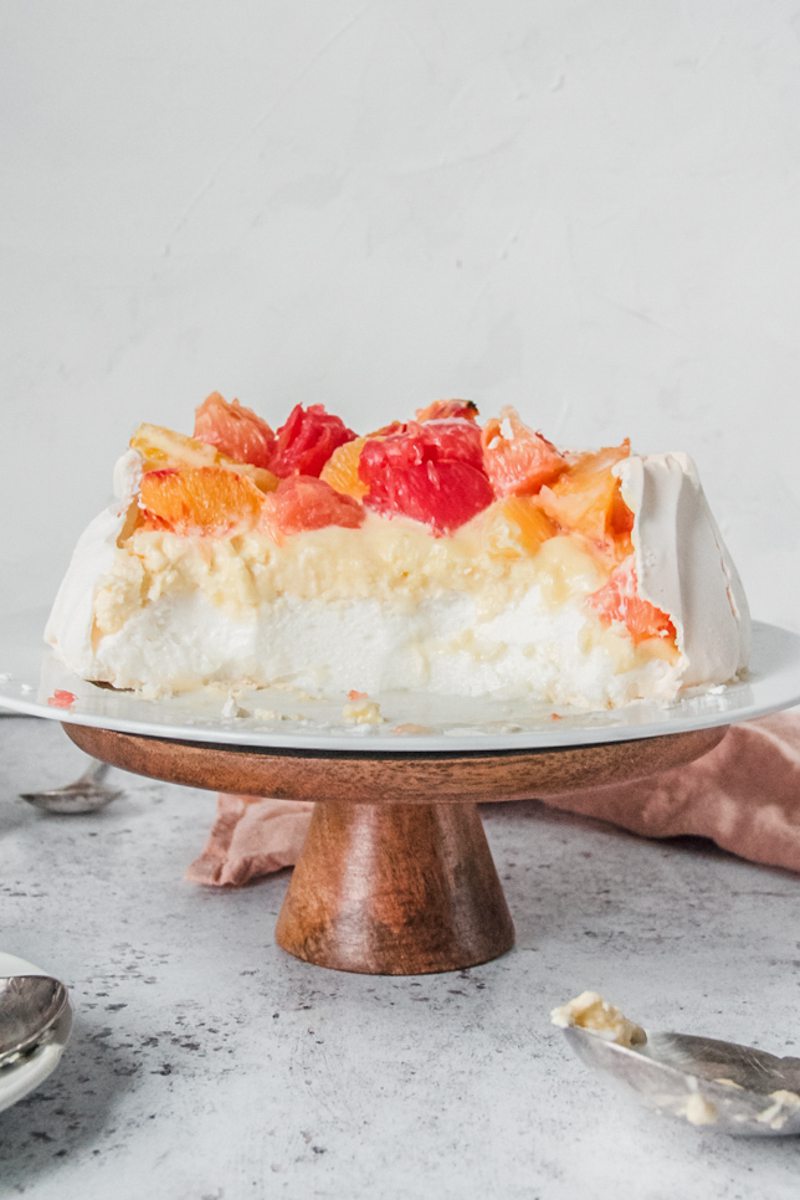
How to make Pavlova with Citrus:
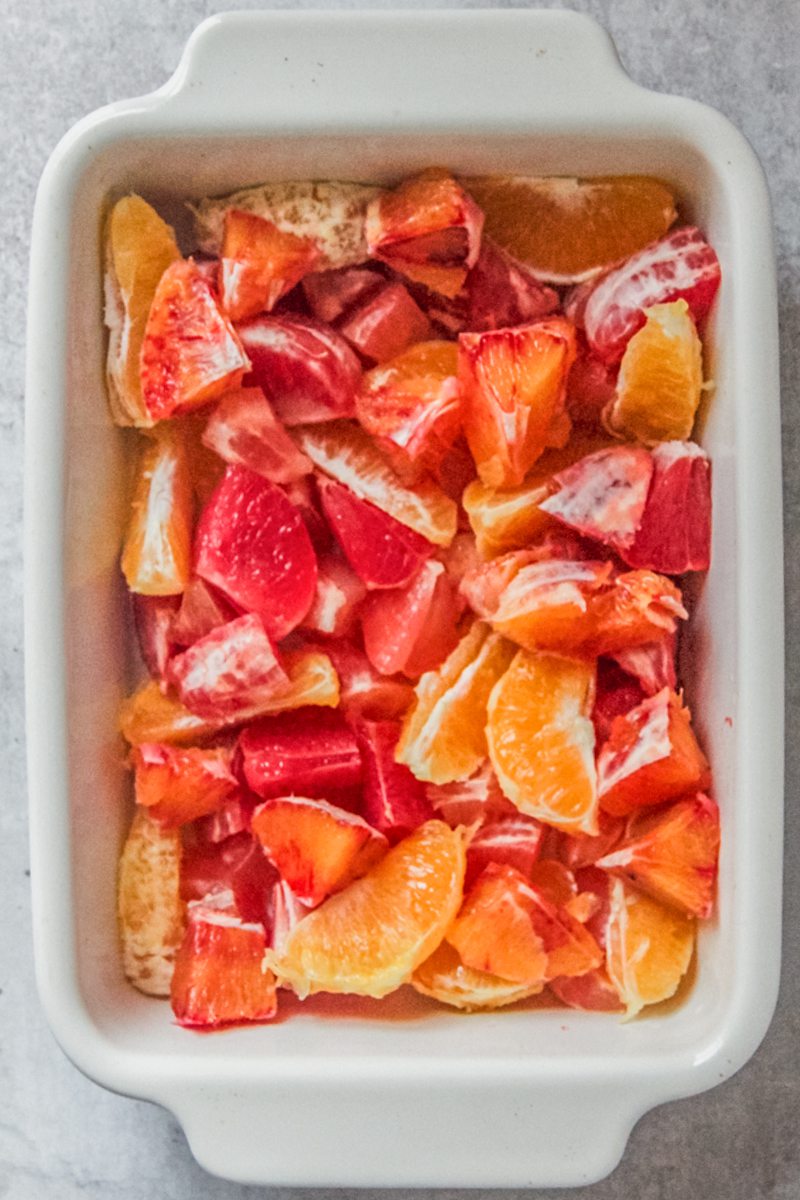
Step 1: Roasted segments: Place the roughly cut citrus segments into a baking dish alongside salt, sugar and rosemary.
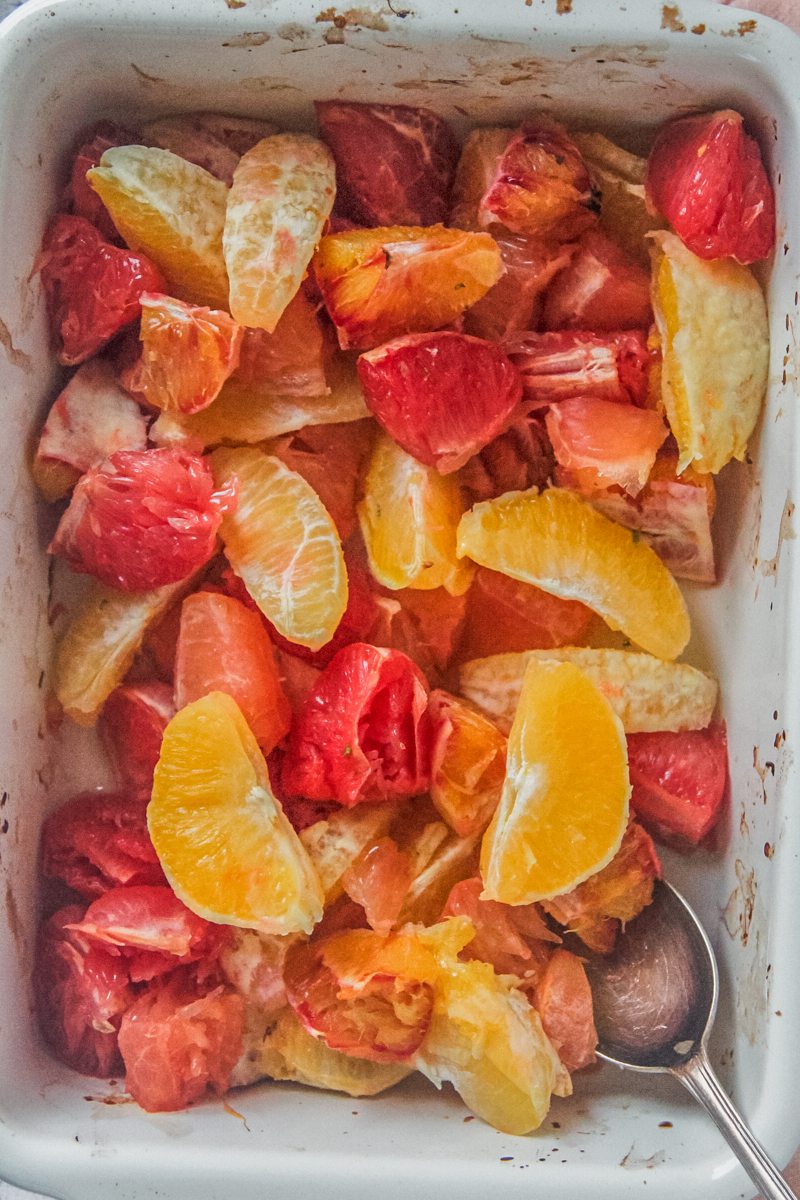
Step 2: Charred edges: Bake until caramelized and there's lots of juice in the dish.
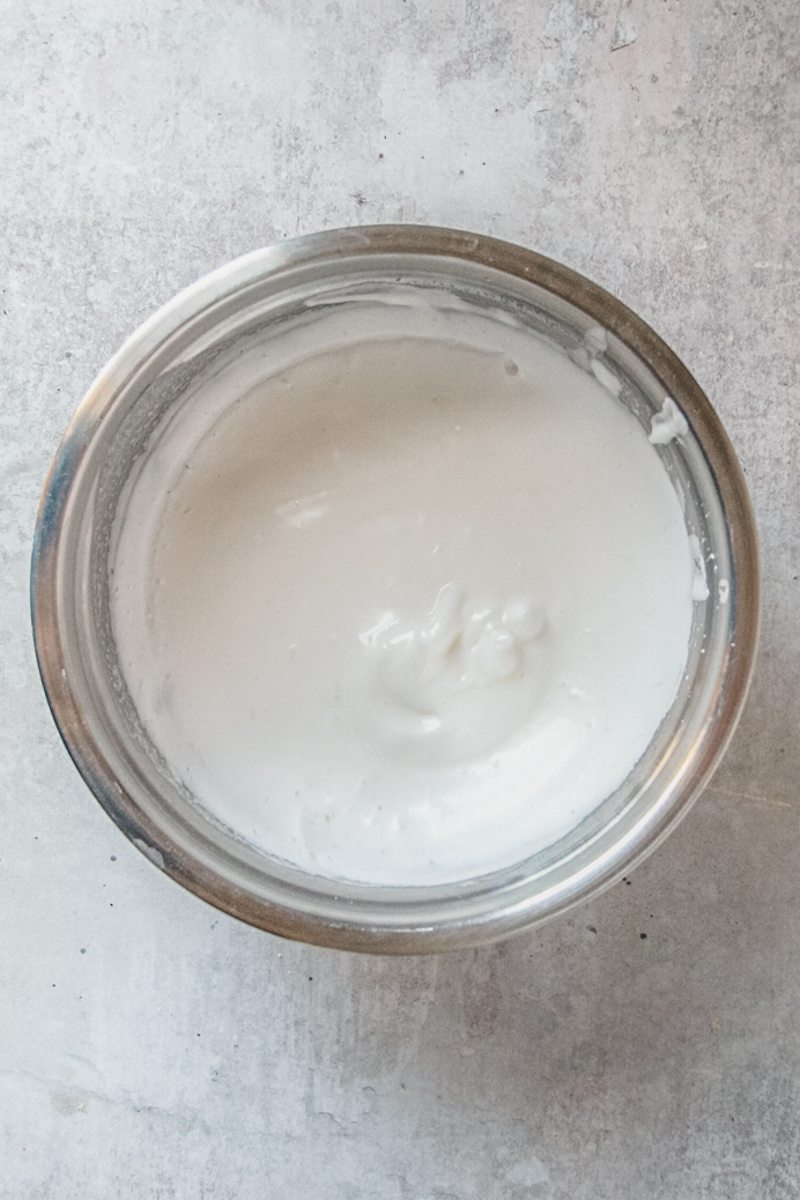
Step 3: Whip it: Whip the sugar, boiling water, vinegar, vanilla extract and egg whites in a clean bowl until stiff.
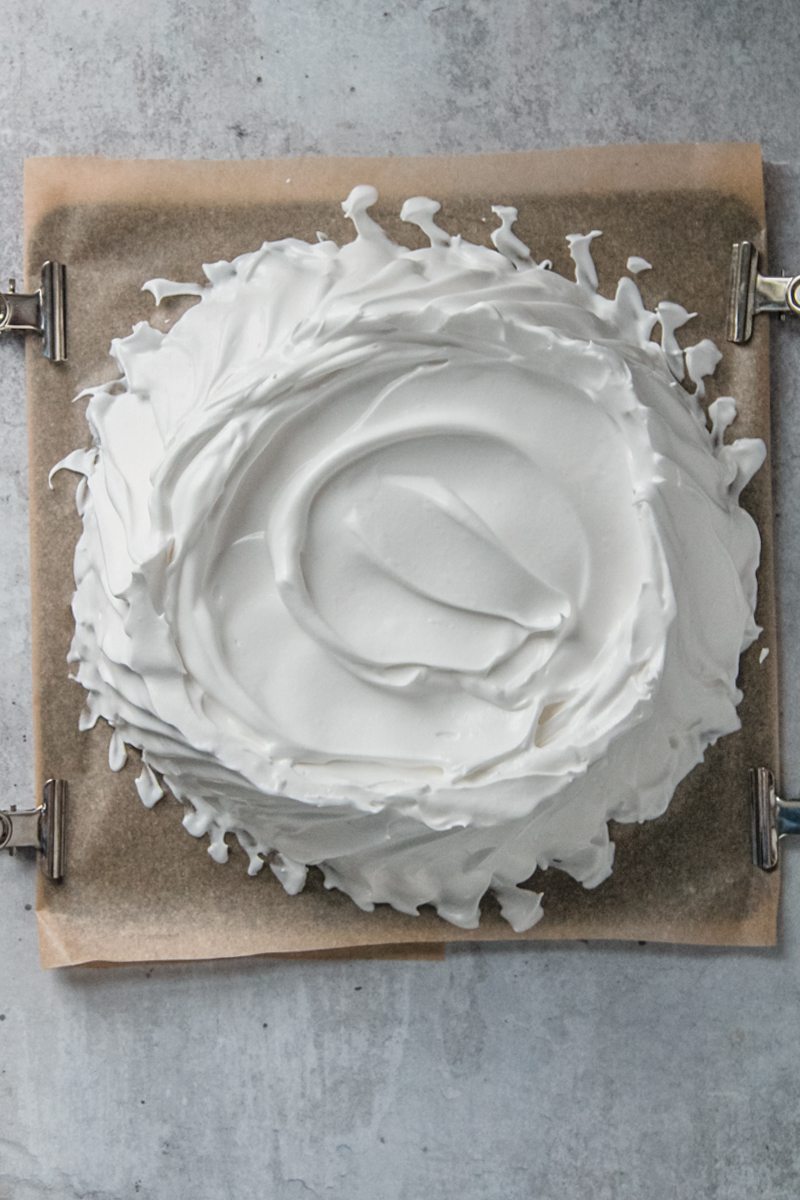
Step 4: Spoon and shape: Spoon onto a lined tray and shape carefully into whichever pavlova shape you prefer with an offset spatula or the back of a spoon.
Step 5: Bake: For 30 minutes before lowering the temperature and baking a further 30 minutes. Allow to cool completely in the oven.
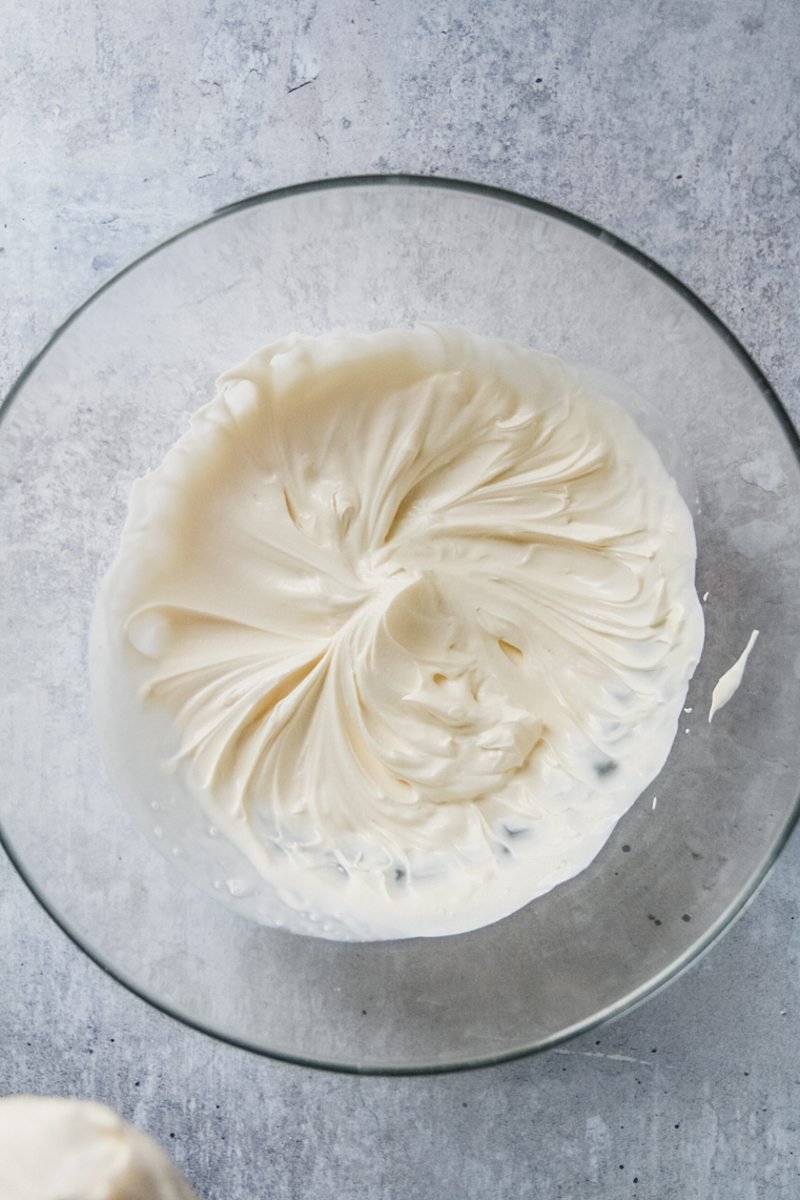
Step 6: Whip: The cream until soft peaks just form than fold in the lemon curd.
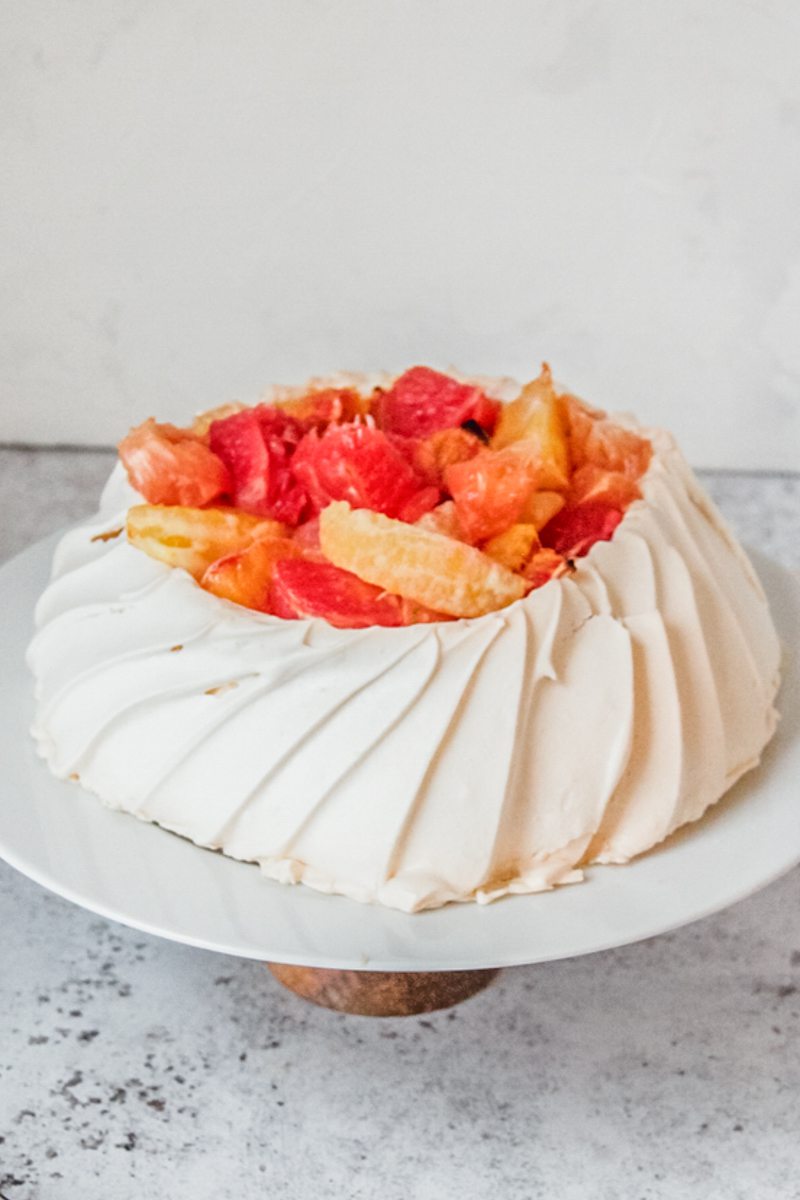
Step 7: Crown of citrus: Slice up your citrus fruit and place on top.
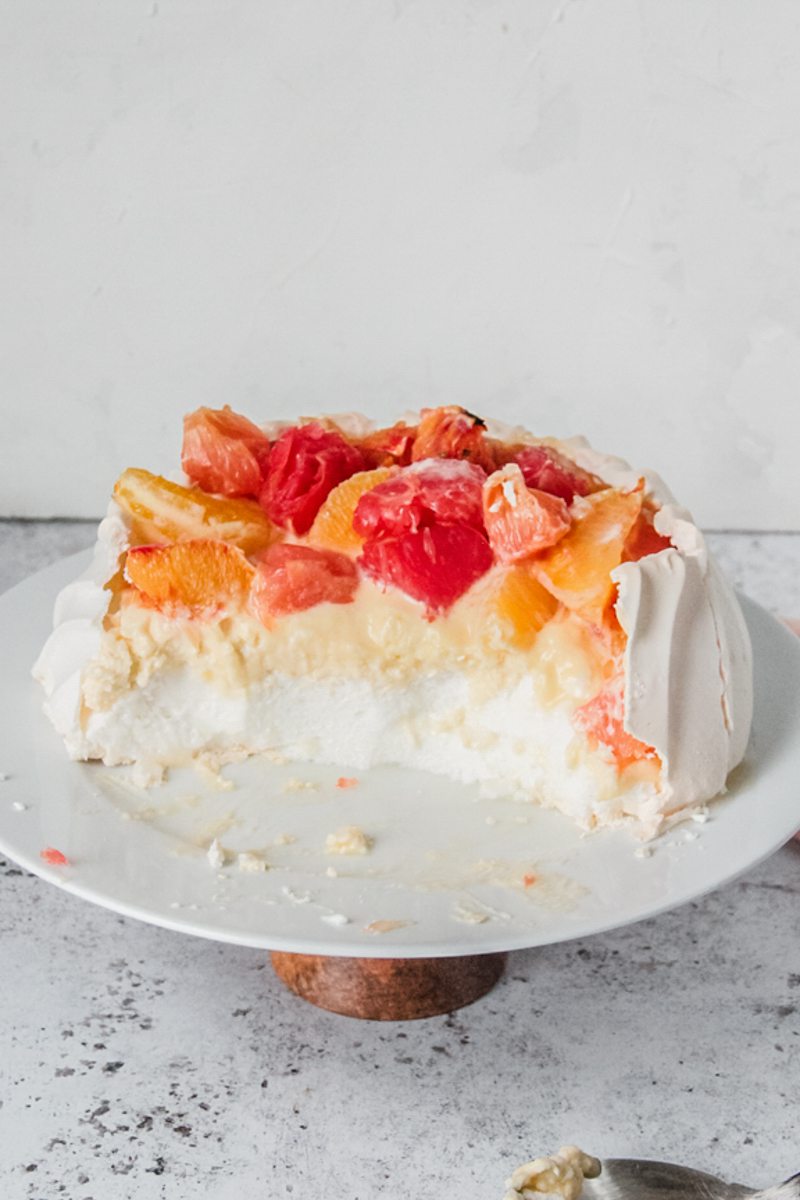
Step 8: Serve: Up and dig in.
FAQ's for the best Pavlova with Citrus
Yes! Room temperature egg whites absorb air more quickly to develop a nice and stable foam - though to really stabilize that foam we’ll need an acidic element (the vinegar we use here).
The best result in a stable but volumized meringue is to whip it at a low, but medium speed of around 3 (depending on your beaters), this will result in introducing enough air to expand the egg whites without over whipping when you begin to introduce your sugar.
Yes you can! Over whipping egg whites can result in your meringue collapsing or weeping beads of sugar once baked. The best way to avoid over beating is to ensure you beat at a steady speed and allow at least 20-30 seconds of beating time for the sugar to dissolve between adding more and try not to beat for longer than 15 minutes (this is around the break point, I’ve noticed). Unfortunately, you cannot repair over whipped meringue, though, dependent on how over whipped they are, you could make an egg white based recipe such as macaroon’s or even a baked Alaska.
The length of time depends on if you’re introducing the sugar when you begin beating the egg whites or if you beat the egg whites to soft peaks and then begin adding the sugar in stages, allow at least 20-30 seconds for the sugar to dissolve before adding more. You don’t want to beat the meringue for longer than 15 minutes as the meringue will begin to be over whipped.
You ultimately want to bake your pavlova at two different temperatures. Starting the baking at a higher temperature helps create the firm crust in your meringue and ensures less seepage and baking at a second and lower temperature helps bake the center creating the marshmallow texture.
Simply stenciling the shape you want for your pavlova onto the underside of your baking paper will help give you an easy border to work with.
It can indeed...in fact, it's best made 1 day ahead of serving, though will also be great to serve up to 3 days after baking. Simply store the plain pavlova in a dry container before topping with your cream and fruit. Once the cream is placed on top, it should be consumed with 3 hours. Full disclosure though, if you have leftovers after serving, you can refrigerate and it will be still good enough to eat the next day (we don't waste leftovers in our house).
More meringue desserts you'll love


Pavlova with Roasted Citrus
Ingredients
Roasted Citrus
- 2 oranges
- 1 blood orange
- 1 grapefruit
- ¼ teaspoon sea salt
- 1 teaspoon fresh rosemary finely chopped
- 14 grams / 1 tablespoon superfine/caster sugar
Pavlova
- 114 grams / 3 large or 5 small egg whites room temperature
- 200 grams / 1 cup superfine/caster sugar
- 30 grams / 2 tablespoons boiling water
- 5 grams / 1 teaspoon vinegar
- 1 teaspoon vanilla extract
- 227 grams / 1 cup heavy cream
- 20 grams / 1 tablespoon lemon curd
Instructions
Roasted Citrus
- For the roasted citrus, preheat your oven to 220C/430F.
- Peel the oranges and grapefruit and roughly slice or slice into segments and place in a baking dish.
- Sprinkle over the salt, sugar and rosemary.
- Place into the oven and bake for 25 minutes or until they are beginning to look slightly charred on the edges and there’s lots of juice in our dish.
- Remove and set aside.
- Lower the oven to 140ºC/280F and line a baking tray with greaseproof paper.
Pavlova
- Place the sugar, boiling water, vinegar, vanilla extract and egg whites in a clean bowl and beat on medium until the meringue is stiff and holds its shape when you pull the beater away, this will take 12 minutes.
- Spoon the meringue onto your greased tray and shape carefully into whichever pavlova shape you prefer with an offset spatula or the back of a spoon.
- Place in the oven and bake for 30 minutes before turning the temperature down to 120ºC/265F and bake for a further 30 minutes.
- Turn the oven off and allow to cool completely, minimum 2 hours before removing.
- Whip the cream until soft peaks just form than fold in the lemon curd.
- Slice up your citrus fruit, into bite size pieces or even roughly and place on top.
- Serve immediately.
Notes
- Egg whites: Room temperature fresh egg whites are best for a great pavlova as they are less likely to collapse.
- Sugar: Superfine or caster sugar will dissolve easily in our meringue and add sweetness without additional flavor. You could replace with white sugar. It is not recommended to substitute with brown sugar due to the flavor it will add to the pavlova.
- Vinegar: Vinegar strengthens the egg white structure helping stabilize and ensure the there is no seepage.
- Boiling water: The boiling water helps raise the temperature in the egg white mixture which makes this meringue closest to a Swiss Meringue helping make our meringue denser in texture than a French meringue and less fussy than an Italian meringue.
- Only use room temperature egg whites: They absorb air more quickly to develop a nice and stable foam - though to really stabilize that foam we’ll need an acidic element (the vinegar we use here).
- Shaping your Pavlova: Simply stenciling the shape you want for your pavlova onto the underside of your baking paper will help give you an easy border to work with. And the back of a spoon or offset spatula will help you create your desired shape.
- Try not to overbeat your meringue: Over whipping egg whites can result in your meringue collapsing or weeping beads of sugar once baked. The best way to avoid over beating is to ensure you beat at a steady speed and allow at least 20-30 seconds of beating time for the sugar to dissolve between adding more. Try not to beat for longer than 15 minutes (this is around the break point, I’ve noticed). Unfortunately, you cannot repair over whipped meringue, though, dependent on how over whipped they are, you could make an egg white based recipe such as macaroon’s or even a baked Alaska.
- Roasted citrus: You can make the roasted citrus up to 3 days prior to topping your pavlova.
Nutrition
Subscribe to receive a free weekly newsletter using seasonal produce as well as exclusive content!
Made it and loved it?
If you have made this recipe, it would mean so much to leave a review below to help more people find this.

Leave a Reply