

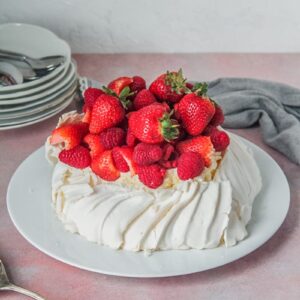
This Pavlova dessert is crispy on the outside and chewy on the inside, and is topped with a luscious whipped cream and fresh fruit. It's a classic Australasian dessert that is perfect for any occasion, from holiday celebrations to summer barbecues.

Table of Contents
Pavlova is a national treasure named after a Russian ballet dancer and has a reputation of being a rather difficult to conquer, there are some fears and trepidation's involved in giving this a go. This may be a reason why my mother has never made pavlova.
Here’s a secret though, it’s not difficult to perfect. It isn’t even difficult to whip up if you have a hand mixer in your possession as even with this swirling on medium speed my arm began to ache (which made me respect the creator of this dish that much more!). There is one vital thing to stick to if you want a truly successful pavlova though, and that is to leave the oven door closed once you slide this in and leave it closed once you turn the oven off to cool.

Ingredients and substitutions for Pavlova
- Egg whites: Room temperature fresh egg whites are best for a great pavlova as they are less likely to collapse.
- Sugar: Superfine or caster sugar will dissolve easily in our meringue and add sweetness without additional flavor. You could replace with white sugar. It is not recommended to substitute with brown sugar due to the flavor it will add to the pavlova.
- Vinegar: Vinegar strengthens the egg white structure helping stabilize and ensure there is no seepage.
- Boiling water: The boiling water helps raise the temperature in the egg white mixture which makes this meringue closest to a Swiss Meringue helping make our meringue denser in texture than a French meringue and less fussy than an Italian meringue making it the most stable one to make into a Pavlova.
See recipe card for quantities.
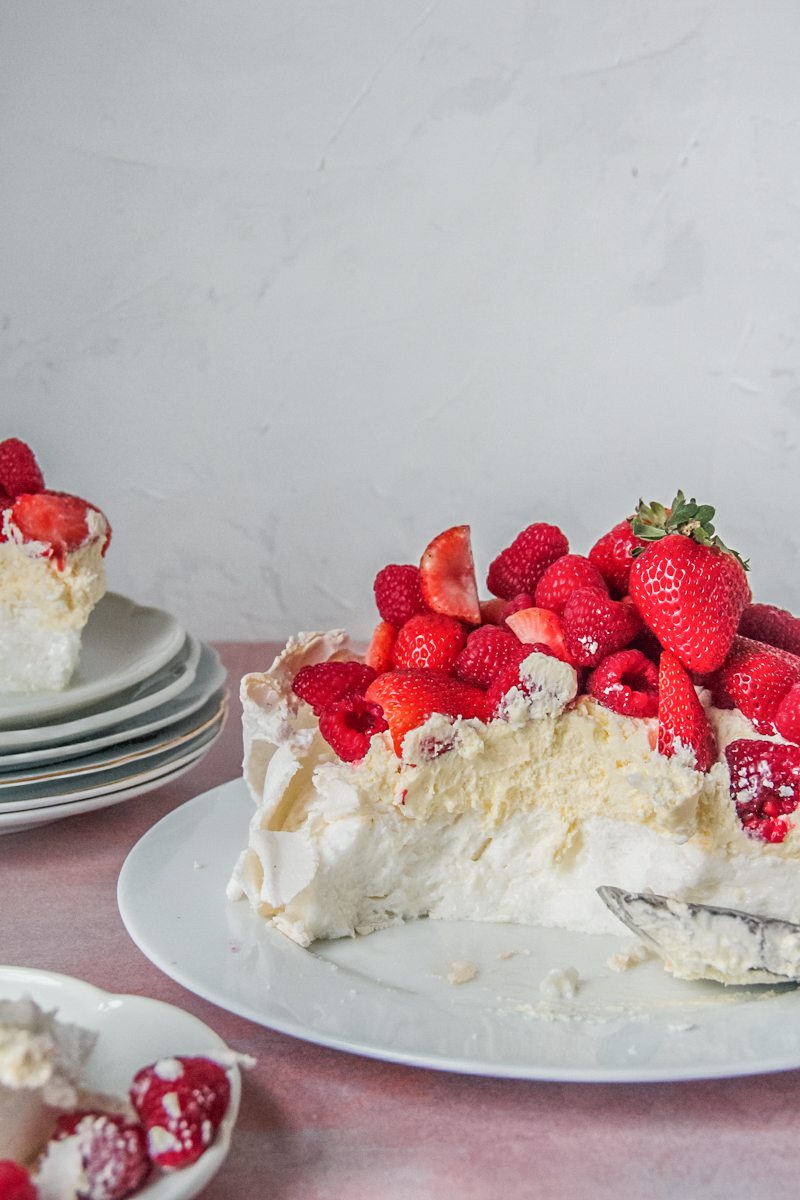
How to make Pavlova:
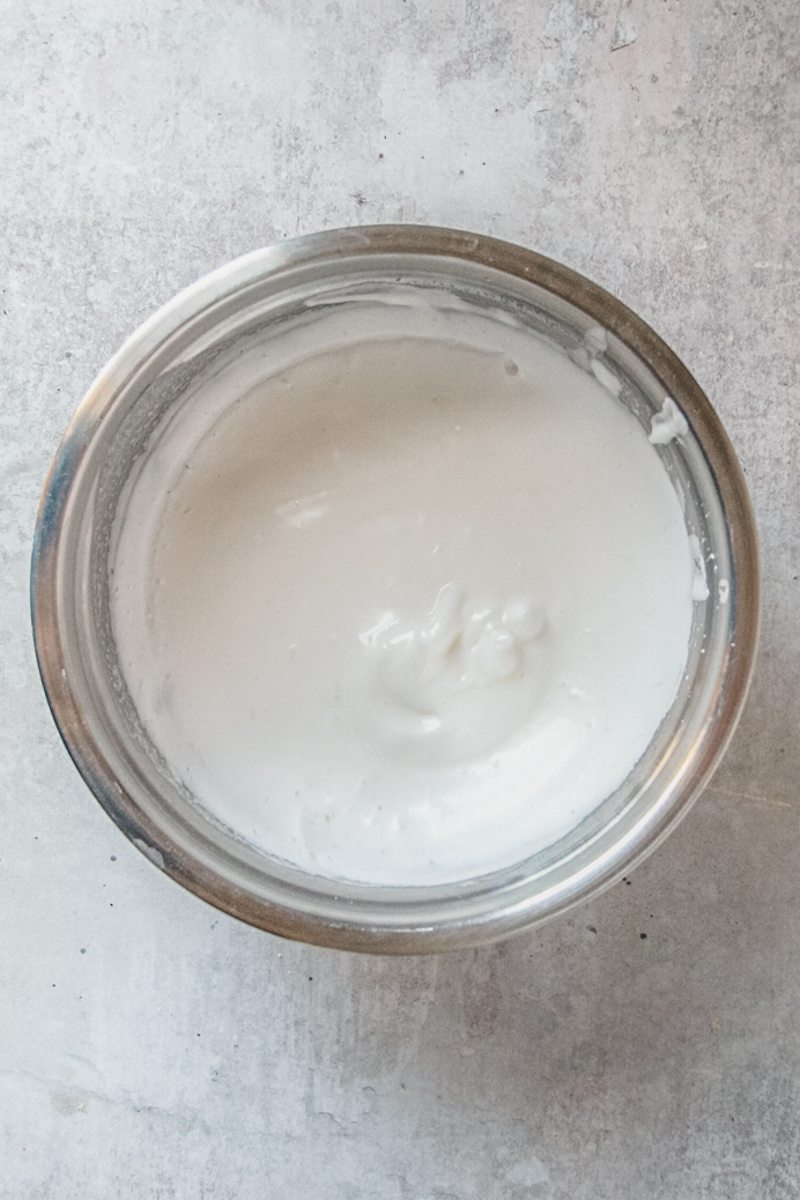
Step 1: Whip it: Whip the sugar, boiling water, vinegar, vanilla extract and egg whites in a clean bowl until stiff.
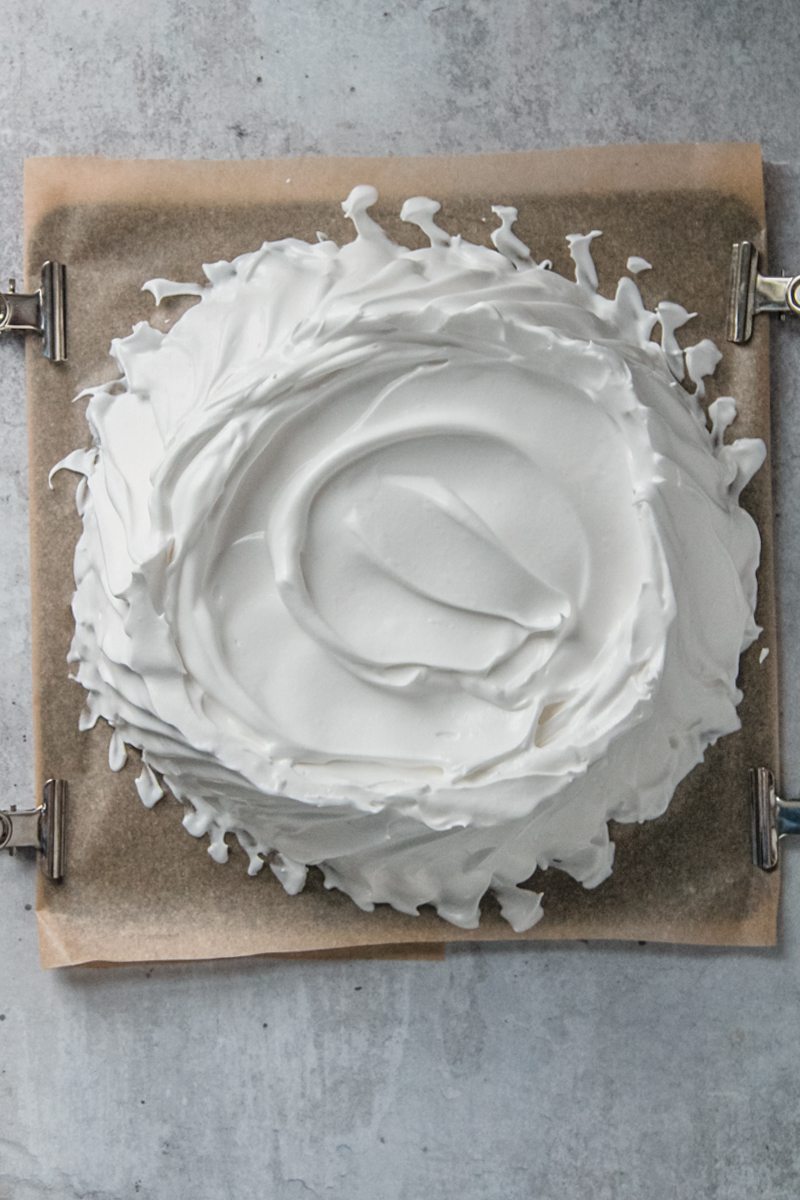
Step 2: Spoon and shape: Spoon onto a lined tray and shape carefully into whichever pavlova shape you prefer with an offset spatula or the back of a spoon.
Step 3: Bake: For 30 minutes before lowering the temperature and baking a further 30 minutes. Allow to cool completely in the oven.
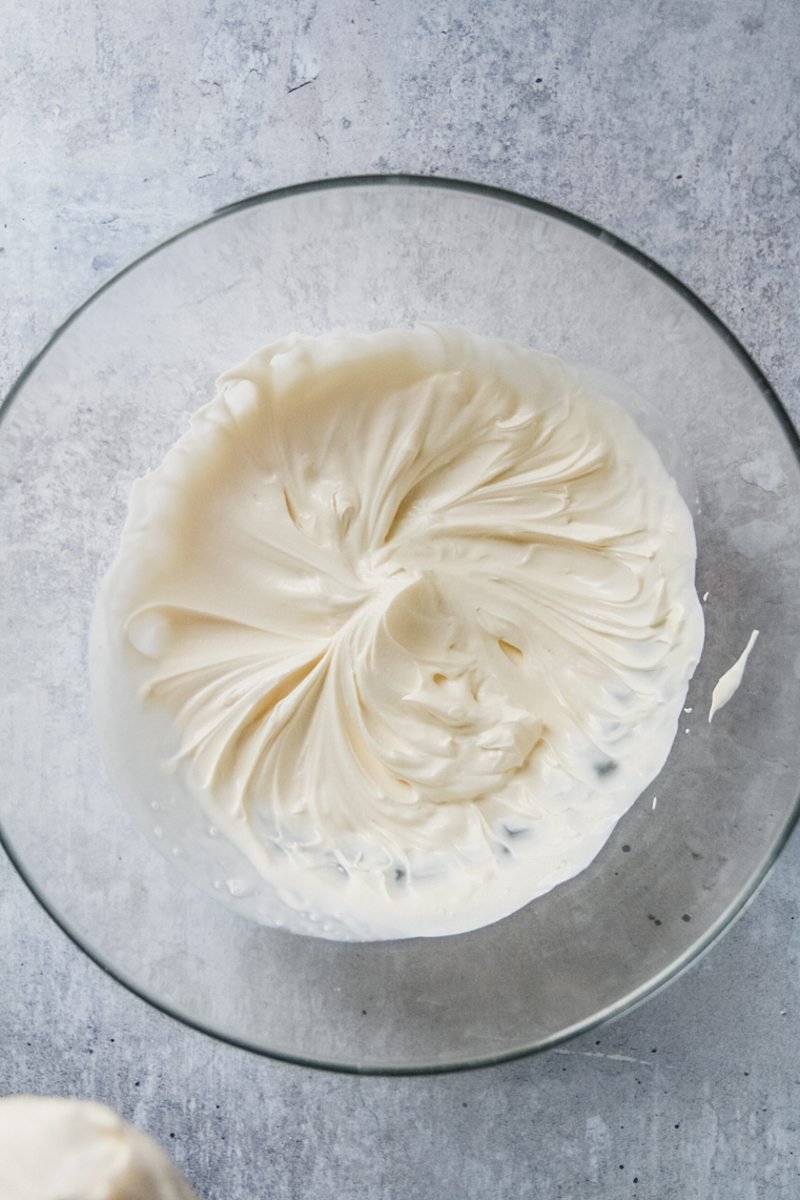
Step 4: Whip: The cream until soft peaks just form than fold in the lemon curd.
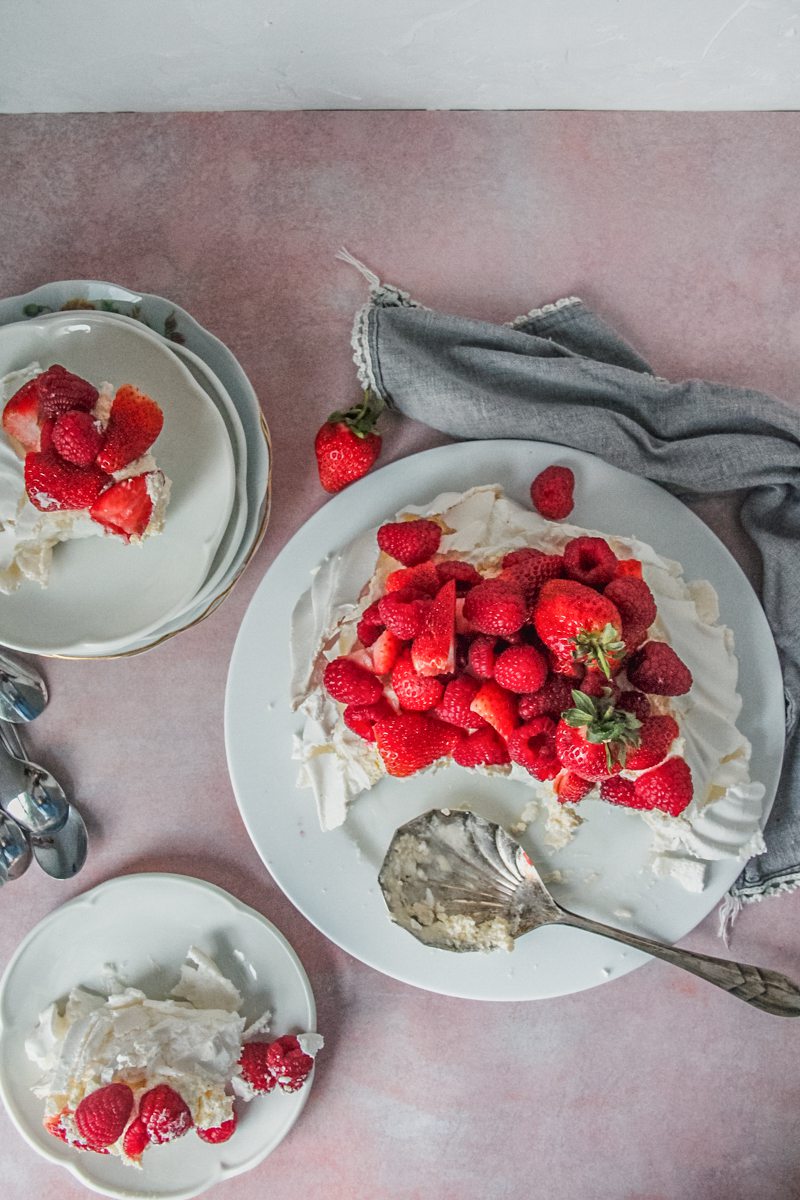
Step 5: Topping: Spread your flavored cream on top of your pavlova and top with the berries.
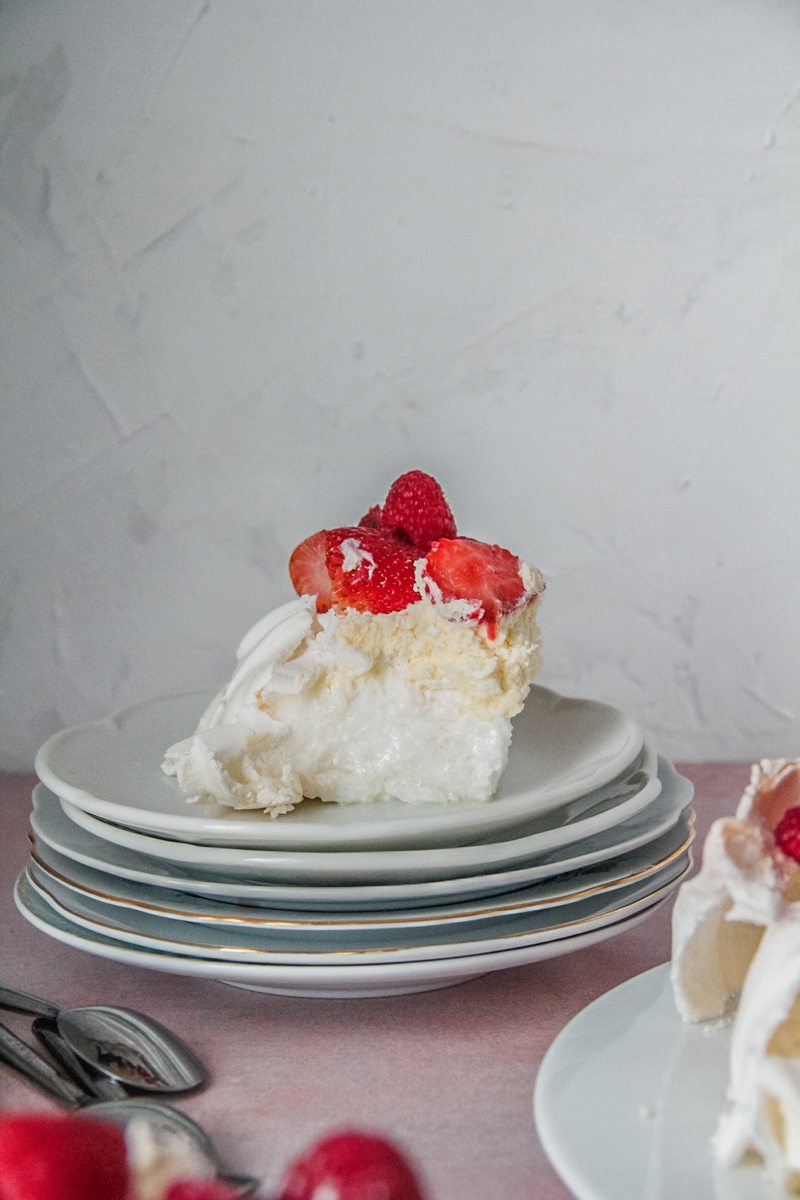
Step 6: Serve: Spoon into serving bowls and dig in immediately.
FAQ's for the best Pavlova
Yes! Room temperature egg whites absorb air more quickly to develop a nice and stable foam. Though to really stabilize that foam we’ll need an acidic element (the vinegar we use here).
The best result in a stable, but fluffy meringue, is to whip it at a low to medium speed of around 3 (depending on your beaters). This will result in introducing enough air to expand the egg whites without over-whipping when you begin to introduce your sugar.
Yes you can! Over whipping egg whites can result in your meringue collapsing or weeping beads of sugar once baked. Try not to beat for longer than 15 minutes (this is around the break point, I’ve noticed). Unfortunately, you cannot repair over whipped meringue, though, dependent on how over whipped they are, you could make an egg white based recipe such as macaroon’s or even a baked Alaska.
You ultimately want to bake your pavlova at two different temperatures. Starting the baking at a higher temperature helps create the firm crust in your meringue and ensures less seepage. Whilst baking at a second and lower temperature helps bake the center creating the marshmallow texture.
Simply stenciling the shape you want for your pavlova onto the underside of your baking paper will help give you an easy border to work with. And the back of a spoon or offset spatula will help you create your desired shape.
Cracking usually happens from temperature changes. Avoid opening the oven door during baking and let the pavlova cool completely inside the turned-off oven. Rapid cooling causes the meringue to contract too quickly.
This can be caused by a few factors. If too much sugar is added at a time and not dissolved during the whipping phase, this can cause a pavlova to be sticky underneath. Over-whipping can also lead to a pavlova seeping at the base. Though if not baked long enough or the humidity was too high, these can create the same problem. Try to ensure you add the sugar slowly and whipping for 20-30 seconds before adding more. Try not to whip for more than advised. Ensure you bake until the exterior is crisp and let it cool completely in the oven without opening the door.
Humidity is the enemy of pavlova! To keep it crisp:
- Bake on dry days if possible
- Store in an airtight container once cooled
- Add toppings right before serving
- Avoid refrigerating the meringue base alone
It can indeed…in fact, the meringue is best made 1 day ahead of serving, though will also be great to serve up to 3 days after baking. Simply store the plain pavlova in a dry container before topping with your cream and fruit. Once the cream is placed on top, it should be consumed with 3 hours. Full disclosure though, if you have leftovers after serving, you can refrigerate and it will be still good enough to eat the next day (we don't waste leftovers in our house).
Other New Zealand desserts you'll enjoy
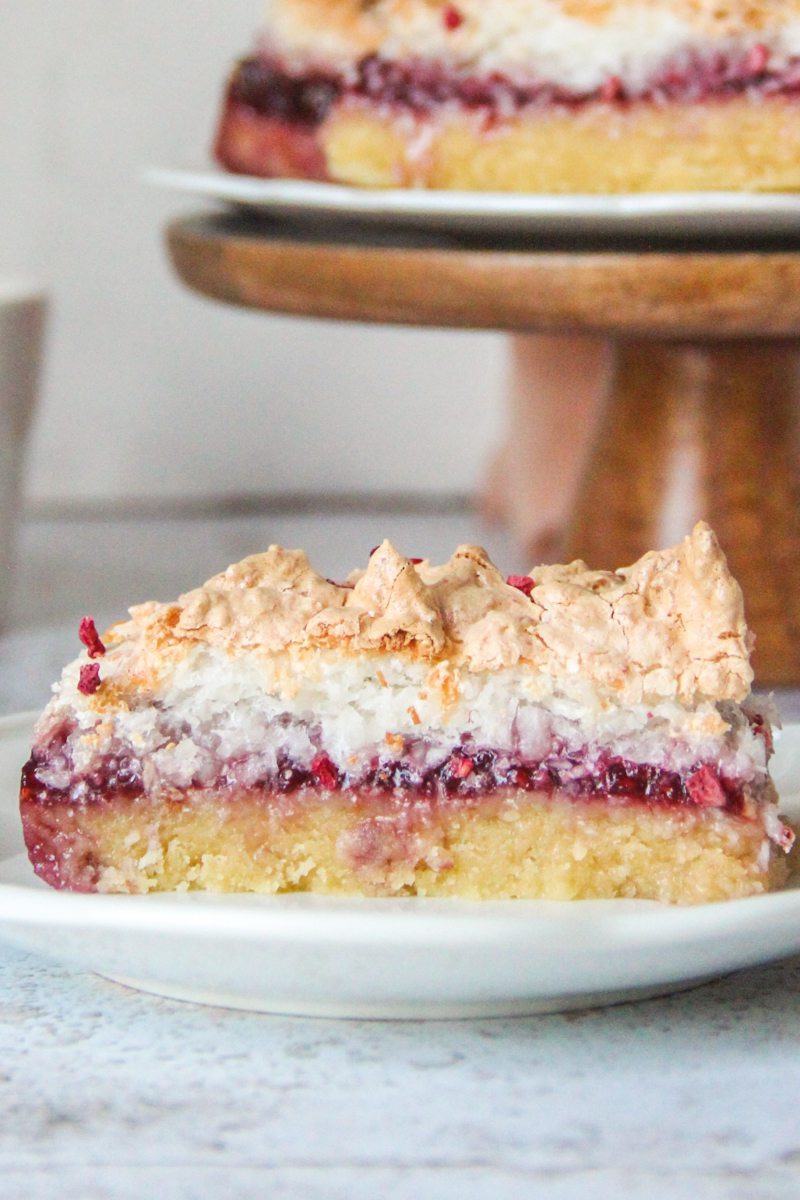
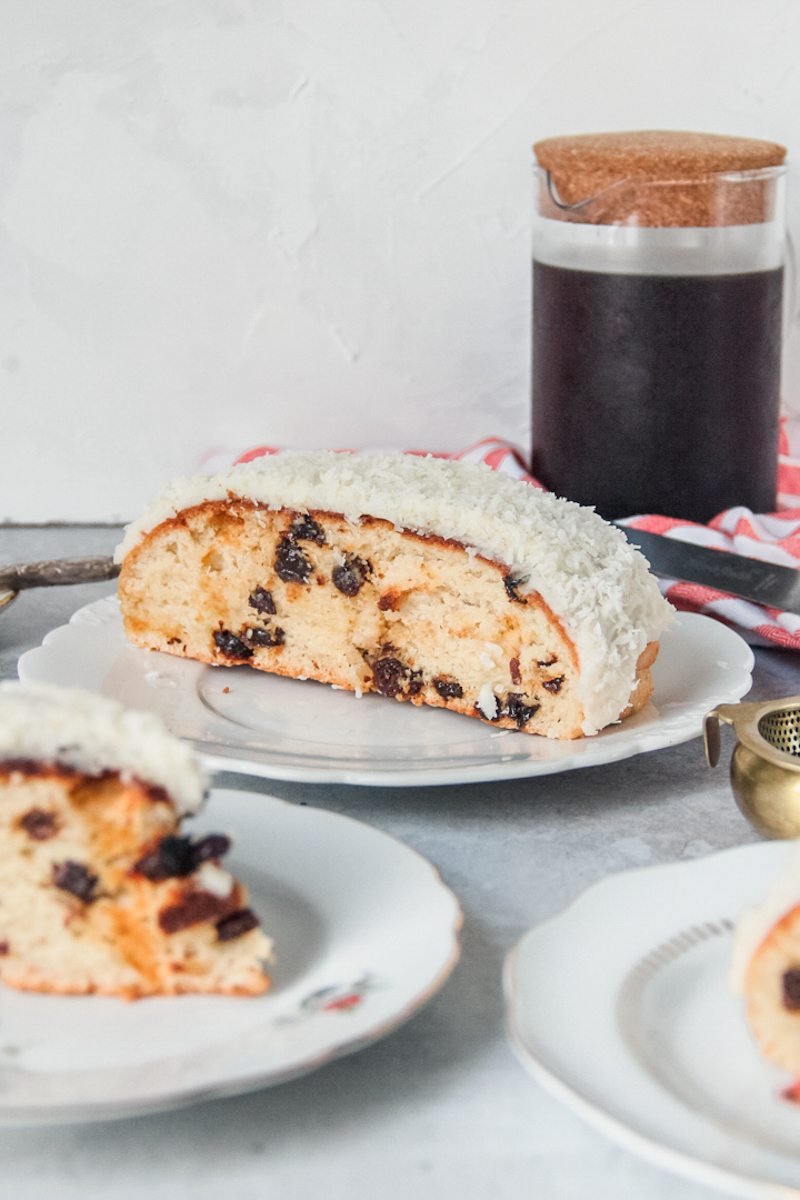
Pavlova
Ingredients
Pavlova
- 114 grams / 3 large or 5 small egg whites room temperature
- 200 grams / 1 cup superfine/caster sugar
- 30 grams / 2 tablespoons boiling water
- 5 grams / 1 teaspoon vinegar
- 1 teaspoon vanilla extract
Topping
- 227 grams / 1 cup heavy cream
- 20 grams / 1 tablespoon lemon curd
- 225 grams / 1 cup raspberries roughly broken
- 225 grams / 1 cup strawberries roughly chopped
Instructions
Pavlova
- Preheat the oven to 140ºC/280F and line a baking tray with greaseproof paper.
- Place the sugar, boiling water, vinegar, vanilla extract and egg whites in a clean bowl and beat on medium until the meringue is stiff and holds its shape when you pull the beater away, approximately 12 minutes with a hand beater.
- Spoon the meringue onto your greased tray and shape carefully into whichever pavlova shape you prefer with an offset spatula or the back of a spoon.
- Place in the oven and bake for 30 minutes before turning the temperature down to 120ºC/265F and bake for a further 30 minutes.
- Turn the oven off and allow to cool completely, minimum 2 hours before removing.
- Remove and place onto your serving plate.
Topping
- Whip the cream until soft peaks just form than fold in the lemon curd. Spread over the top of the pavlova and place your berries on top.
- Serve immediately.
Notes
- Egg whites: Room temperature fresh egg whites are best for a great pavlova as they are less likely to collapse.
- Sugar: Superfine or caster sugar will dissolve easily in our meringue and add sweetness without additional flavor. You could replace with white sugar. It is not recommended to substitute with brown sugar due to the flavor it will add to the pavlova.
- Vinegar: Vinegar strengthens the egg white structure helping stabilize and ensure the there is no seepage.
- Boiling water: The boiling water helps raise the temperature in the egg white mixture which makes this meringue closest to a Swiss Meringue helping make our meringue denser in texture than a French meringue and less fussy than an Italian meringue.
- Only use room temperature egg whites: They absorb air more quickly to develop a nice and stable foam - though to really stabilize that foam we’ll need an acidic element (the vinegar we use here).
- Shaping your Pavlova: Simply stenciling the shape you want for your pavlova onto the underside of your baking paper will help give you an easy border to work with. And the back of a spoon or offset spatula will help you create your desired shape.
- Try not to overbeat your meringue: Over whipping egg whites can result in your meringue collapsing or weeping beads of sugar once baked. The best way to avoid over beating is to ensure you beat at a steady speed and allow at least 20-30 seconds of beating time for the sugar to dissolve between adding more. Try not to beat for longer than 15 minutes (this is around the break point, I’ve noticed). Unfortunately, you cannot repair over whipped meringue, though, dependent on how over whipped they are, you could make an egg white based recipe such as macaroon’s or even a baked Alaska.
Nutrition
Subscribe to receive a free weekly newsletter using seasonal produce as well as exclusive content!
Made it and loved it?
If you have made this recipe, it would mean so much to leave a review below to help more people find this.
Leave a Reply